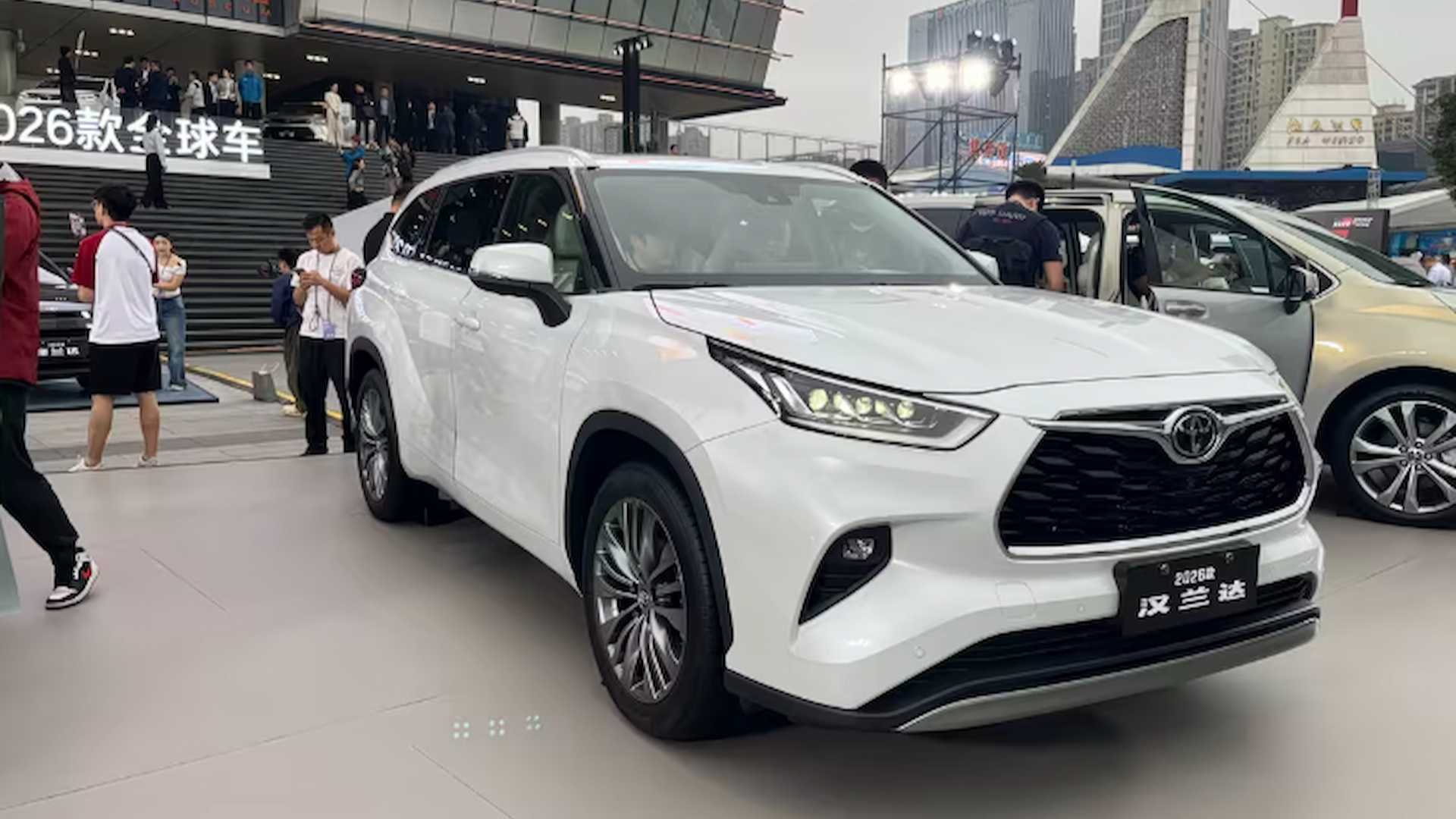
Speaking of the GAC Toyota Highlander, anyone who knows a little about cars probably won't find it unfamiliar—this car is an unavoidable option in China's midsize SUV market.
The spectacle of people queuing up and paying markups to get one back in the day feels like it was just yesterday, and before you know it, the starting price has now dropped straight to 219,800 yuan. Can you handle that?
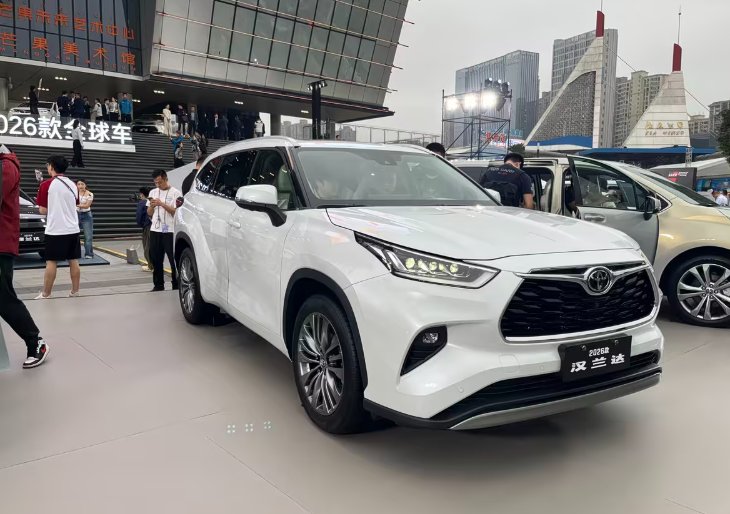
I have to say, today's auto market is truly cutthroat—new forces like the Li Auto L7 and AITO M7 are grabbing territory like crazy with big screens and big sofas, and Toyota really can't sit still this time.
This facelifted Highlander has put all its effort exactly where it counts. The most intuitive feeling when you sit inside is that the small screen with the inherited thick bezels has finally been retired. A 15.6-inch large screen is standard across the entire lineup, with a Qualcomm Snapdragon 8155 chip stuffed right inside.
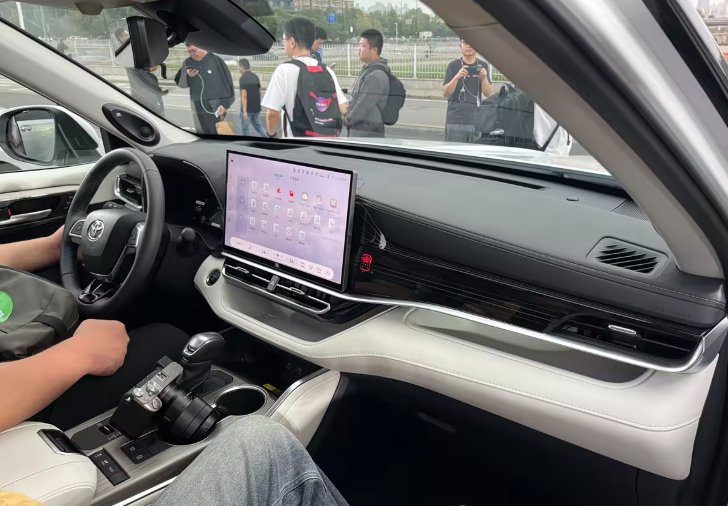
In the past, many veteran owners complained endlessly that Toyota's infotainment felt like a product from the last century, with all kinds of lag and crashes and a poor experience. But now, whether you're using CarPlay with an Apple phone or HiCar 5.0 with a Huawei phone, everything connects seamlessly.
Driving it day to day to drop off and pick up the kids from school, you just say "Hello Xiaoyue" to set navigation and play music, and the response speed has genuinely caught up with mainstream domestic levels.
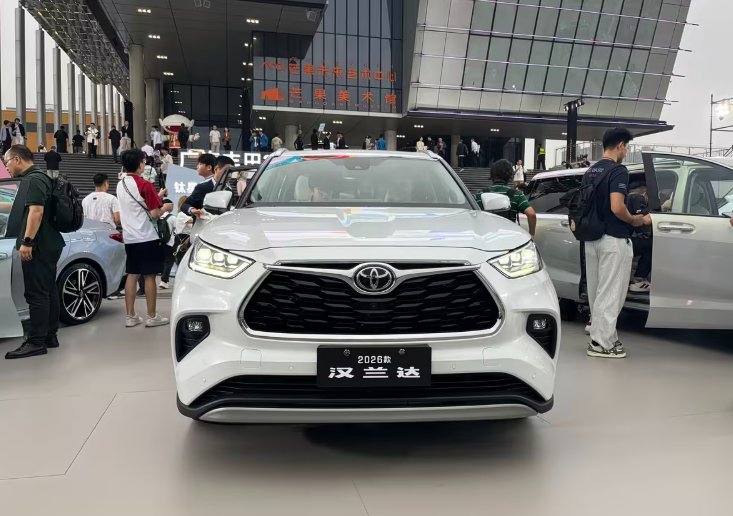
Anyone who's driven the old Highlander surely knows that wind noise at highway speeds is indeed a bit annoying. The new model has gone all out on this point, with acoustic laminated glass standard across the lineup for the front windshield and the first and second row side windows. On long road trips with the whole family, when you hit 120 km/h, the elderly and kids in the car can sleep much more peacefully.
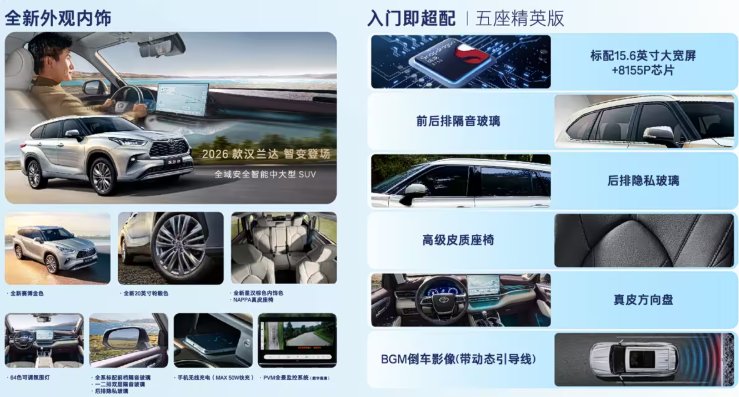
The entry-level version comes directly with leather seats, and the coverage of seat ventilation and heating on mid- and high-trim models is broader too. Heading out with the whole family in summer, your back no longer gets soaked in sweat.
A 50W wireless fast charger and a 540-degree transparent chassis view have also been added, making extreme parking in old residential compounds feel much more reassuring and a lot safer.
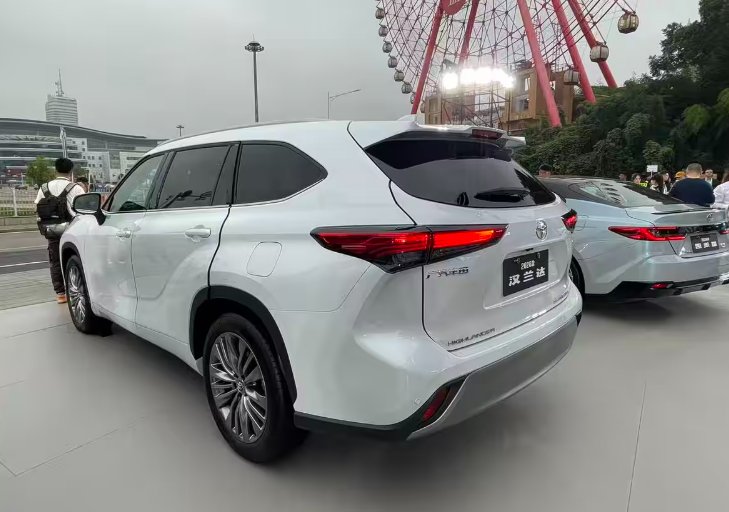
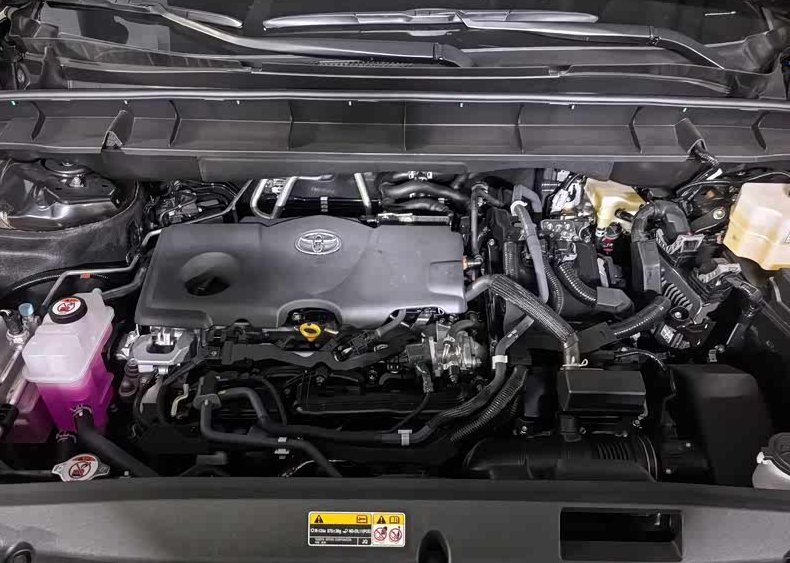
For powertrains, it's still the familiar old recipe—the 2.5L dual-engine hybrid and the 2.0T gasoline version continue their service, which is exactly what the market expects.
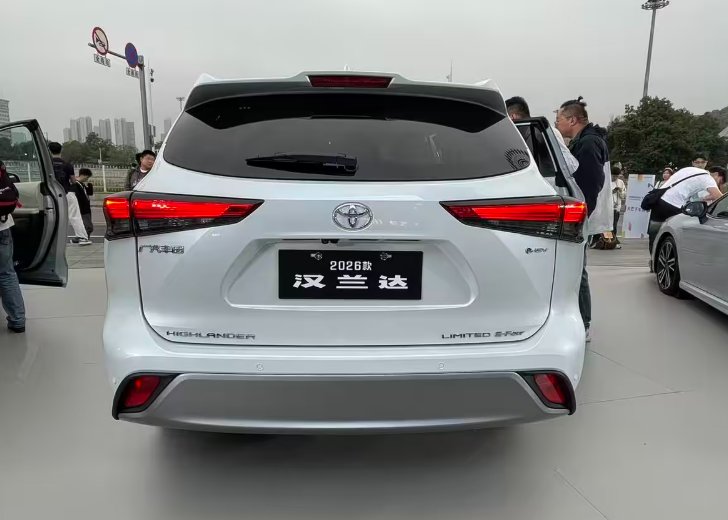
Personally, I strongly recommend everyone set their sights on the hybrid version. Even though the budget is a bit higher, it's genuinely better.
Why? Because this THS hybrid system is just too mature. Its on-paper specs may not be as ferocious as dual-motor AWD new energy vehicles, but what it emphasizes is smoothness and peace of mind. In stop-and-go city driving, the electric motor intervenes extremely smoothly, and fuel consumption stays steadily around 6 liters per 100 kilometers year-round.
On long trips during holidays, there's absolutely no need to queue up at service areas fighting for charging piles—one tank of gas easily covers over a thousand kilometers. For middle-aged men who value stability, this sense of reassurance without range anxiety hits just right. Try it and you'll see.
GAC Toyota officials have also let slip that extended-range and plug-in hybrid versions exclusively for the Chinese market are already on the way. The traditional big automakers have fully woken up and started fighting at the pace of the Chinese market.
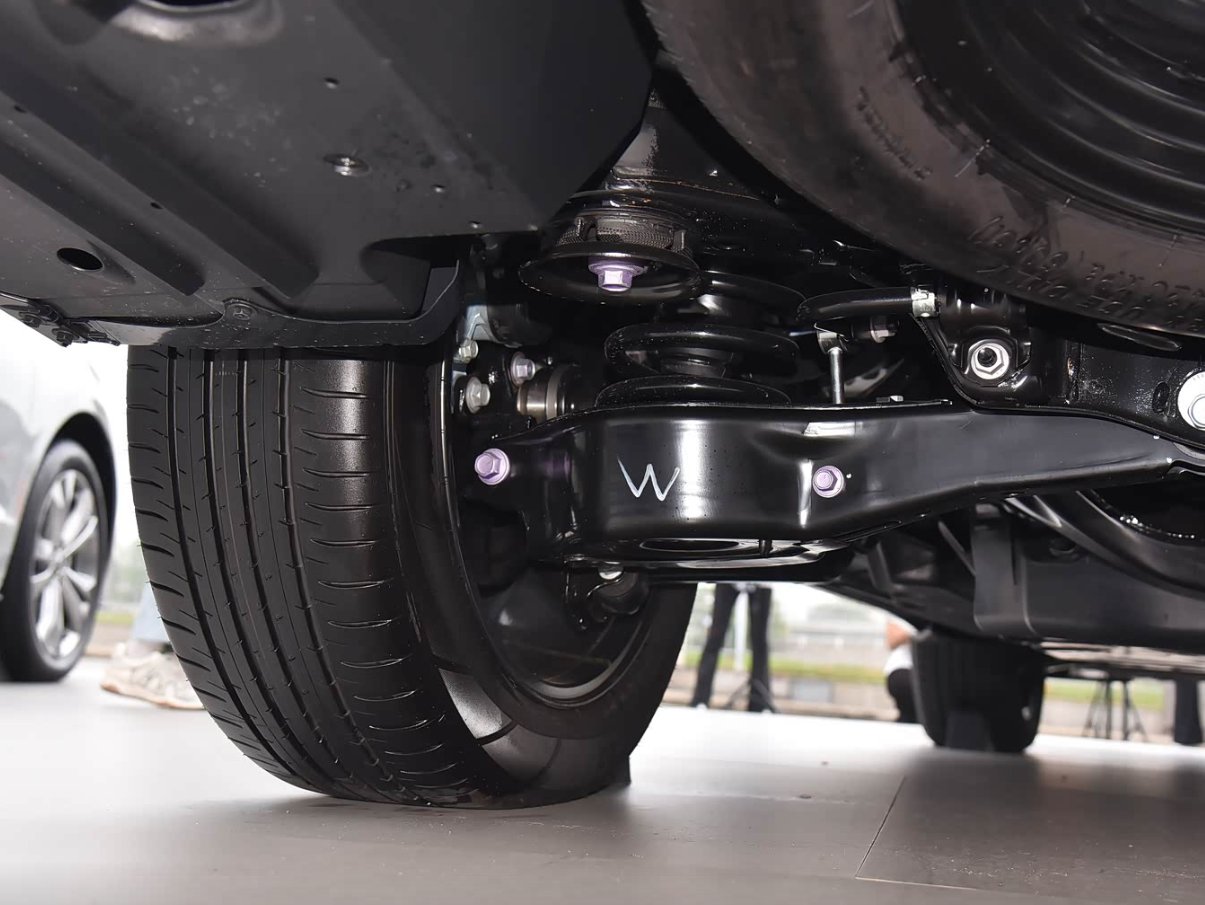
This new Highlander still isn't a beast that'll get your adrenaline pumping. It's like an old buddy quietly by your side—spacious and worry-free to drive. If you're buying a car to try something new, then turn left and go look at the new forces.
But if you've got over 200,000 yuan in hand and want a family workhorse that can steadily accompany you through five or even ten years, this Highlander that has lowered its posture and filled in its smart-tech shortcomings is still an extremely solid choice—bar none.


