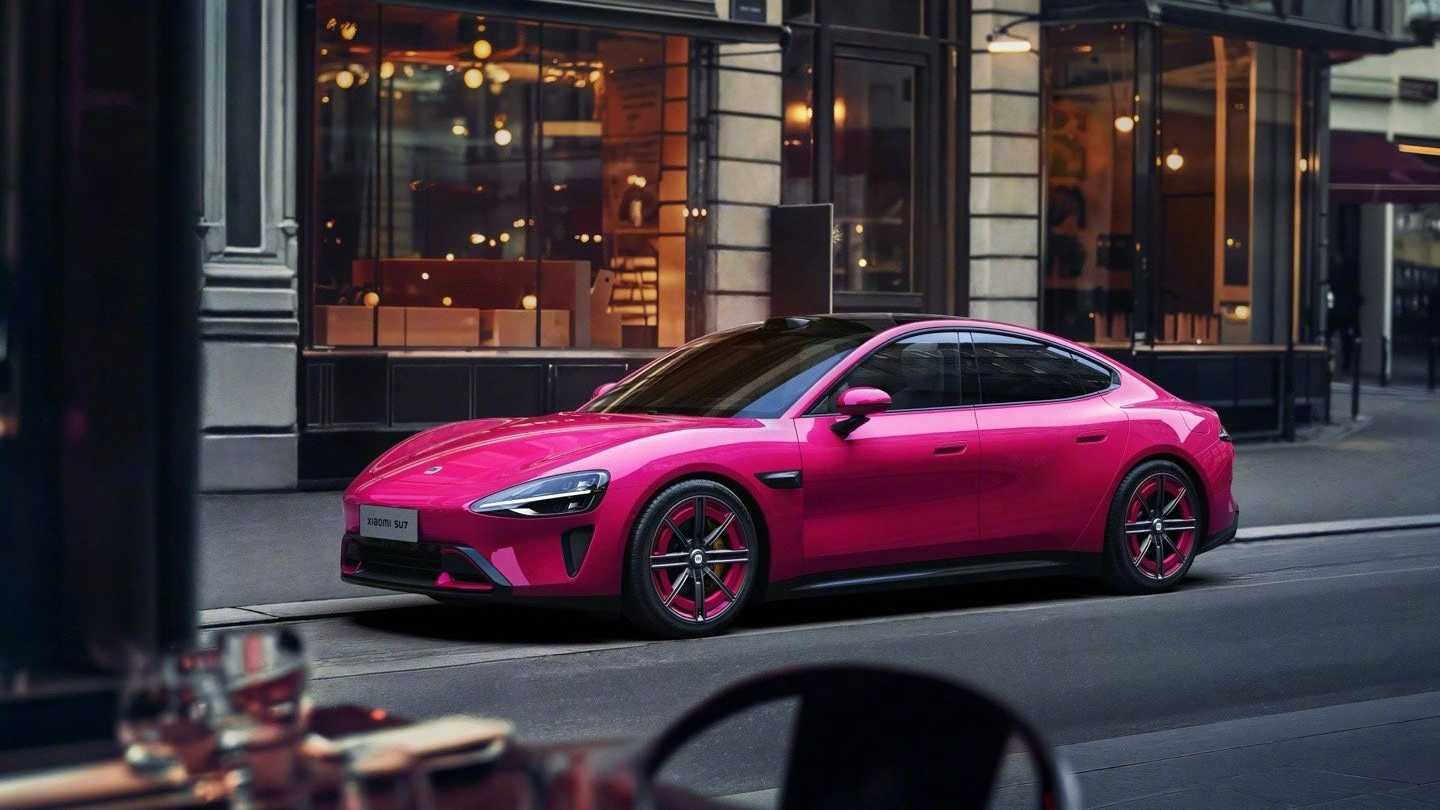
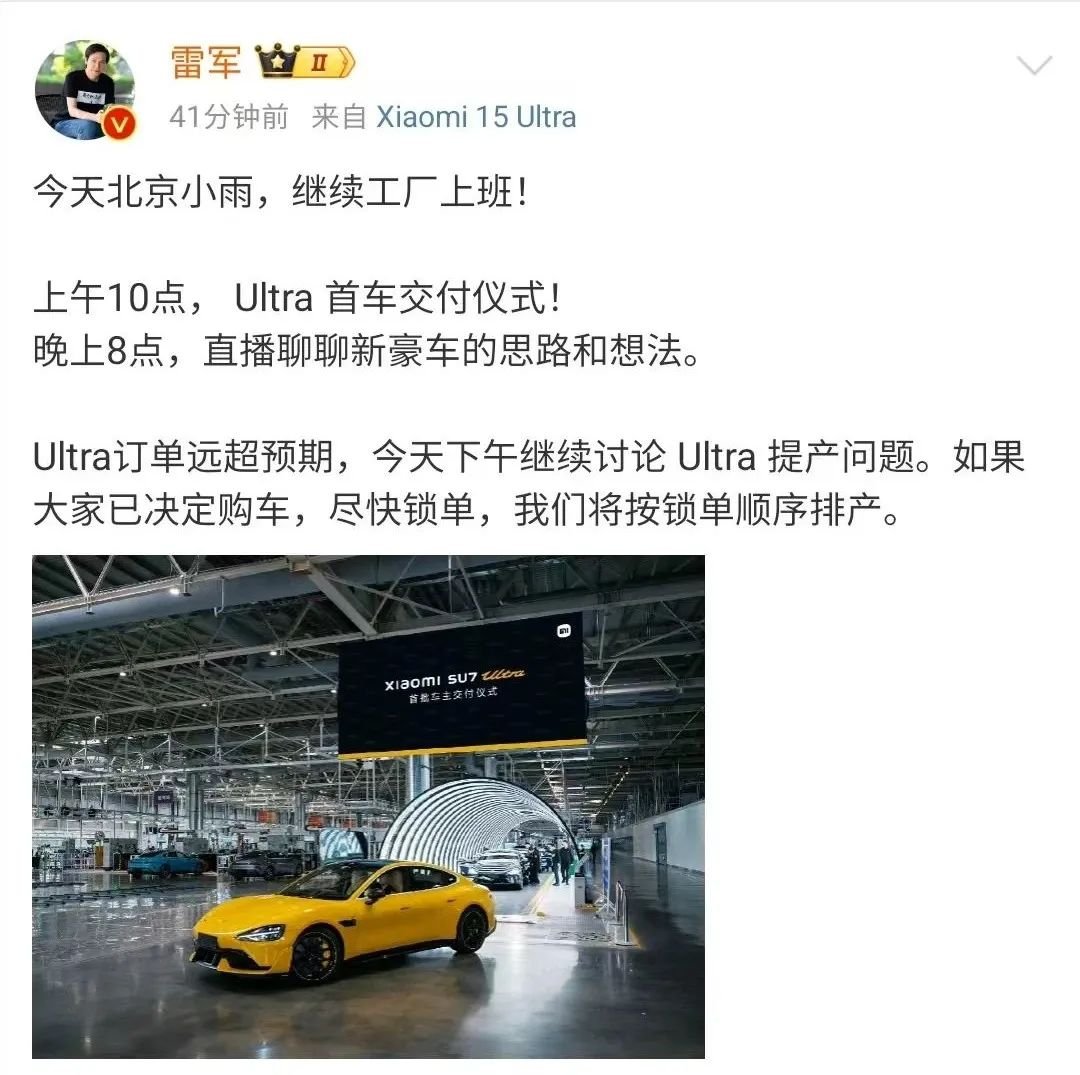
On March 2, Lei Jun, chairman and CEO of Xiaomi Group, said on Weibo: Ultra orders far exceeded expectations, and this afternoon we will continue discussing the issue of increasing Ultra production.
I. The "nuclear bomb effect" of the pricing strategy, the business logic from 810,000 to 520,000
On March 2, the Xiaomi Auto factory in Beijing Yizhuang was brightly lit, and robotic arms on the production line were operating at a high speed of 45 movements per minute. This scene formed a remarkable echo with the grandeur of the SU7 Ultra launch event 72 hours earlier: when Lei Jun announced the final price of 529,900 yuan, the applause that erupted on site almost blew the roof off the venue. This "price nuclear bomb," 285,000 yuan lower than the pre-sale price disclosed last year, instantly detonated the entire auto market.
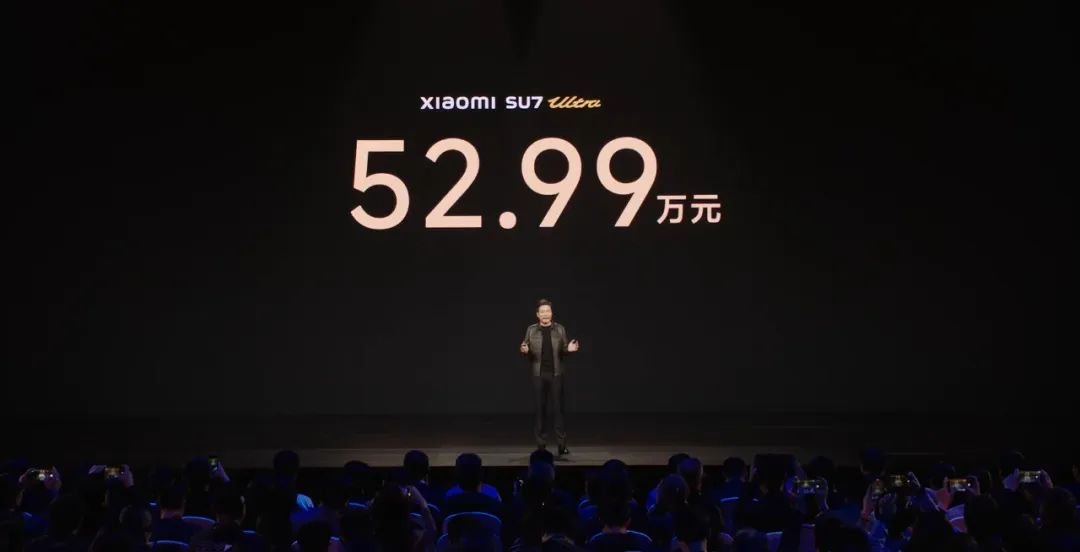
From a business strategy perspective, this pricing game can be called a textbook-level marketing case. Through a year-long process of "expectation management," Xiaomi first anchored market perceptions with a high-end positioning of 814,900 yuan, then achieved cost control through supply chain optimization and technological iteration, and ultimately cut the price in half. This "high opening, low closing" pricing strategy not only created a huge psychological gap but also cleverly dissolved consumers' doubts about the inflated pricing of new carmaking forces.
It is worth noting that the 529,900 yuan price precisely targets a blank zone in the mid-to-high-end electric vehicle market. Compared with the Tesla Model S (from 698,900 yuan) and NIO ET7 (from 428,000 yuan), the SU7 Ultra has built a unique value-for-money barrier with hardcore parameters such as 3-second-class 0-100 km/h acceleration, an 800V high-voltage platform, and 910 km range. This combination punch of "technology flagship + approachable pricing" directly pierced the pricing system of traditional luxury brands.
II. The "supernova explosion" of market reaction, the consumer code behind phenomenal data
6,900 units in 10 minutes after sales opened, more than 10,000 in 2 hours, and 15,000 firm orders in 28 hours—behind these numbers lies a deep transformation in China's new energy vehicle market. According to data from the China Passenger Car Association, the total size of the new energy vehicle market above 500,000 yuan in 2023 was about 128,000 units, while the first-day order volume of the SU7 Ultra alone accounted for 12% of the entire year's share in that segment. Such explosive power is rare in the history of the automotive industry.
The deeper consumer code lies in the synergy of the Xiaomi ecosystem. Data from the first batch of orders show that more than 68% of reservation users are Xiaomi phone users, and 43% already own at least 5 Xiaomi smart home devices. This ecological closed loop of "phone-home-car" is reshaping consumers' standards for value judgment. When the in-car system can seamlessly control home air conditioning, and when the phone NFC key replaces the traditional car key, what users buy is no longer just a means of transportation, but a complete mobile smart ecosystem.
III. The "extreme challenge" of ramping up production, the revolution from PPT carmaking to ready-car delivery
The promise of "delivery upon launch" pushed Xiaomi onto the real battlefield. Traditional automakers take an average of 6-9 months from launch to delivery, while the SU7 Ultra took only 72 hours from unveiling to first deliveries. Behind this "lightning delivery" is Xiaomi's deep restructuring of the supply chain: standardized production through the Kirin battery pack jointly developed with CATL, a shortened assembly process using Bosch's integrated electric drive system, and a self-built mold factory that raised parts commonality to 76%.
But production pressure still looms. Based on the current 15,000 orders, Xiaomi needs to roll 166 vehicles off the line per day on average to achieve quarterly delivery. Compared with the speed of Tesla's Shanghai Gigafactory, which rolls one car off the line every 45 seconds, Xiaomi's production efficiency still has room for improvement. The emergency production meeting Lei Jun convened on March 2 may push the production line from a two-shift system to a 24-hour "three-shift" operation, which will be a severe test for the quality control system.
IV. The "plate movement" of the industrial landscape, the law of the jungle in the New Forces 2.0 era
The dramatic emergence of the SU7 Ultra marks the entry of New Forces competition into the 2.0 era. While traditional automakers are still struggling with the electric transformation, technology companies have already entered the battlefield with ecosystem advantages. Xiaomi's entry strategy has typical internet characteristics: opening the market with negative hardware margins and achieving long-term profitability through software services and ecosystem returns. This model constitutes a dimensional strike against traditional automakers that rely on per-vehicle profits.
Market reaction has verified the irreversibility of this trend. The day after the SU7 Ultra launch, a German luxury brand urgently convened a dealer meeting to discuss targeted promotional policies; another New Forces brand adjusted the configuration list of an upcoming model overnight. This "catfish effect" triggered by Xiaomi is accelerating the value reconstruction of the entire industry.
V. The "three gates" of the future battle, cold thinking after the carnival
After the first wave of delivery enthusiasm subsides, Xiaomi Auto still needs to pass through three tests. The first is quality. J.D. Power data show that the average first-year failure rate of New Forces brands is 2.3 times that of traditional automakers. The second is service, requiring the establishment of an after-sales network covering 200 cities nationwide within 3 months. The last is continuous innovation. With CATL announcing that mass production of solid-state batteries is imminent, the speed of technological iteration will determine market discourse power.
More challenging is the evolution of the business model. Xiaomi's financial report shows that the gross margin of internet services reached 74.1% in 2023, while the current gross margin of the auto business is only 8.3%. How to successfully transplant the internet playbook of the phone business into the auto sector and build a profit triangle of "hardware + software + services" will be key to determining the success or failure of this carmaking campaign.
Conclusion: The coming-of-age ceremony of the disruptor
Standing before the floor-to-ceiling window on the top floor of Beijing's Xiaomi Technology Park, one can clearly see the lights of the Yizhuang factory burning day and night. This halo not only illuminates the delivery road of the SU7 Ultra, but also reflects the upgrading journey of China's manufacturing industry. From phones to cars, from products to ecosystems, Xiaomi is completing its transformation from follower to rule-maker. This pricing revolution reveals not only business wisdom, but also China's determination to break through the value ceiling with intelligent manufacturing. When the 529,900 yuan SU7 Ultra rolls off the production line, what we see is not just an electric vehicle, but the arrival of a new industrial era.