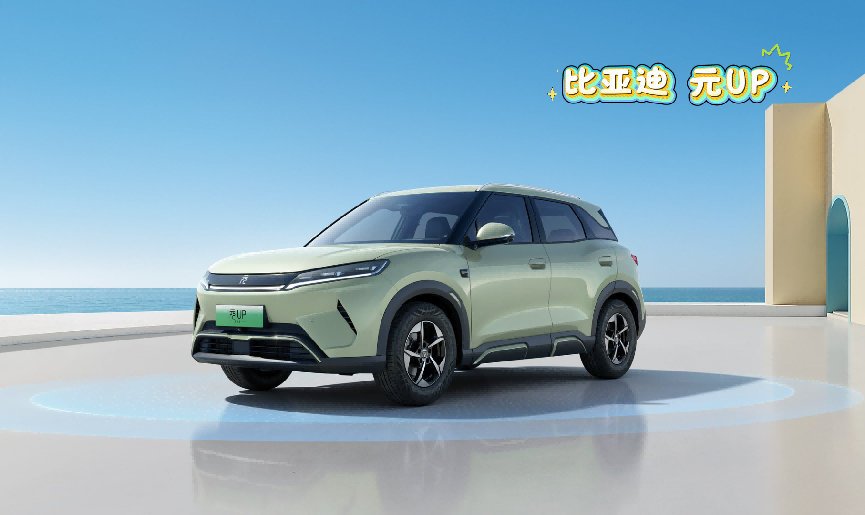
When a car budget of around 120,000 yuan is placed in front of you, the choices in the pure electric SUV market may seem abundant but are in fact full of trade-offs. On one side is the BYD Yuan UP, which has been deeply engaged in the new energy field for many years; on the other is the Dongfeng Yipai Nammi 06, which arrives with "central enterprise quality + all-around configuration." This same-class contest has long gone beyond a simple comparison of parameters and become a reconstruction of value around users' real car-use needs. Today our protagonists are the Dongfeng Yipai Nammi 06 471Ultra version and the BYD Yuan UP Smart Driving version 401KM Beyond型. Their official guide prices are 119,900 yuan and 119,800 yuan respectively. So in the three core dimensions that users care about most—range and charging, practical space, and intelligent driving—what exactly are their differences?

Range and charging: a "double buff" boost that bids farewell to anxiety
The core competitiveness of pure electric models has always revolved around real range and charging efficiency. In this dimension, the gap between the Nammi 06 and the Yuan UP already begins to appear on the official specification sheet. The Nammi 06 471Ultra version is equipped with a large 51.87kWh battery, with a CLTC range of 471km, while the Yuan UP Smart Driving version 401KM Beyond型 has a battery capacity of 45.12kWh and a range fixed at 401km. In terms of range, the Nammi 06 is clearly slightly superior.

In daily commuting scenarios, if a user's daily round trip is 40km, the Nammi 06 can easily achieve "one charge per week," with no need to frequently look for charging piles; for light outdoor trips on weekends, the Nammi 06's remaining range gives users even more confidence—from urban Beijing to Miyun Reservoir (about 120km one way), after the round trip there is still more than 200km of remaining charge, enough to handle temporary needs such as shopping and dining on the way back. Thanks to Dongfeng's solid calibration of its three-electric technology, the Nammi 06's measured range achievement rate is very stable, thoroughly bidding farewell to "range anxiety."
In terms of charging efficiency, the Nammi 06's 3C super fast charging technology can be called "in a league of its own" in its class. Its class-exclusive 3C fast-charging CTP direct-cooling battery pack has a peak charging power of up to 154kW. At room temperature, charging from 30% to 80% SOC takes only 18 minutes, and 5 minutes can add 114km of range. This means that in the time it takes a user to drink a cup of coffee at a service area, the vehicle can be replenished with enough electricity to travel more than a hundred kilometers; while the Yuan UP takes 0.5 hours to charge from 30% to 80%, so there is a certain gap in charging efficiency.
Space design: "space magic" within A0-class dimensions
In the field of automotive design, "size ≠ space" has long been a consensus, but there are very few models that can truly maximize space within limited dimensions. The space showdown between the Nammi 06 and the Yuan UP precisely confirms this view. In terms of body dimensions, the Yuan UP has a slight advantage in vehicle length (4310mm) and height (1675mm), while the Nammi 06 shows stronger strength in vehicle width (1868mm) and wheelbase (2715mm). In particular, the 2715mm wheelbase not only far exceeds the Yuan UP's 2620mm, but also directly places it in the compact SUV ranks, laying a solid foundation for space optimization.
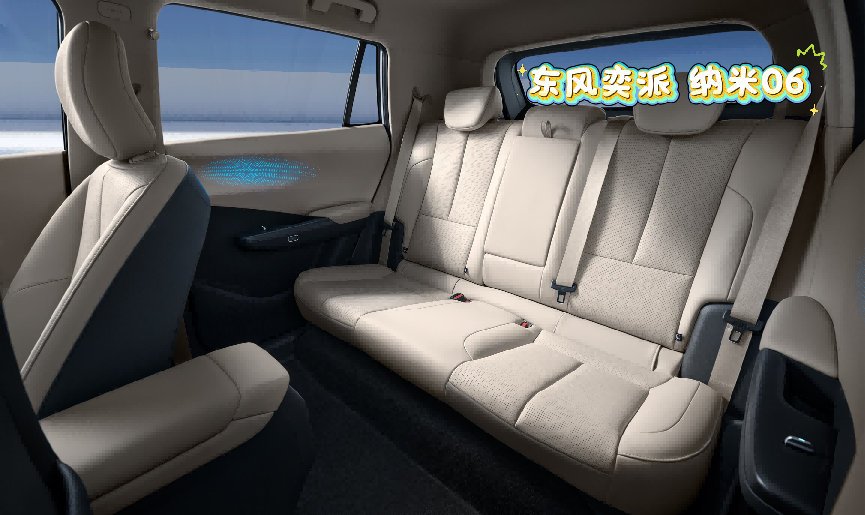
Once inside the car, this wheelbase advantage translates into a visible improvement in the riding experience. In actual testing, the Nammi 06 has more rear legroom. Even after a passenger 180cm tall sits down, there is still more than two fists of distance between the knees and the back of the front seat, completely avoiding a "curled-up sitting posture." In terms of headroom, thanks to a reasonable roof arc design and a 1.2㎡ panoramic sunroof, the Nammi 06 further enhances the cabin's sense of openness and effectively alleviates any feeling of oppression. With this comparison, taller passengers should prefer the Nammi 06's sense of openness.
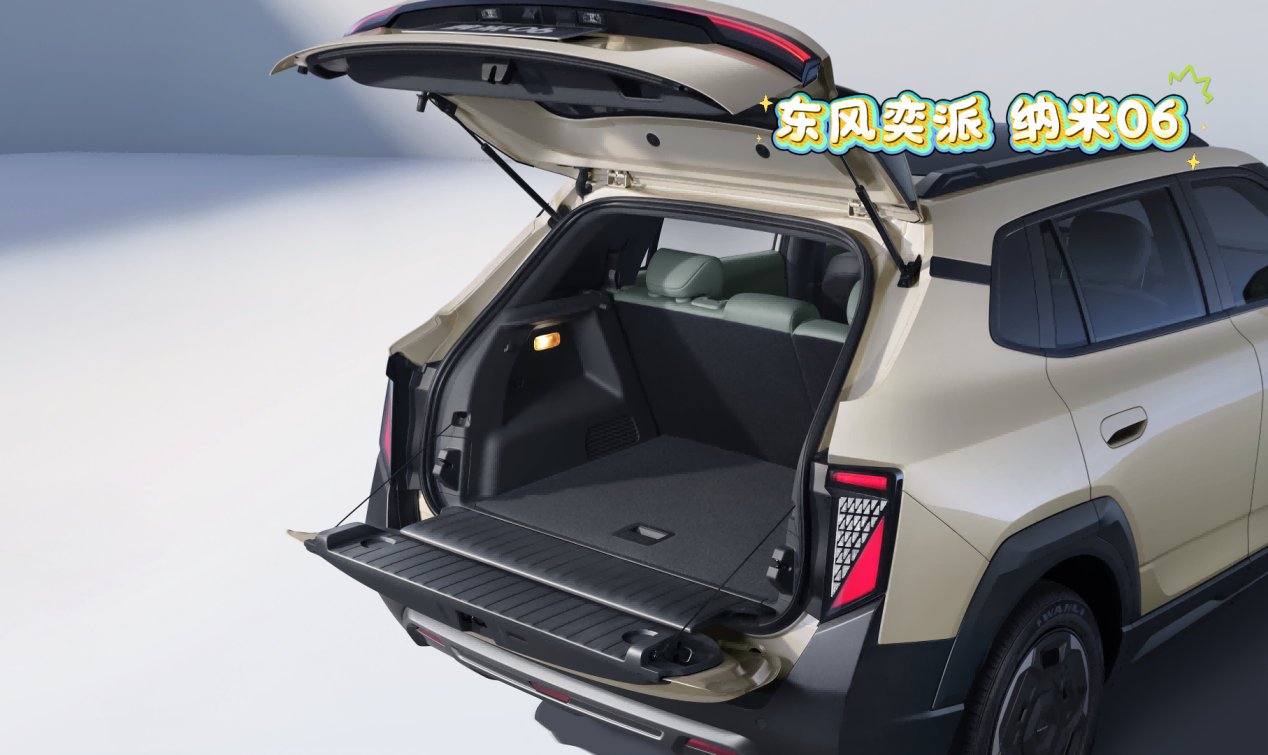
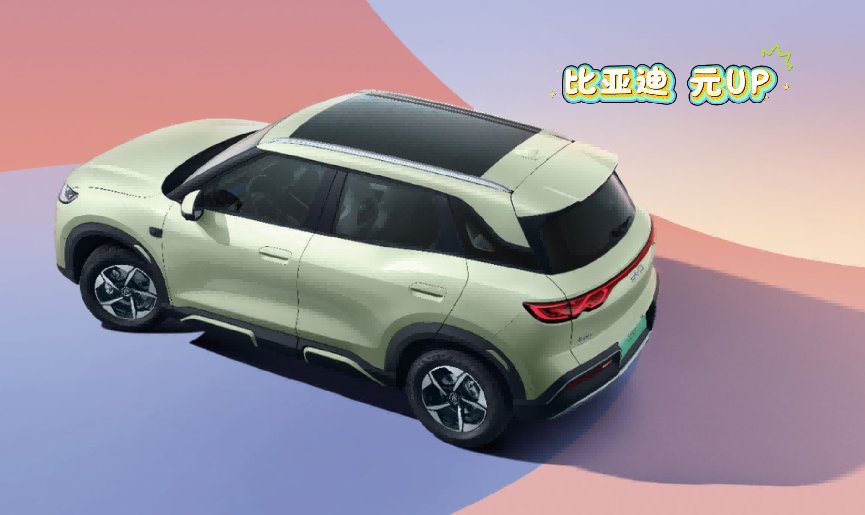
In terms of storage capability, the Nammi 06's "sky and earth doors" design can be called a model of same-class innovation. It adopts an upper-lower split opening; the lower door can bear 300kg and, once opened, can serve as a temporary seat or storage platform—when camping, with the lower door lowered and paired with a picnic mat, it instantly becomes an "outdoor living room"; when carrying large items, the lower door can serve as support, making it convenient for users to slide items into the trunk. In addition, the Nammi 06's rear seats support 4/6 split folding, and after folding, the trunk can easily accommodate large items such as strollers, suitcases, and camping gear; the Yuan UP also supports rear seat folding, but its tailgate opens in the traditional way. Which one do you prefer?

In terms of detail design, the Nammi 06's 35 customized storage spaces push "pragmatism" to the extreme. There is a hidden storage compartment on the left side of the steering wheel for a vehicle registration certificate and driver's license; the central armrest box is 15cm deep and can hold a 6.7-inch phone, power bank, sunglasses, and other items; the rear seatbacks are equipped with cup holders and storage bags, making it convenient for passengers to place water cups and magazines. These thoughtful designs allow every personal item to find its own dedicated place, thoroughly bidding farewell to in-car clutter.
Intelligent driving: the real proposition of "smart driving equality" at the 110,000-yuan level
At a time when intelligent driving has become a core competitiveness of the auto market, "smart driving equality" has gradually become a focus of consumer attention. But true "equality" should not be simply piling up functions; rather, it should let users truly feel the convenience and safety of intelligent driving in daily car use. What contest do the Nammi 06 and Yuan UP have in the field of intelligent driving?
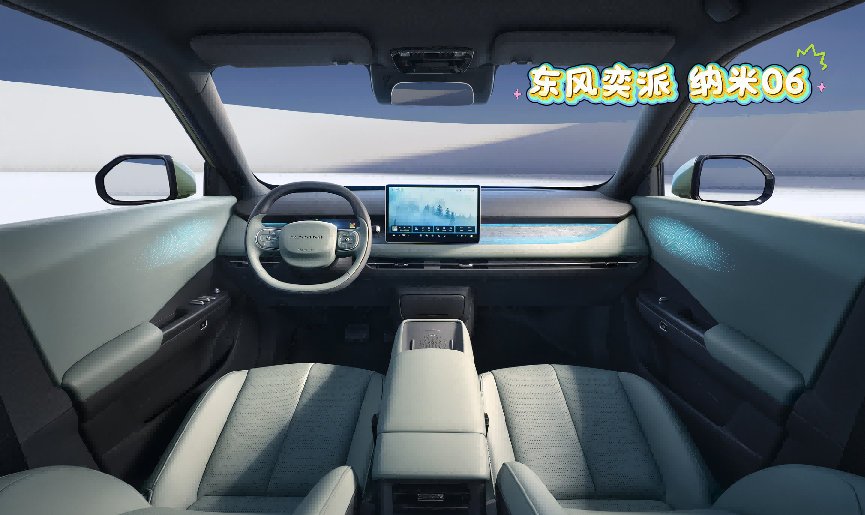
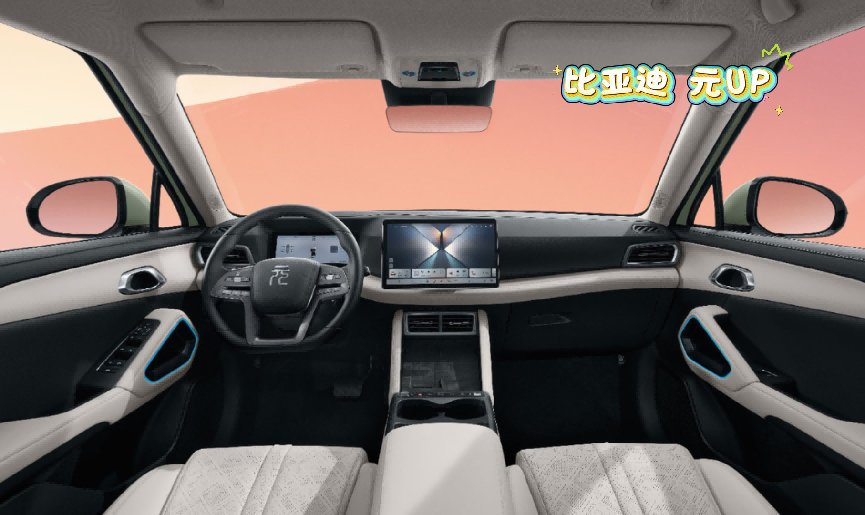
From the perspective of hardware configuration, the Nammi 06 471Ultra version is equipped with the Tianyuan Smart Driving T100 system and a Qualcomm Snapdragon 8155 chip, which can easily handle multitasking and ensure smooth operation of intelligent driving functions; the Yuan UP Smart Driving version is equipped with the DiPilot 100 system and uses the DLINK D100 chip.
In terms of functional coverage, the Nammi 06's intelligent driving system can be called "full-scenario coverage." Its highway navigation NOA function does not rely on high-precision maps and can be used on roads nationwide. It can realize functions such as intelligent on- and off-ramps, optimal lane selection, and passage through large-curvature curves, with a success rate of more than 99% for entering and exiting ramps; the Yuan UP also has highway navigation functions, supporting basic functions such as lane keeping and adaptive cruise.
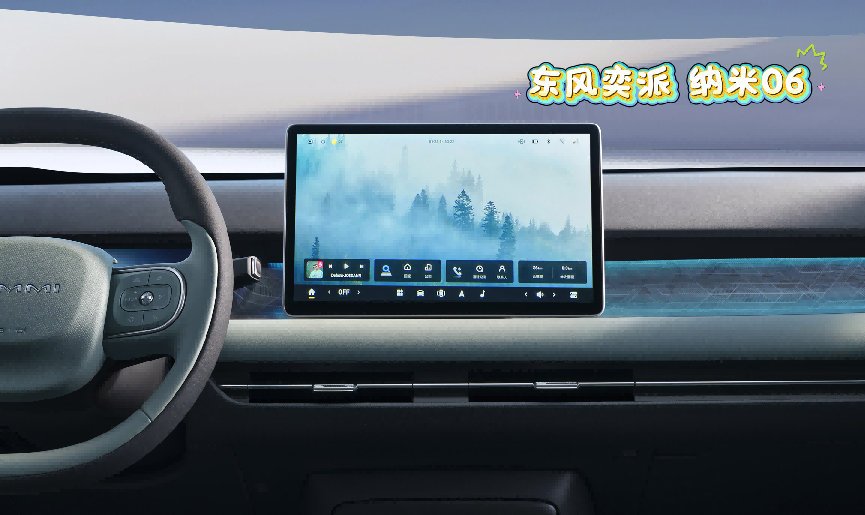
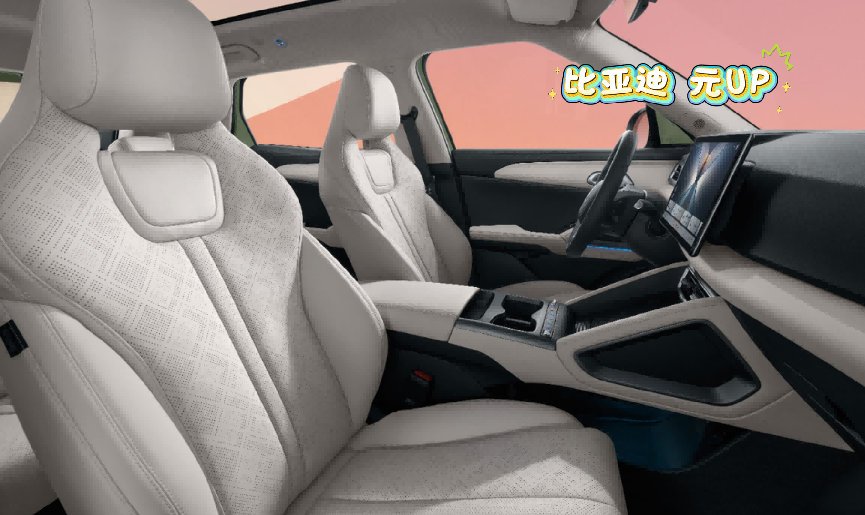
More notably, the city memory navigation assist (MOD) function carried by the Nammi 06 can be called "one of a kind" in its class. This function does not require high-precision map support. After the user drives the vehicle and learns a route once, the system can memorize the route, and on subsequent drives it can achieve point-to-point assisted driving, memorizing up to 10 routes within 150 kilometers, fully meeting daily commuting needs. By contrast, the Yuan UP's intelligent driving functions are limited to highway scenarios.
In terms of parking assistance, the Nammi 06's cross-floor memory assisted parking function thoroughly solves the "parking difficulty" problem. This function can store up to 20 parking routes of 2 kilometers each. Whether it is a cross-floor route in a shopping mall underground parking lot or a complex parking space in a residential community, the Nammi 06 can easily handle it. In addition, the Nammi 06's 100m traceable reversing function can be called a "savior" in narrow alleys or dead ends. The vehicle can reverse along the memorized path, thoroughly bidding farewell to the trouble of "difficult reversing."
Conclusion: the "optimal solution" at 119,900 yuan, beyond just parameters
When we step outside the specification sheet and start from users' real car-use scenarios, it is not difficult to find that the Nammi 06's advantages go far beyond the three major dimensions of range, space, and intelligent driving. Its 256-color ambient lighting can change colors according to the rhythm of music and, together with diverse interactive sound external playback functions, makes every trip full of ceremony; the zero-pressure breathing seats use high-density foam material and breathable fabric, allowing comfort even on long journeys; library-level NVH quietness keeps in-car noise within 55dB, so whether it is an online meeting or a nap, it will not be disturbed by outside noise.

More noteworthy is that Dongfeng Yipai, as a "central enterprise national team," provides solid quality endorsement for the Nammi 06. Its body adopts an ultra-high-strength steel cage structure, and the tensile strength of the front bulkhead crossbeam exceeds 1500 MPa. Together with fourfold battery safety protection, it builds a "mobile safety fortress" for users; the September limited-time car purchase benefits are even more sincere—five lifetime free quality guarantees worth 6,800 yuan and user benefits worth up to 13,000 yuan, giving users no worries when buying a car.
In the 119,900-yuan-class pure electric SUV market, the BYD Yuan UP has brand accumulation and, in terms of core product strength, does have certain advantages, but compared with the comprehensive offering of the Dongfeng Yipai Nammi 06, there is still a certain gap; in this same-class duel, which one would you prefer?


