1. First look at the price: clearly aimed at "involution"
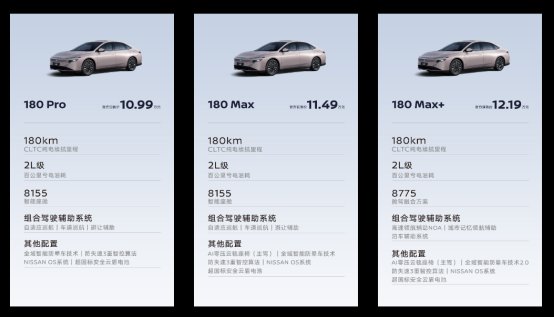
Overview of pre-sale & benefit prices:
180 Pro: pre-sale price 10.99 million yuan, pre-sale benefit price 10.69 million yuan
180 Max: pre-sale price 11.49 million yuan, pre-sale benefit price 11.19 million yuan
180 Max+: pre-sale price 12.19 million yuan
Then add:
Cross-year purchase tax subsidy
A reservation gift where a 3,999 yuan deposit offsets 6,999 yuan of the vehicle price
Purchase benefits such as compensation for self-ignition
What does that equal?
—Using the budget of a traditional fuel A-segment family sedan, you can directly reach a joint-venture brand plug-in hybrid sedan, and one at the level of 180 km pure electric range + 21.1 kWh large battery.
If the subsequent official guide price does not "reverse," then at the price level the N6 has already laid its cards on the table:
"I'm not talking nostalgia with you, I'm here to fight for orders for real."
2. Design and dimensions: a "plug-in hybrid version" from the same source as N7, with truly substantial dimensions
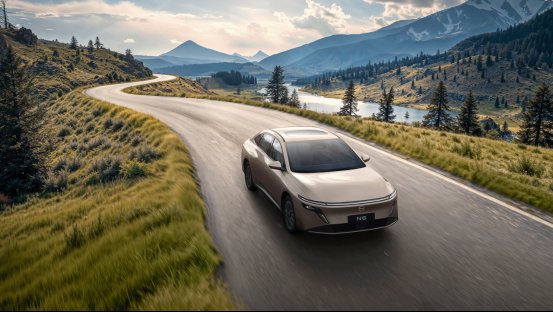
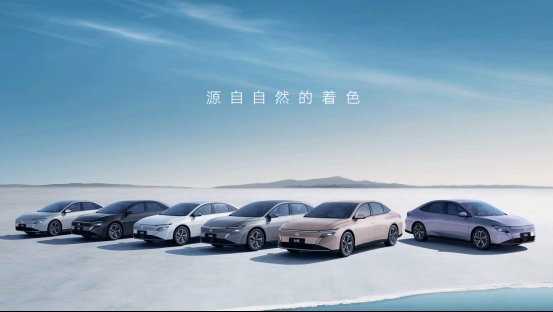
In terms of exterior, the N6 continues Nissan's latest family design language:
Front face:
An upper through-type LED light strip
A lower polyline-style main headlight, forming a split lighting cluster
The badge is still embedded in the middle of the front bumper, with a bit of a concept-car feel
This treatment has an obvious "kinship" with the N7, but because the N6 is a sedan + fastback, its overall presence is lower and more youthful and sporty.
Body dimensions:
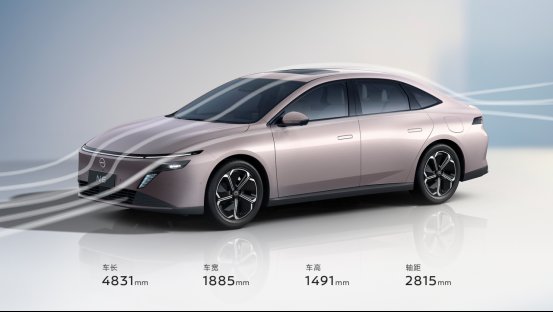
Length/width/height: 4831×1885×1491/1494 mm
Wheelbase: 2815 mm
Among compact/entry-level mid-size sedans, these figures belong to the category of "punching above its class":
Vehicle length and width are already close to many mid-size cars
With a 2815 mm wheelbase, there is confidence in rear legroom and overall longitudinal passenger space
Combined with the fastback short rear and hidden electric door handles, the visual center of gravity is further back, and the stance is quite crisp
In one sentence:
The dimensions are truly on the larger side for a "compact," but the price is a standard 100,000-yuan-class family sedan price.
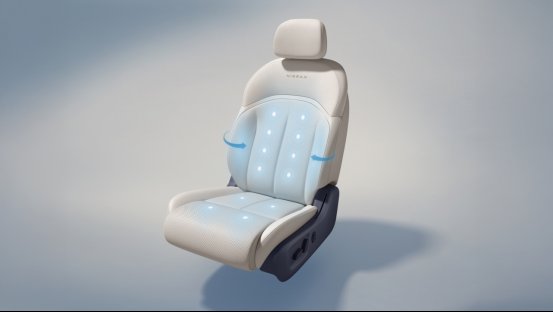
3. Interior and equipment: atmosphere, details, and "friendliness to phone addicts"
The keywords for the N6's cabin design can probably be summed up in three words: wrap-around, atmosphere, phone-friendly.
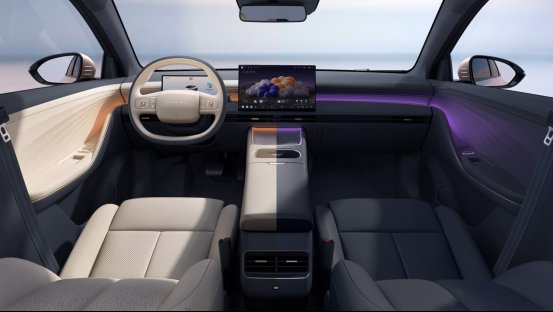
1. Wrap-around cockpit + dual-screen layout
360-degree wrap-around cockpit design
Floating central control screen + LCD instrument panel
Column-shifter gear change mechanism, freeing up space in the central tunnel
Two interior color schemes are available, light and dark; the light version's steering wheel is wrapped in two-tone leather, looking quite premium
The overall style is not the "minimalist tech overload" route, but rather more comfort + family use + a bit of youthfulness, in line with Nissan's traditional tone.
2. Atmosphere: 256-color light waterfall ambient lighting
256-color light waterfall ambient lighting
Paired with the wrap-around layout, the nighttime sense of ceremony will be quite strong
For daily commuting + weekend family use, this experience of "the car lights up and immediately feels atmospheric" is something many users genuinely care about
3. Very friendly to phone users
This point is worth calling out separately:
A reserved phone holder expansion port on the center console
A ventilated wireless phone charging panel on the lower center console
Behind it are cup holders + central armrest box, with a convenient layout
Many people nowadays are highly coupled with their phones for navigation, music, and using the car system. This set of details in the N6 is essentially saying:
"I know you can't live without your phone, so I'll just make the phone's 'place' comfortable for you."
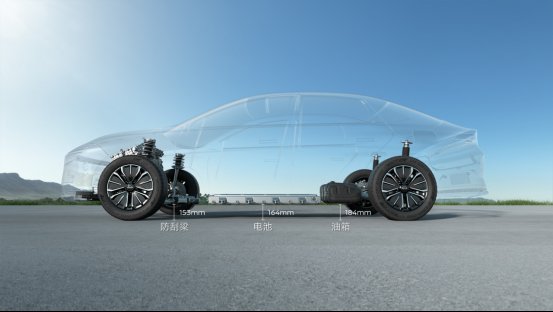
4. Powertrain: 180 km pure electric + 1.5L plug-in hybrid, the key is "standard across the lineup"
The most core product point is actually just one sentence:
Standard across the lineup: 180 km pure electric range + 21.1 kWh large battery + plug-in hybrid system.
Specifically: Engine model: NR15 1.5L engine maximum power: 75 kW
Motor drive motor maximum power: 155 kW
Battery & range: Battery capacity: 21.1 kWh, one of the largest in its class; standard across the lineup 180 km pure electric range (official data)
Energy consumption: Fuel consumption at low battery as low as 2.79L/100km (official data)
What is the practical significance of this combination?
Urban commuting can basically be driven as a "pure electric car"
With 180 km of pure electric range, even at a 10% or 20% discount, most people only need to charge once or twice a week for daily commuting
No range anxiety on long trips during holidays
With low-battery fuel consumption of 2.79L/100km, a full tank, and combined pure electric + fuel range, the theoretical range is very considerable
The whole lineup uses the same battery + range specification
No need to struggle between "short range/long range"
Configuration differences are mainly reflected in comfort/intelligent features, making the choice logic simpler
For many family users with limited budgets who want to experience electric drive but are also afraid that "pure electric is inconvenient," this kind of **"one car doing two jobs"** plug-in hybrid solution is indeed a very pragmatic choice.
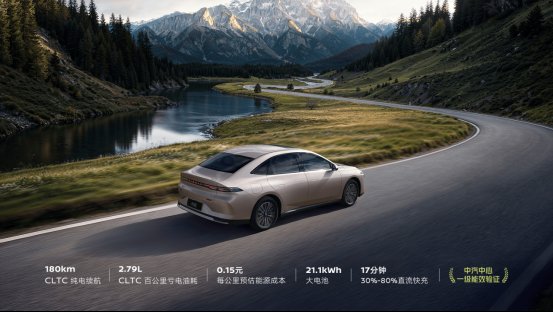
5. Its relationship with its own N7: is it really a "plug-in hybrid version of N7"?
Officially, the N6 is a "plug-in hybrid version of N7" sharing technology with the N7, which can be understood as:
Same design language: the front face, taillights, and fastback short-tail style are highly consistent
Same architecture: both belong to the Tianyan architecture system, with inheritance in the underlying platform, electrical/electronic systems, and cabin/intelligent driving logic
Positioning offset:
N7: leans toward a pure electric/intelligent image, more toward the role of "new energy flagship + image car"
N6: positioned as a plug-in hybrid family sedan, with a noticeably lower price threshold, focused on volume sales
For the brand, the N7 is responsible for "building image and elevating tone," while the N6 is responsible for "laying out sales and expanding the user base." The two cars form a combination punch from pure electric to plug-in hybrid.
6. Who will it put pressure on?
Although you didn't directly mention competitors, from the price + specifications, we can roughly predict:
Joint-venture fuel family sedans in the 100,000-130,000 yuan price range
A large group of traditional family sedans such as Sylphy, Lavida, and Excelle
What the N6 offers is "similar money + a more advanced power form + longer pure electric range"
Some entry-level Chinese-brand plug-in hybrid sedans
Independent-brand plug-in hybrids are still very aggressive in power specifications and stacked configurations
But for some users who trust joint-venture quality and after-sales systems more, the N6 will be a more "psychologically reassuring" option
Of course, in terms of intelligence, car system ecosystem, and driver assistance, independent brands may still be more aggressive. If the N6 wants to truly "win fans," it still depends on the specific configurations announced at the official launch, such as:
Car system smoothness and ecosystem
Coverage of intelligent driving assistance functions
OTA cadence, etc.
7. Who are the users worth waiting for?
Based on the information you currently have, I'll help you roughly divide into several categories of **people who "can pay close attention to the N6"**:
Family users with a budget of 110,000-130,000 yuan who originally planned to buy joint-venture family sedans like Sylphy/Lavida
Now they can seriously add the N6 to their comparison list
The question changes from "which fuel car to buy" to "whether to go straight to a plug-in hybrid in one step"
Families who mainly commute in the city but really do need to drive long distances during holidays
Use it almost as a pure electric car for commuting
Use it as an energy-saving fuel car for trips to their hometown or cross-city self-driving
People who have requirements for brand reliability and after-sales service locations, but also want to experience electric drive
Do not want to bet entirely on certain new forces or niche brands
Want to find a "steadier, more mature" solution
Users who have already paid attention to the Nissan N7 but feel pure electric is not very convenient and whose budget is limited
The N6 is a more realistic, lower-threshold "Plan B"


