When it comes to hybrids, many people are actually already a bit "tired of watching."
The specs keep getting higher, launches keep getting more frequent, but the question that really matters to users hasn't changed: for daily driving, does it actually save fuel? ⟦4⟦
This time, the answer given by Changan Blue Whale Super Hybrid is not specs, but real-world testing.

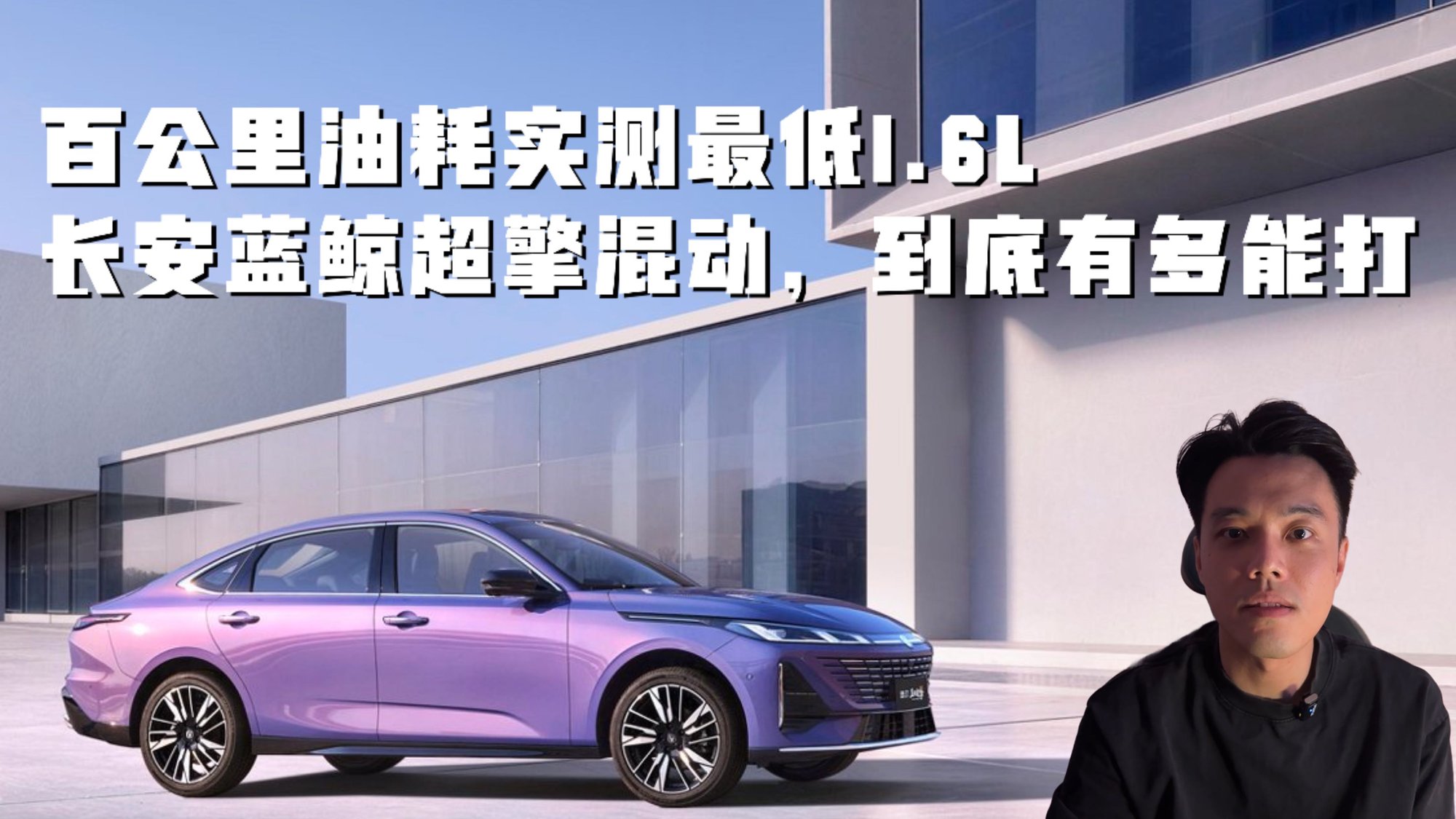
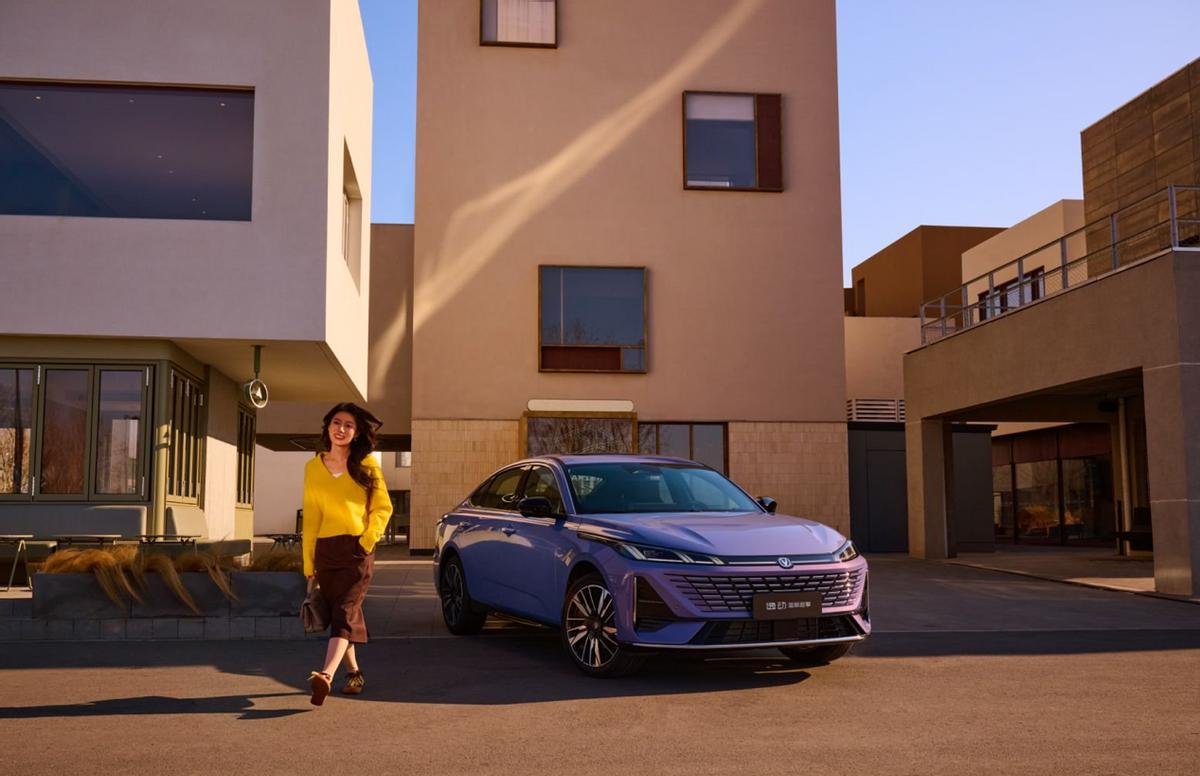
In a recent round of dynamic tests by media and users, the fourth-generation Eado Blue Whale Super Hybrid and the fourth-generation CS75PLUS Blue Whale Super Hybrid achieved a very striking figure under urban driving conditions—as low as 1.6L/100km. The official fuel consumption figures previously given for these two cars were 2.98L/100km for the sedan and 3.98L/100km for the SUV.
The focus of this real-world test is not just "low," but—the real-world result is even lower than the official rating.

Moreover, these were not laboratory conditions, but real commuting conditions: traffic jams, traffic lights, frequent stop-and-go. This point is actually more important than the numbers themselves. Because it directly shows one thing: the fuel consumption of this hybrid system is not "manufactured," but "driven."
To put it plainly, many people today choose hybrids with the wrong approach.
The three most common misconceptions:
First, only looking at official fuel consumption.
Second, only looking at peak thermal efficiency.
Third, only listening to specs mentioned at launch events.
But what truly determines your monthly fuel bill has never been these "best-looking moments," but those dozens of kilometers you drive to and from work every day.
If a car can only be very efficient under some ideal condition, then for most people, it actually does not mean much.
What is truly valuable is—saving fuel most of the time.
The Blue Whale Super Hybrid system is essentially solving this problem.
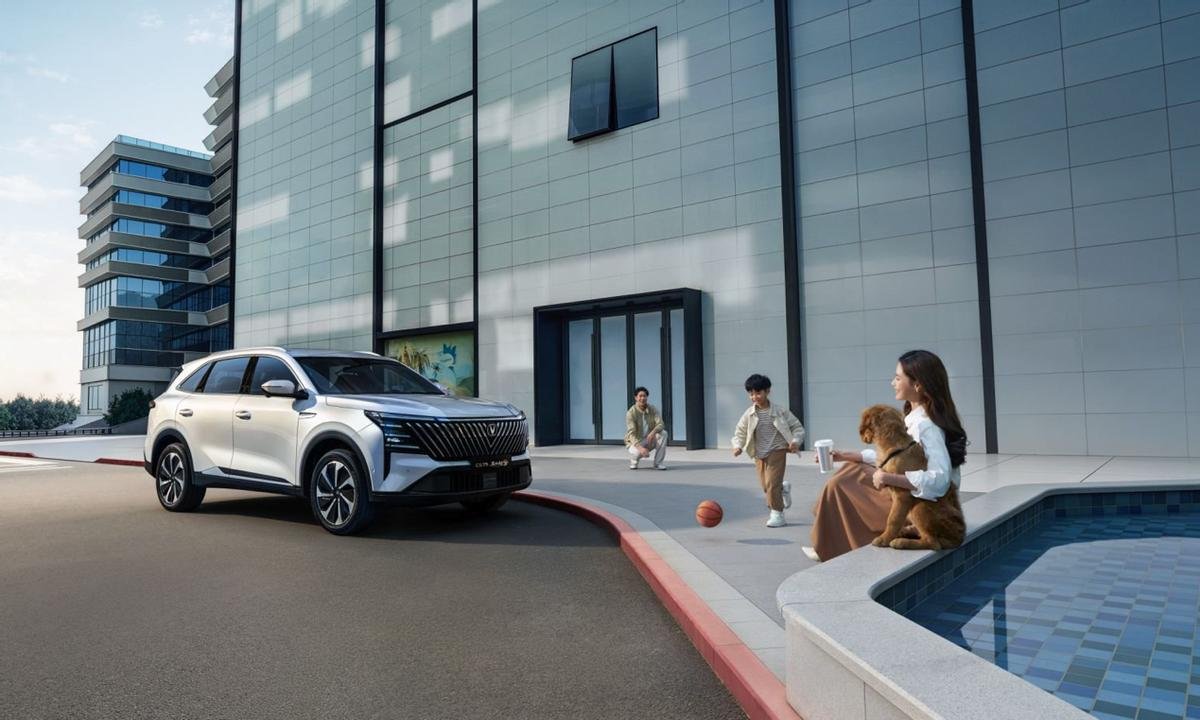
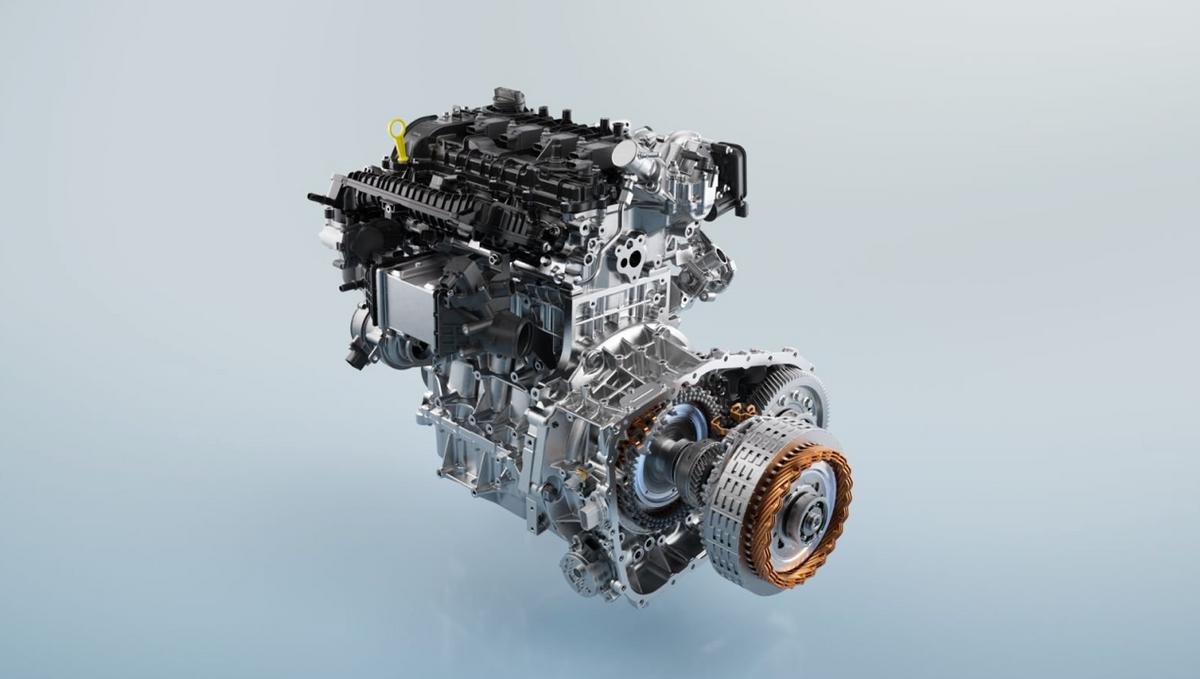
First, look at the basic capabilities. Taking the fourth-generation CS75PLUS as an example, it uses a 500Bar ultra-high-pressure direct-injection hybrid engine. To put it simply, it atomizes the fuel more finely and burns it more fully. Combined with a thermal efficiency approaching 45%, and the ability to stay in the high-efficiency range more than half the time, the characteristic of this powertrain is not "being very strong at a certain moment," but "being consistently efficient over the long term."
But if it only got this far, that actually would not be enough.
Because the biggest problem in city driving has never been "efficiency is not high," but—the operating conditions are too complex.
Stop-and-go, suddenly fast and suddenly slow—in this kind of environment, no matter how good the engine is, without a smart scheduling system, it is very difficult to truly bring out its efficiency.
The key to Blue Whale Super Hybrid is that it has an extra "brain"—Ai Cloud Intelligent Control.
You can understand it as an "invisible driver."
It will judge road conditions in advance. For example, if you are about to enter a congested section, it will first let the engine run in the high-efficiency range and store more electricity; when you actually get stuck, it will prioritize using electricity to move slowly and press fuel consumption down.
You can hardly perceive the whole process, but the result is—better fuel savings.
The official figure is that this set of algorithms can further reduce fuel consumption by 5% to 10%. On top of an already very low fuel consumption base, this improvement is actually not small.
What is more interesting is that this system is not only saving fuel, but also changing the driving experience.
With traditional hybrids, in many cases "the system is doing things, and the person has to adapt." But Blue Whale Super Hybrid starts to reverse this—letting the system adapt to the person.
For example, its acceleration closed-loop control is no longer simply "how much you press is how much you get," but automatically adjusts power according to road conditions and driving intent. You only need to press the accelerator normally, and it will help make acceleration smoother and more responsive.
On top of that, it can also learn your driving habits, and over time, the feel each person gets may even differ.
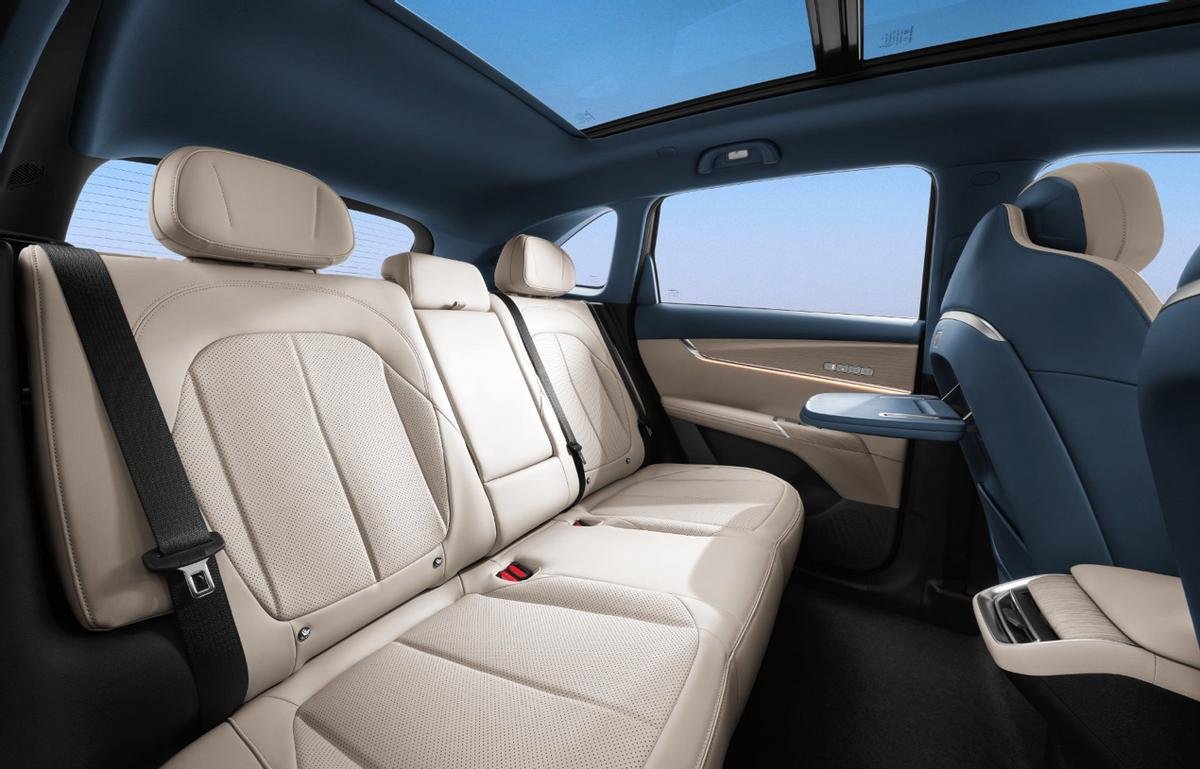
In terms of comfort, it has also made some fairly practical optimizations. For example, ANC active noise cancellation suppresses low-frequency noise; PSC imperceptible start-stop means there is no longer obvious vibration when the engine intervenes. These things may not usually be used as selling points, but when you drive every day, you will feel the difference very directly.
Putting these together, you will find one thing:
Blue Whale Super Hybrid is not pursuing some particularly extreme single metric, but doing something more "down-to-earth"—making a car continuously, stably save fuel, drive well, and stay quiet on real roads.
This is also why its real-world test results match the official figures, and can even be lower.
For people who are still struggling over whether to choose a gasoline car or an electric car, this type of hybrid actually provides a more realistic option: no need to change refueling habits, no need to consider charging conditions, but the cost of use is already approaching that of new energy vehicles.
In the end, with hybrids having developed to where they are today, the logic has already changed.
In the past, the comparison was about whose specs were higher; now the comparison is—whose product is closer to daily use.
And this time, Blue Whale Super Hybrid used a set of real-world test data to make this clear.