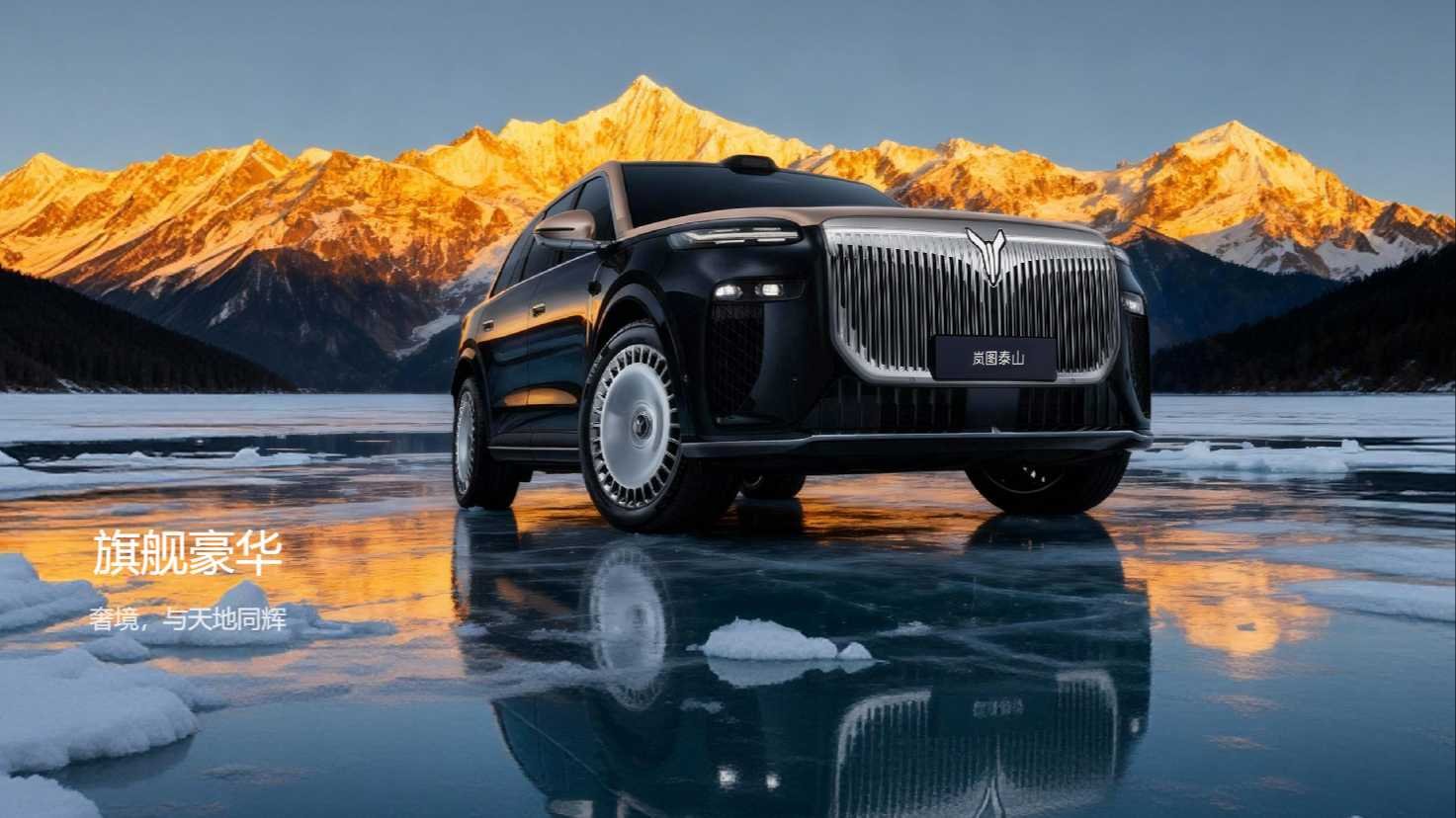
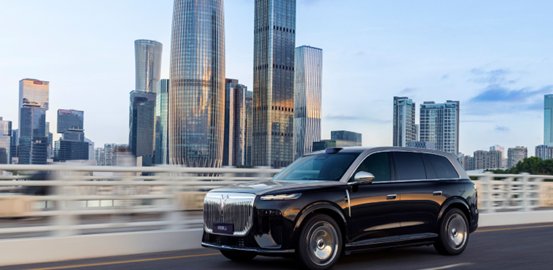
Naming this all-new flagship SUV "Taishan" is, to some extent, going against market logic.
In an era of new energy vehicles that emphasizes streamlined shapes, racetracks, and 0-100 km/h acceleration, it is not called "Windchaser" or "Lightchaser," but "Taishan"—a name that is steady, heavy, slow, and even slightly archaic.
But when you see its 5230mm body length, 3120mm wheelbase, 2+2+2 six-seat layout, combined with Huawei Qiankun ADS 4, HarmonyOS Cockpit 5.0, 800V plug-in hybrid, and tri-chamber air suspension, you will realize that what this car truly wants to answer is actually a very Chinese question:
—In an era of growing uncertainty, what exactly do we want to use to anchor the lives of ourselves and our families?
I. Name and Size: Why Do We Need a "Big Car"?
People who buy full-size SUVs often don't lack a car—they lack a sense of "certainty."
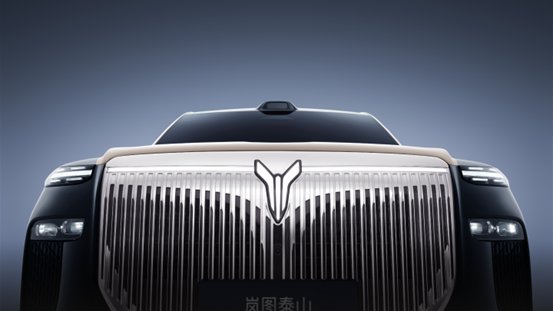
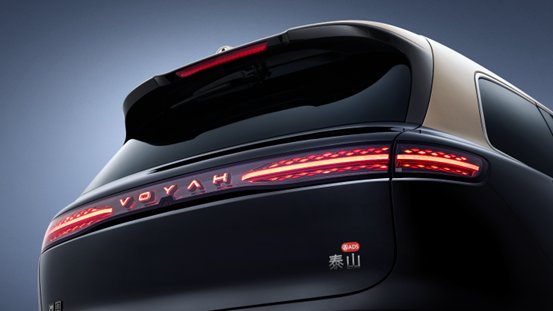
When you stand next to the Voyah Taishan, that visual "enormity" is not just about satisfying vanity—
5230mm body length, 2025mm body width, 3120mm wheelbase—behind these rational figures lies a very instinctive psychology: I want a "big enough" shell to block out those changes outside that I cannot control.
Homes are getting farther from city centers, the relationship between work and the city is becoming looser, children's education, parents' health, one's own career—all shrouded in a layer of fog.
With all these uncertainties, people instinctively want to grasp those few "visible certainties"—such as:
A decent school; A home that isn't too cramped; And a car that is big enough.A big car is like a mobile "household kit":
You know that no matter what happens outside, at least this car full of people, this car full of luggage and stories, can be packed in completely.
This is also where the name "Taishan" is subtle.
It does not emphasize "charging forward" and "breakthrough," but rather stability and dependability.
Just like many middle-aged people who say they want to "shake things up," but deep down know clearly: what they really want is "an order that won't easily collapse."
II. 2+2+2: Inside One Car, There Is a Chinese Family's Relationship Theory
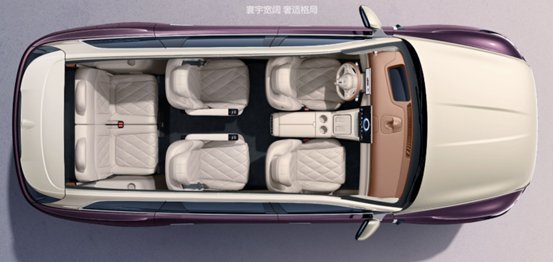
The Voyah Taishan adopts a 2+2+2 six-seat layout, with the second row being the typical "boss seats."
In the product manual, this is of course: catering to high-end business, enhancing the sense of prestige.
But placed in real life, it is more like concretizing the "relationship structure" of a Chinese family into a seating arrangement.
The first row is "responsibility":
The driver's seat is mostly occupied by Dad or Mom, who have to face roads, rules, schedules, and the price of gas and electricity.
The second row is "the protagonists":
Most of the time, these two seats are reserved for parents, elders, or that hard-working "boss";
During family trips, they are often given to the elderly, to those who most need to be taken care of.
The third row is "flexibility":
Sometimes for the kids, sometimes for relatives and friends, sometimes for suitcases and strollers, sometimes simply left empty.
The spatial layout of a car is actually a metaphor for **how a family arranges its "distance"**:
Too cramped, and people get irritated—before a word is even spoken, emotions flare up;
Too spacious, and intimacy easily fades into "polite distance."
Taishan uses large space, wide cushions, electric leg rests, massage and ventilation—these "piled-on features"—which appear to sell comfort, but actually help you solve a very delicate problem:
Can a family, within the same space, avoid oppressing each other while still keeping each other within sight?
When you sit in the second row, watching the people in front drive, listening to the kids in the third row making noise, you suddenly realize:
The truly impressive thing about "six seats" is not how many people it can hold, but rather—giving each person a measure of dignity, a measure of freedom.
III. Intelligence and Control: When Algorithms "Watch the Road" for You, Are You Still a Driver?
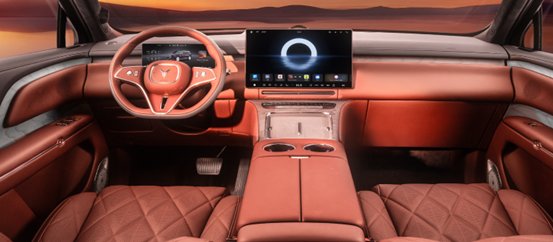
The Voyah Taishan is equipped with Huawei Qiankun ADS 4, advanced intelligent driving, urban navigation, four lidar sensors, HarmonyOS Cockpit 5.0...
These words in a promotional video are a stacking of technological feel;
In philosophy, they pose a sharper question:
When a car can "watch the road, judge, and execute" for you, should humans still hold onto their obsession with the steering wheel?
In the past, cars were "an extension of power":
You pressed the accelerator, held the steering wheel, and the car followed your will, becoming part of your body.
Now, cars are increasingly like an "independent intelligent agent":
It will use lidar and cameras to see dangers ahead earlier than you can; It will proactively brake, change lanes, and alert when you hesitate; It will even, when you're distracted, steadily pull the car over to the roadside for you.You slowly shift from an "operator" to a "supervisor,"
From "I am the protagonist" to "I am just someone who sets boundaries for the decision-making system."
This is very safe, and very efficient.
But it also forces one to think: how much "judgment authority" are we willing to hand over to an invisible brain?
When the kids are watching the ceiling screen in the back, your partner is scrolling on their phone, and you activate advanced intelligent driving, letting the car automatically follow, change lanes, and enter and exit ramps—
At this moment, you are indeed relaxed; But you are also tacitly agreeing: we have partially handed our family's lives to algorithms and computing power.This is not a question of good or bad, but a reality that must be acknowledged:
Technology makes travel "more like flying," but can you still retain a little bit of "the dignity of driving" in this car?
IV. 800V Plug-in Hybrid and 1400km Range: Do We Lack Range, or a Reason to Set Off?
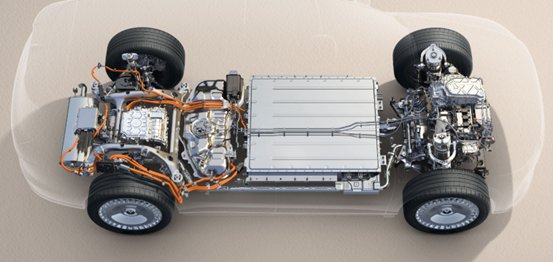
From a rational perspective, the Voyah Taishan's powertrain is very "flattering to anxiety":
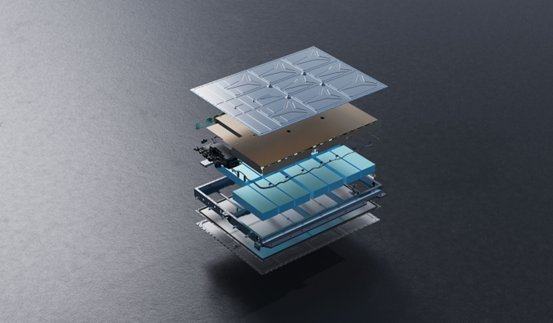
65kWh large battery, pure electric range of over 300 kilometers; Plus a range extender, combined range can reach 1400km; 800V high-voltage platform + 5C ultra-fast charging, 20% to 80% in 12 minutes.You can hardly find a reason for "range anxiety."
But the more interesting question is: among the factors that truly limit your travel, where does "range" rank?
The faraway places most families ultimately don't visit are often not because:
The car isn't economical enough; There aren't enough charging stations; Or the roads aren't good enough.But rather:
Can't get time off work, Kids haven't finished their homework, There's always something "more important" at home, pushing the plan back again and again.Plug-in hybrid is essentially a philosophy of compromise:
I want the faraway places, but I'm afraid of uncertainty, so I want a fuel tank as "the last line of defense."
800V, 5C ultra-fast charging, range extender—the stacking of these technologies helps you solve the "what if" problems—
What if there are no charging stations on the road; What if it's too cold; What if it rains and there's traffic; What if I don't have time to wait for charging today.But it cannot solve another, deeper hesitation:
"What if this departure disrupts the order we've worked so hard to maintain?"
So, from a certain perspective, Taishan's powertrain is not encouraging you to "go farther,"
But rather gently telling you:
"Set off with peace of mind—at least when it comes to energy replenishment, I won't make things difficult for you."
As for how far you actually go, that's still your own choice.
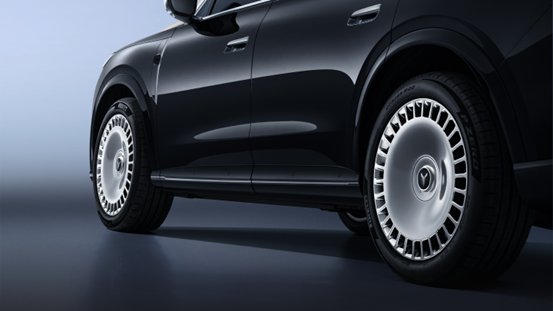
V. Tri-Chamber Air Suspension and Magic Carpet: We Pursue "Smoothness" While Fearing the Loss of "Reality"
The Voyah Taishan uses tri-chamber air suspension, EDC Magic Carpet chassis, and bidirectional 16° rear-wheel steering.
The common goal of these things is simple: eliminate "bumpiness," making a 5.2-meter large car drive like a smooth electric yacht.
Air suspension adjusts height and stiffness, helping you filter out fine vibrations and undulations; Magic Carpet scans the road ahead, making speed bumps and potholes feel like "edited reality"; Rear-wheel steering makes U-turns and parking less awkward, letting a giant also be "light as a swallow."This is almost an ultimate pursuit of the modern automotive industry:
Let your body feel as little of the world's roughness as possible.
But here too lies a contradiction:
Too much discomfort makes people tired, irritable, and even lose interest in faraway places; But if everything is smoothed flat, will we also slowly lose our perception of "real road conditions"?Life is also like a continuously upgrading suspension system:
When young, we are willing to accept bumps, feeling that life should have "some pits, some toughness"; As we grow older, you start adding "air suspension" to yourself: buying insurance, buying a big car, choosing safe routes, trying not to let family suffer too much impact; But occasionally, you miss those days when bumps were clear—every pothole felt under your feet, every mistake was a lesson, rather than a risk resolved for you by an "active safety system."Taishan's chassis philosophy can be summed up in one sentence:
"I will do my best to process the outside world into something softer for you, but how you ultimately travel is still up to you to decide."
This may be a mature view of safety:
Neither overly frightening yourself, nor pretending the world has no potholes.
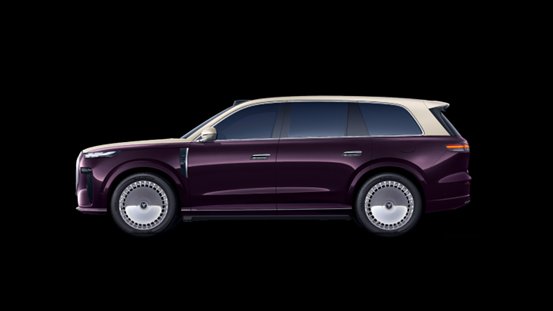
VI. When a Car Is Called "Taishan," What Does It Truly Carry?
Back to the question at the beginning:
After the price ranges from 379,900 to 509,900 yuan, after configurations from Huawei's four lidar sensors to tri-chamber air suspension, 800V plug-in hybrid, and 2+2+2 six seats are all thrown in at once, what exactly is the Voyah Taishan?
In the product brochure, it is a "full-size flagship SUV."
In marketing language, it is "the mobile castle of a new-era Chinese family."
But if you pull the perspective back a bit, you will find:
For many people in the 35-50 age range, this is not a "toy car," but a declaration of a life stage:
"I no longer use a car to prove how cool I am, but to take good care of the people I care about."
For those who frequently shuttle between the city, airports, and high-speed rail stations,
It is a "mobile living room" where one can briefly pause on the road:
You can lie in the second row for ten minutes, run through a PPT in front of the ceiling screen, or simply, on the way home at night, shut the day's noisy emotions outside the car door.
What is most moving about a car called "Taishan" may never have been 0-100 km/h, or how many lidar sensors it uses, but rather that it quietly answers a question:
When you finally have the ability to buy your family a car that doesn't make them "suffer too much," do you want to give them speed, or peace of mind?
The answer given by the Voyah Taishan is:
"I can give you enough technology, a long enough range, a big enough space.
As for what you want to use this car for—
Picking someone up from the airport, rushing on a journey, going camping, or just driving around the city,
That is your choice about life."
A car is just an object.
What truly determines the meaning of this "Taishan" has never been its spec sheet, but the person sitting in the car, holding the steering wheel—
And what kind of world he is willing to bring this car full of people to face.


