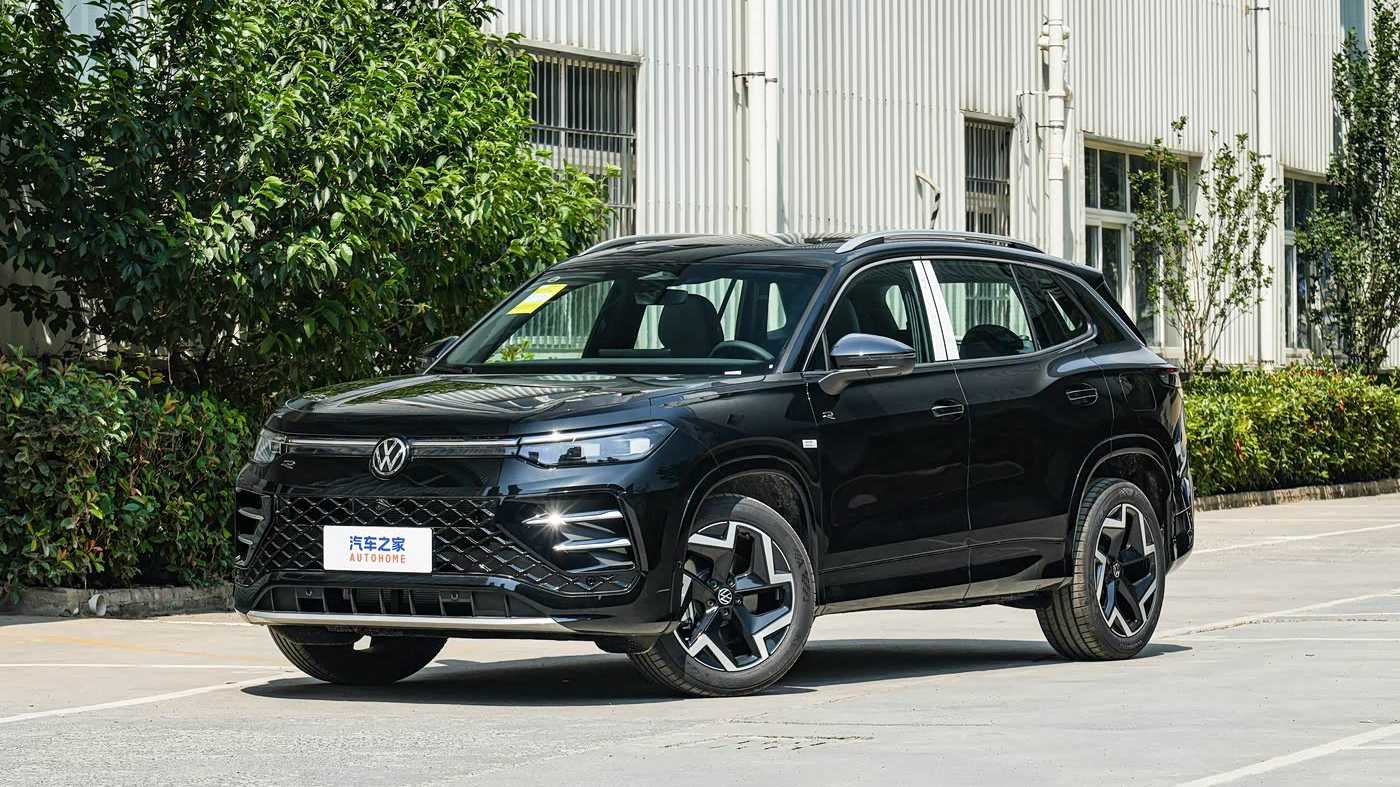
Is a plug-in hybrid just a worm when the battery is dead? The Tayron L PHEV, with a depleted-battery fuel consumption of 4.23L, may be about to put this old saying to rest.
If you had said this two or three years ago, you would probably have been criticized for it. Plug-in hybrids really were awkward back then—ferocious when fully charged, but once the battery ran out, depleted-battery fuel consumption shot straight to six, seven, or even eight liters, thirstier than many pure gasoline cars. People bought HEVs for one reason: no matter whether there was charge or not, fuel consumption stayed steadily at four or five liters, with no worries.
But recently I saw a set of data that made me think the wind in this battle between HEVs and plug-in hybrids may be about to change. Volkswagen announced a set of depleted-battery fuel consumption figures for the Tayron L PHEV: 4.23L/100km under CLTC conditions. Note that this is not a pretty number in the fully charged state, nor some combined condition, but the real depleted-battery fuel consumption when the battery is completely drained and everything relies on the 1.5T engine to carry the load. A mid-size plug-in hybrid SUV drinks just over four liters per 100 kilometers when out of charge.
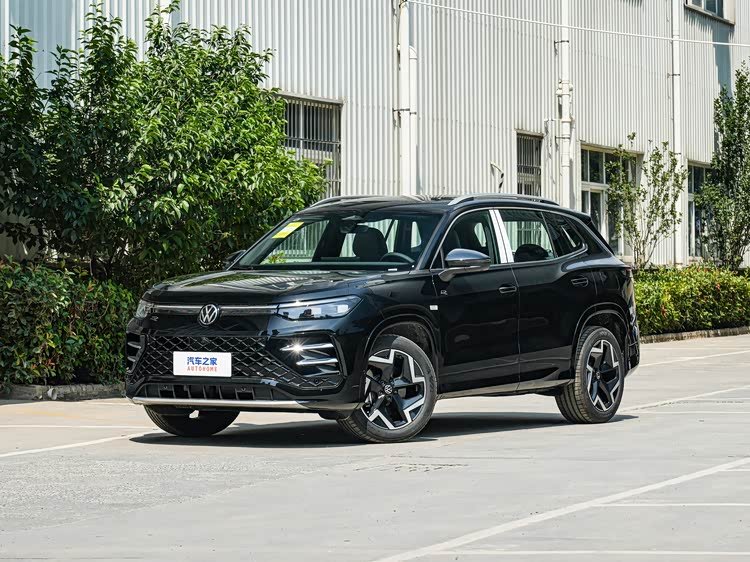
What does this number mean? Let's just pull up the data and talk.
The RAV4 Hybrid, the fuel-saving benchmark among Japanese HEVs, has a WLTC combined fuel consumption of 4.59L. The CR-V Hybrid is basically stable at five liters or more. The Tayron L PHEV's depleted-battery CLTC fuel consumption is 4.23L. In other words, when this plug-in hybrid SUV's electricity is used up and it runs on the engine alone, its fuel consumption is almost on the same level as the hybrid RAV4, and clearly lower than the CR-V Hybrid.
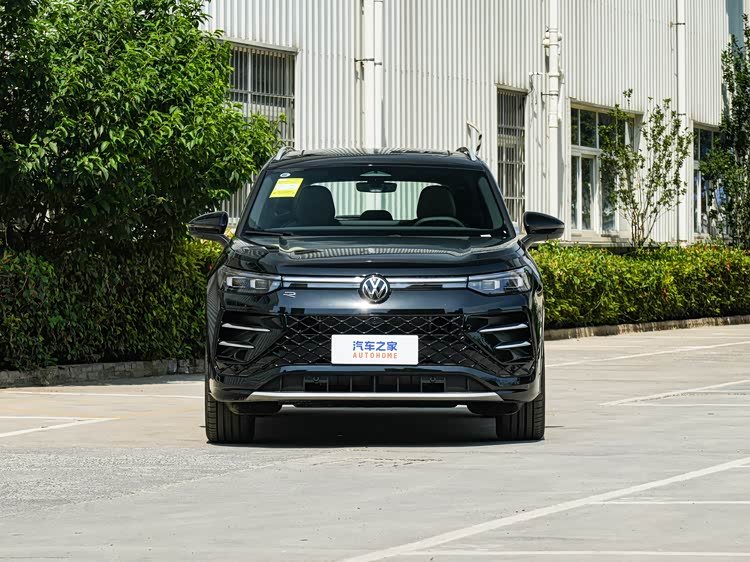
The saying "a dragon when charged, a worm when not" may really be due for retirement today.
How is this achieved? Let's break it down into three key points.
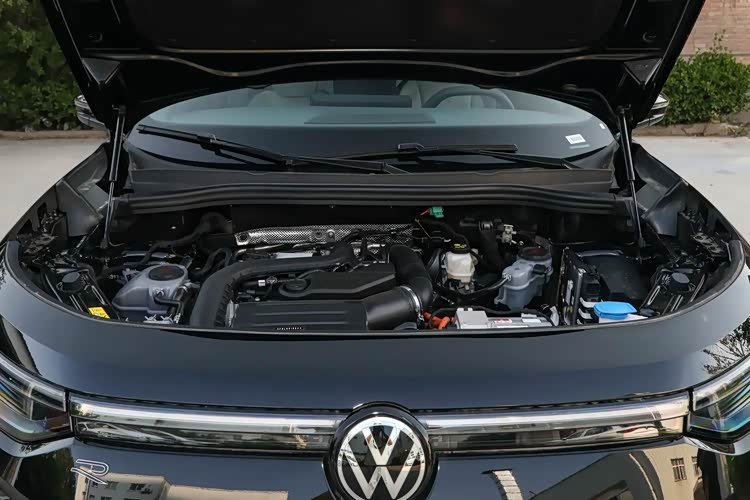
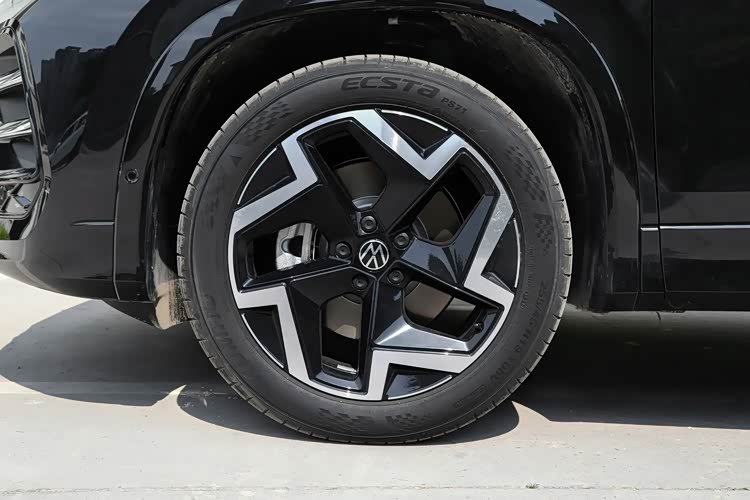
The EA211 1.5T hybrid-specific engine is equipped with the same VTG variable-geometry turbocharger as Porsche. The technical term sounds intimidating, but the principle is actually very straightforward—keep the engine working in a relatively efficient speed range, neither strained nor reckless, squeezing every drop of fuel for all it is worth. The P1+P3 coaxial electric motor layout eliminates the energy losses caused by a bunch of gear transmissions in traditional structures, allowing the motor and engine to work more closely together and making power delivery smoother. The TQ251 hybrid-specific transmission pushes transmission efficiency above 97%, so almost every bit of force produced by burning fuel is truly delivered to the wheels, with very little wasted through slippage or internal losses in between.
There is also an easily overlooked detail—when the displayed battery level is 0, the system actually still keeps a 10% reserve. Many plug-in hybrid owners have probably had a similar experience: the display says it can still go twenty kilometers, but just five kilometers out it suddenly dies. The logic in the Tayron L is that it would rather let you see fifty kilometers less on the cheerful dashboard range than keep an extra emergency reserve. This shows the manufacturer really calibrated it around daily driving scenarios, not just chasing pretty numbers in the lab.
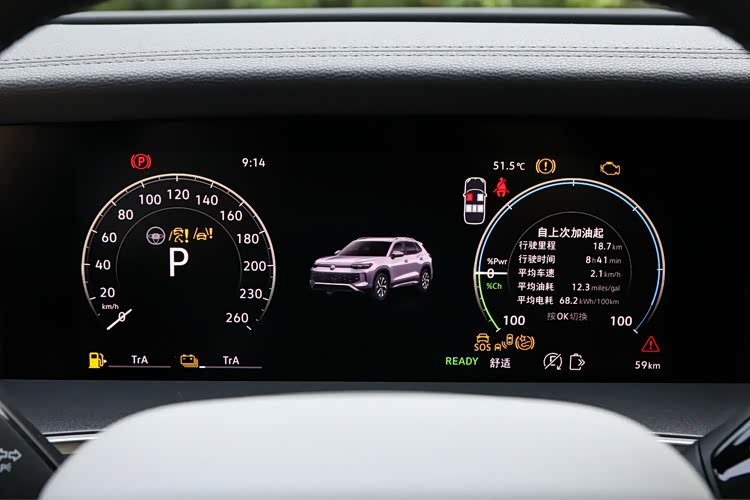
Of course, strictly speaking, WLTC and CLTC testing standards are different, and whether real-world depleted-battery fuel consumption is 4.8L or 5.2L, the gap with HEVs is not as big as it looks on paper. But in everyday perception, the difference between depleted-battery fuel consumption in the four-liter range and the five-liter range is far smaller than the difference between having a pure electric mode and being able to do nothing but burn fuel for life. Moreover, the Tayron L PHEV takes 92-octane fuel, while some HEVs still need to be fed 95-octane. Counting the fuel price difference, the actual cost per kilometer differs even more noticeably.
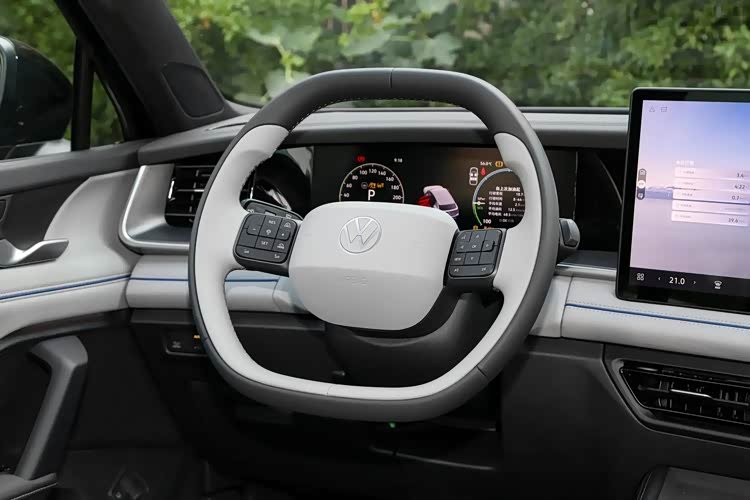
Matching HEVs in depleted-battery fuel consumption is only a tie. The real gap lies in the things HEVs simply cannot offer.
CLTC pure electric range of 145 kilometers. If your daily commute is thirty kilometers round trip, one charge is enough for four or five days without burning a drop of fuel. On the way to drop the kids off at school, climbing out of the underground garage, the motor quietly handles it, exactly like driving a pure EV. It also comes with 50kW DC fast charging. In the time it takes to eat lunch, the battery can recover half its charge, and in the afternoon you can continue going out on errands with zero fuel consumption.
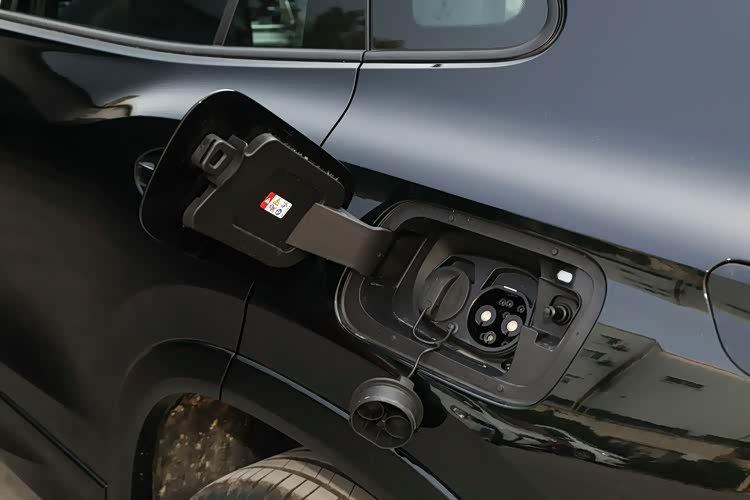
What about HEVs? No charging port, no pure electric mode. Whether stuck on the Second Ring Road or running on the highway, the engine is always burning fuel. Sure, it saves fuel, four or five liters per 100 kilometers, but between "four or five liters" and "zero liters" lies more than just a small gap. That small HEV battery only holds one or two kilowatt-hours. It can help you out for the first few hundred meters from a standstill, but the rest of the way the engine is huffing and puffing the whole time. Put plainly, an HEV is still fundamentally a fuel-car logic, just burning fuel a bit more finely.
Do the math on the economics, and it is very clear: if you can install a charging pile at home, weekday commuting basically costs nothing, with pure electric driving at just a few cents per kilometer. No matter how economical an HEV is, it still costs three or four tenths of a yuan per kilometer. For a thousand kilometers of commuting in a month, the fuel cost alone differs by more than three hundred yuan, and over a year that is more than four thousand yuan, enough for the whole family to take a trip. On holidays for long-distance travel, the Tayron L PHEV's depleted-battery fuel consumption of 4.23L is almost at the same level as an HEV, and neither burns more fuel than the other.
This is what it means to get the best of both worlds: big savings for city commuting, and no extra cost on long highway trips.
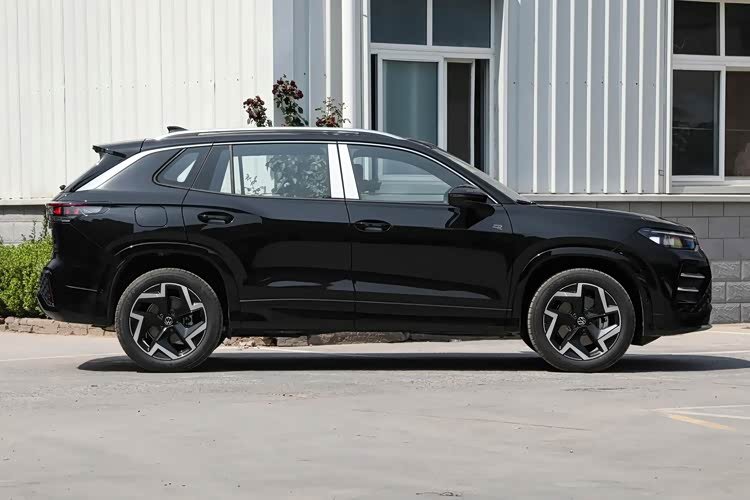
There is also something HEV owners would not even dare imagine—3.5kW external discharge. When camping, set up an induction cooker to make hot pot, or pull up a screen and use a projector for an outdoor movie. HEV owners can only stand nearby with instant noodles and stare. The whole vehicle has 28 storage spaces, the trunk holds 413L, and with the rear seats folded it expands to 1614L. A stroller, tent, portable stove, folding tables and chairs all fit inside with room to spare. For a family of four going camping on the weekend, the Tayron L PHEV is a mobile outdoor camp, while an HEV is just a fuel-efficient car. The difference in roles is enormous.
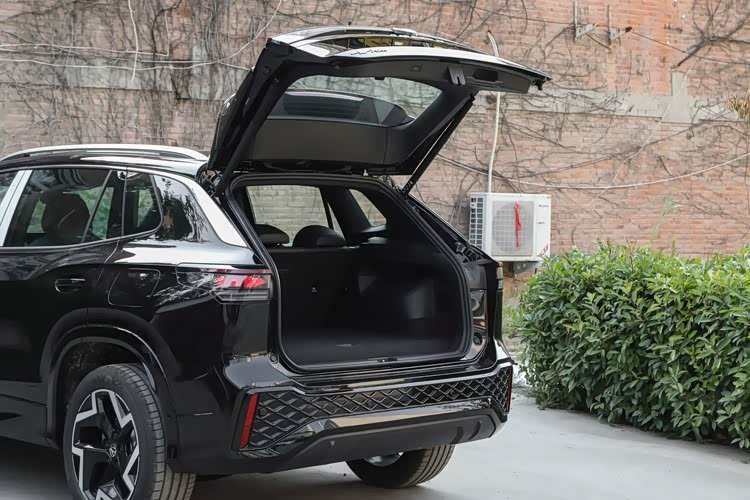
Combined range of 1439 kilometers. With a full tank and full charge, you can drive from Beijing to Shanghai in one go without stopping at a gas station along the way. Even if an HEV is more fuel-efficient, after just over a thousand kilometers it still has to start looking for a gas station.
Then there is another invisible account—the green license plate. The Tayron L PHEV gets a green plate and is exempt from purchase tax, directly saving 15,000 yuan on a 170,000-yuan car. An HEV gets a blue plate and pays whatever tax is due. In license-restricted cities, a green plate also means you can drive freely on workdays without checking the restriction calendar. The money is saved and the convenience is gained. You do not feel it in ordinary times, but once you really use it, the difference shows.
Talking about cars without talking about price is pointless. 169,900 yuan, a full 70,000 yuan cheaper than the old model, with even more equipment.
The old Tayron GTE sold for 240,000 yuan, had a pure electric range of just over fifty kilometers, no fast charging, and the dual-clutch transmission still occasionally shuddered at low speeds. In today's plug-in hybrid market, it really is a bit behind the pace.
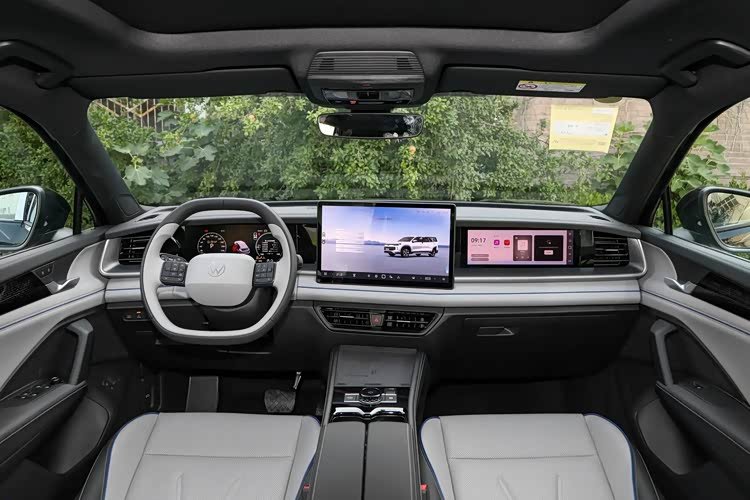
The current Tayron L PHEV, PRO version at 169,900 yuan, PRIME version at 181,900 yuan, is a direct 70,000-yuan cut from the old model. Pure electric range goes from 50 kilometers to 145 kilometers, 50kW fast charging is added, the dual-clutch is replaced by a P1+P3 coaxial architecture, and smoothness is improved very noticeably. The 8155 chip with triple screens (PRIME version), highway NOA assisted driving, and 2-kilometer cross-floor memory parking—things old owners would not even dare imagine—are all included now.
The 70,000-yuan price difference buys a full generation of product evolution—from powertrain to equipment to user experience, it is basically a different species. Comparing at the same price makes it even clearer: spend 170,000 yuan on a joint-venture fuel SUV, and a 1.5T engine starts at seven liters per 100 kilometers in the city; buy an HEV, and you save fuel but have no pure electric mode and no green plate; buy the Tayron L PHEV, and you get depleted-battery fuel consumption in the four-liter range plus 145 kilometers of pure electric range plus a green plate plus tax exemption plus fast charging plus external discharge. It has everything it should.
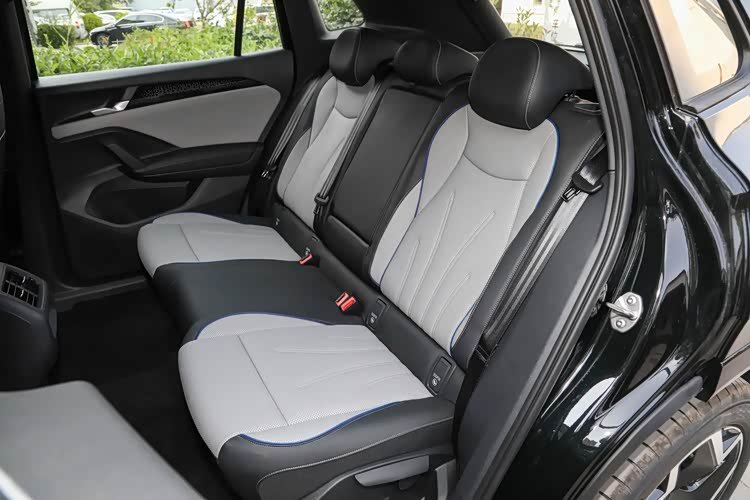
There is also one more detail, the anti-motion-sickness function. This hybrid system specially includes anti-motion-sickness coasting control. When traffic is congested in the city and you frequently start and stop, power output is especially gentle, so elderly people and children in the rear seats are less likely to feel carsick. Anyone with elderly and young family members understands that many plug-in hybrids have too abrupt motor torque at launch, which instead makes the rear seats uncomfortable. This function is indeed thoughtful for family users.
Now look at HEV rivals at the same price. The RAV4 Hybrid starts at around 170,000 yuan, and the CR-V Hybrid starts heading toward 200,000 yuan. A plug-in hybrid SUV at 169,900 yuan, with depleted-battery fuel consumption in the four-liter range, 145km of pure electric range, green plate tax exemption, external discharge for camping, fast charging for replenishment, and a fully equipped 8155 cockpit—HEVs really have little advantage left at this price.
After these three calculations, the result is actually quite clear.
Depleted-battery fuel consumption matches HEVs, pure electric commuting is something HEVs cannot offer, and the price is 70,000 yuan cheaper than the old model while adding fast charging and assisted driving. With this whole package from the Tayron L PHEV, HEVs really have very few advantages left at the 170,000-yuan price point.
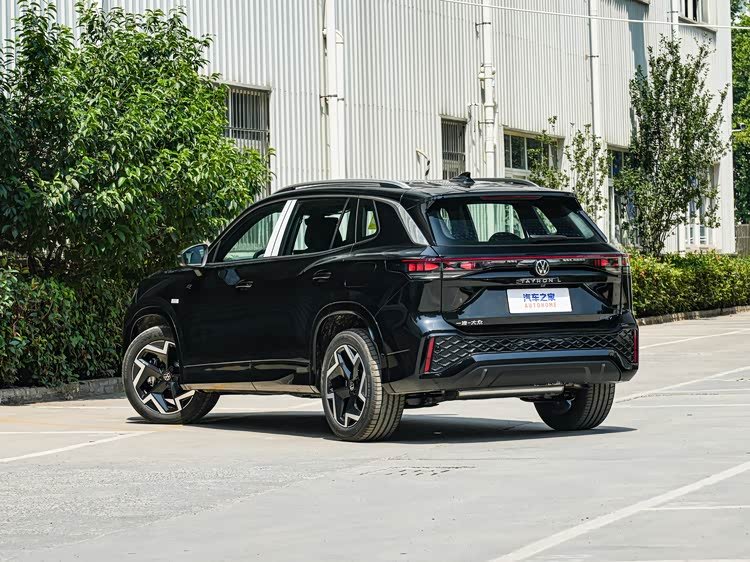
Of course, HEVs are not without advantages. For friends who do not have a fixed parking space at home and do not want the hassle of a charging pile, an HEV really is more worry-free: just refuel and go. The problem of pure electric range being discounted in northern winters has not yet been fully solved by plug-in hybrids either, and that is also an objective fact. But then again, as long as you have somewhere to install a charging pile, want to save money on daily commuting, and also want to take the family out camping on weekends with external discharge—the Tayron L PHEV starting at 169,900 yuan really deserves to have the math done all over again.
With a budget of around 170,000 yuan for a family SUV, do you stand with HEVs or PHEV plug-in hybrids? Welcome to chat in the comments about your choice, and let's do the math together.


