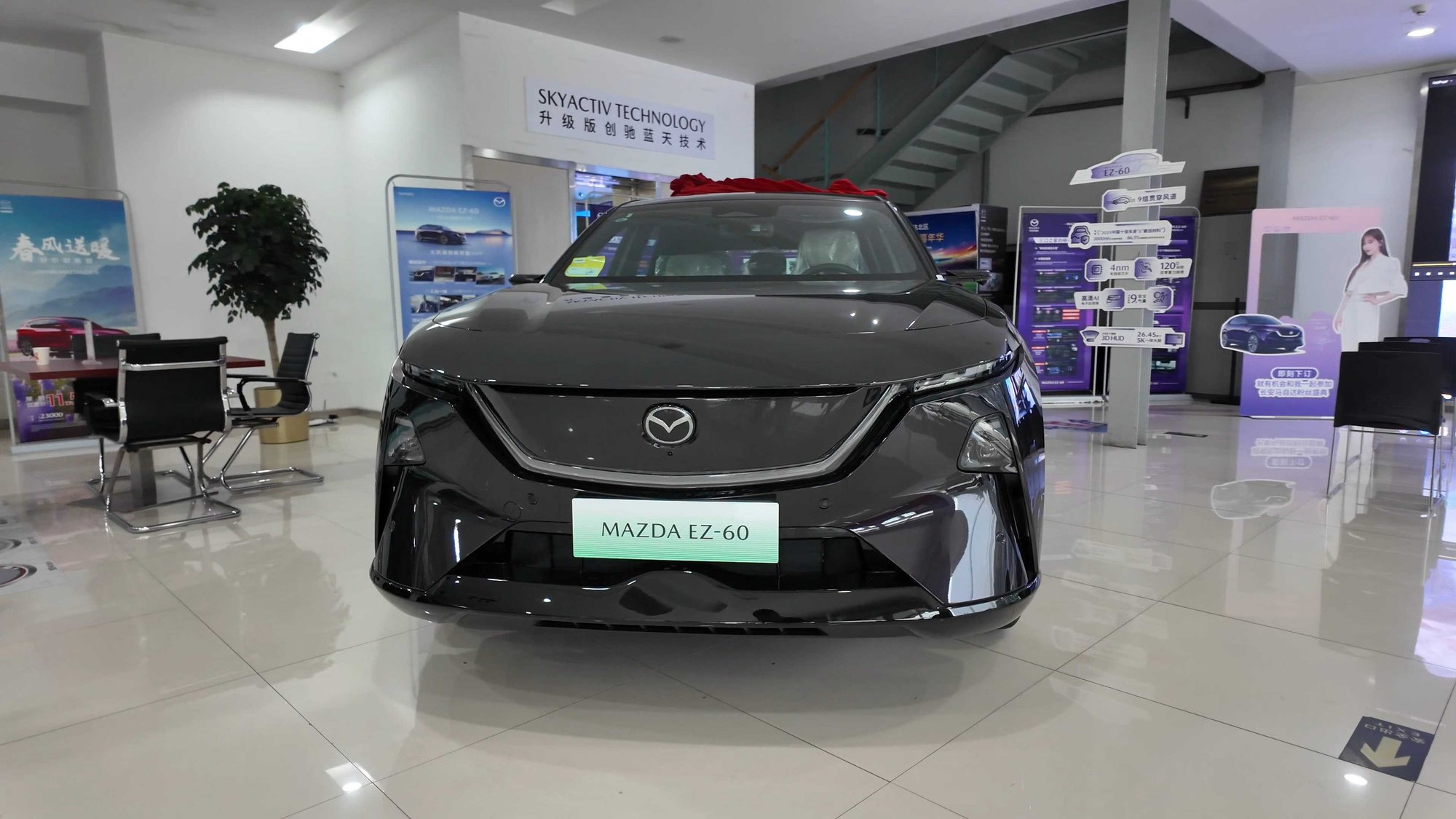
If Mazda's models can be considered good to drive, I believe those who have driven Mazda's models would not disagree. The Mazda EZ-60 is fighting with "product strength surpassing the Model Y + the playbook of domestic new energy vehicles." After visiting Renzheng Licheng Mazda yesterday to see the EZ-60, the author let out this lament: "When it comes to playing the new energy vehicle game, Mazda has finally seen the light." To stir up waves again in the new energy vehicle era, Mazda is very likely to start a new chapter from Changan Mazda.
[Brief Review of Styling Design]
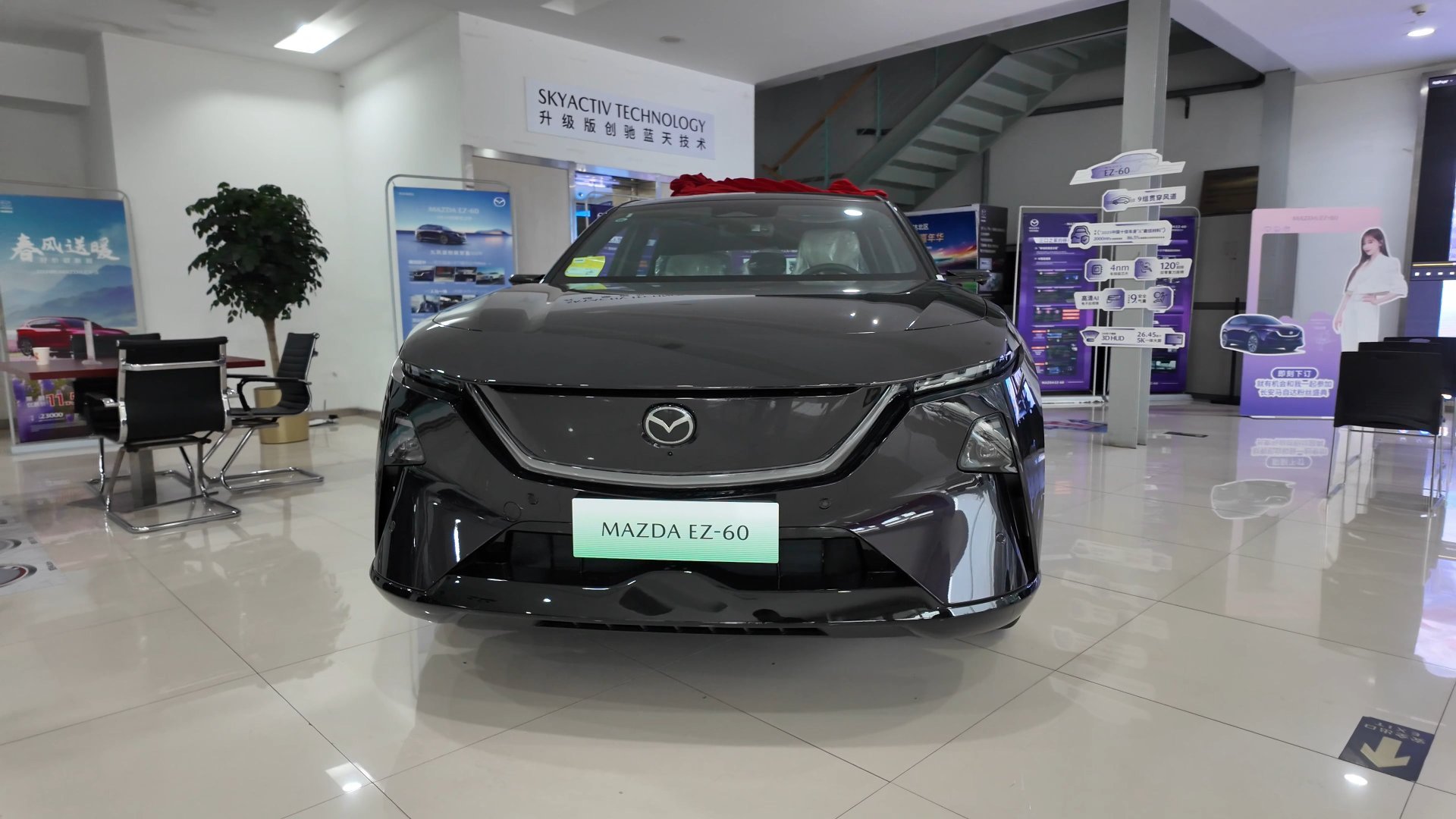
In terms of styling design, the Mazda EZ-60 still has a strong Mazda family character, but in the new energy era, Mazda has given it a name more in line with current trends: "Wings of Light Sculpted Front Face." Its looks can be considered on point and are very likely to become the first factor attracting its target customers, but driving and ride dynamics are where the Mazda EZ-60's true strength lies.
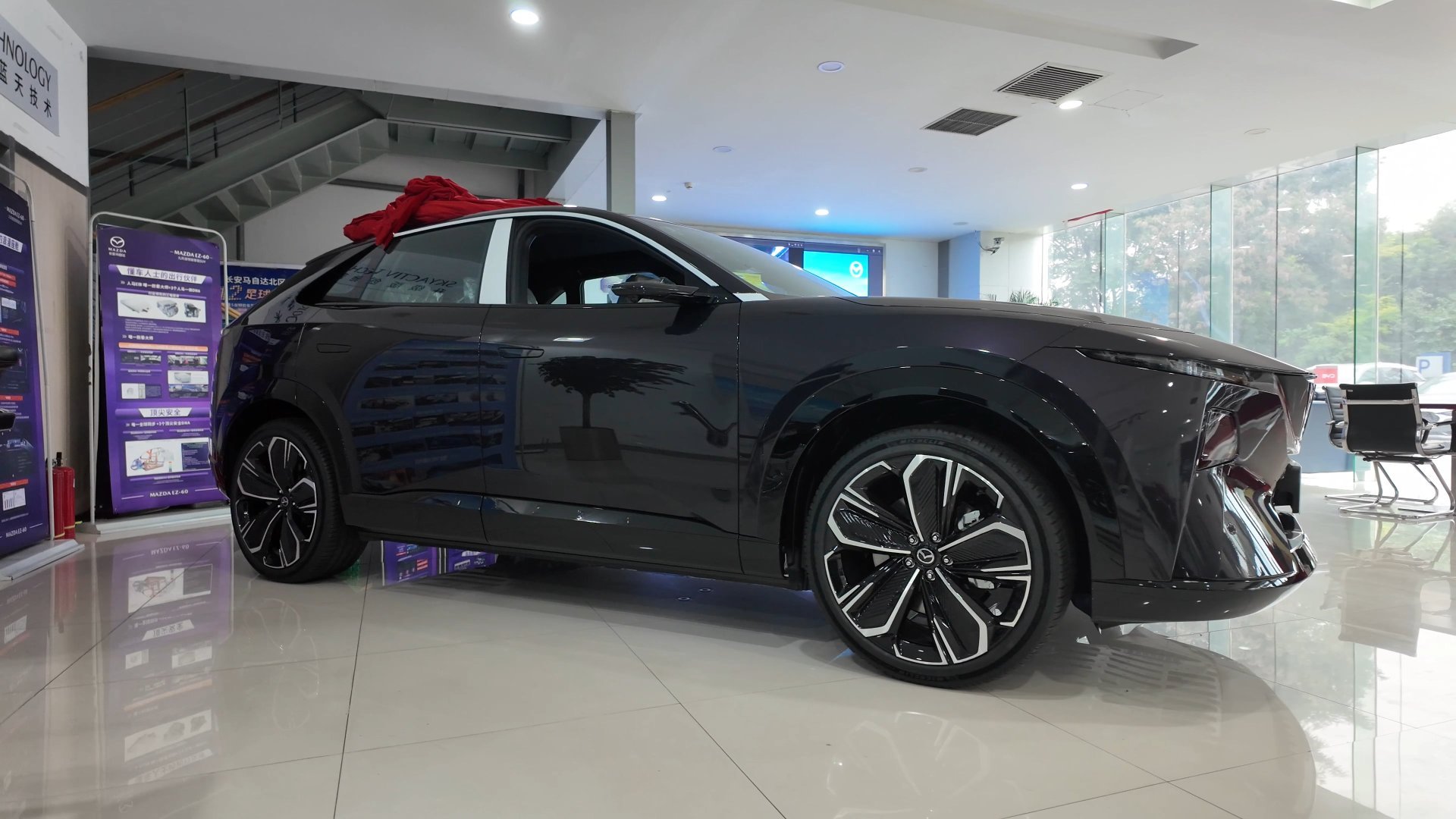
The body-side lines are dynamic and smooth. Mazda calls this "light and shadow sculpting." It is said to have gone through 300+ rounds of repeated refinement on clay models, so that when light flows, the interplay of light and shadow can be presented in a full 360° dimension. Car enthusiasts with higher aesthetic standards may want to take the time to evaluate it in person.
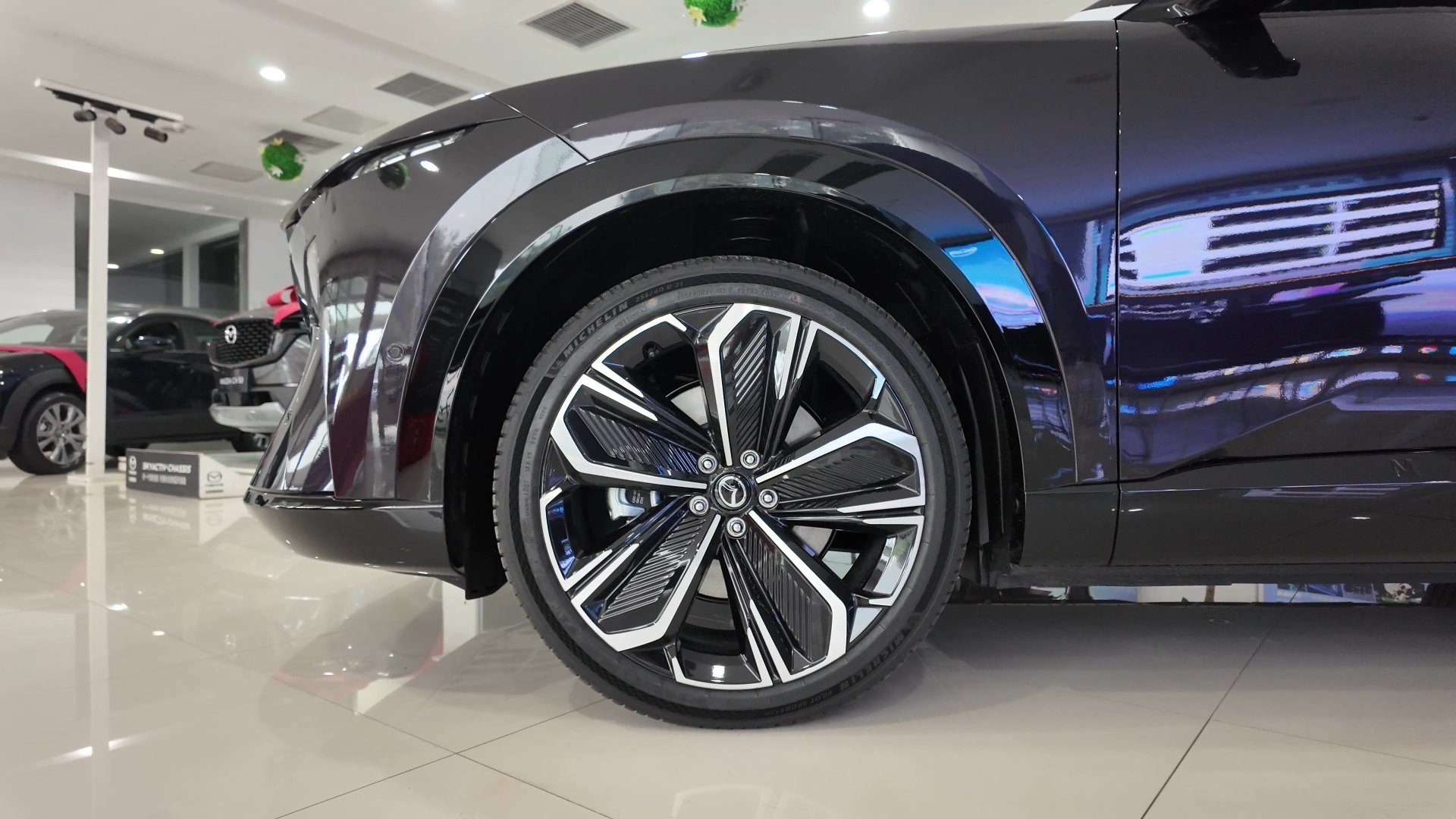
The deeply dished petal-style wheels are uniquely shaped, highly characteristic of the new energy era, while also carrying Mazda's consistent style. You should know that "deep dish," or in other words, many models biased toward driving control, use negative-offset wheels. The EZ-60's deeply dished petal wheels have a bit of that flavor.
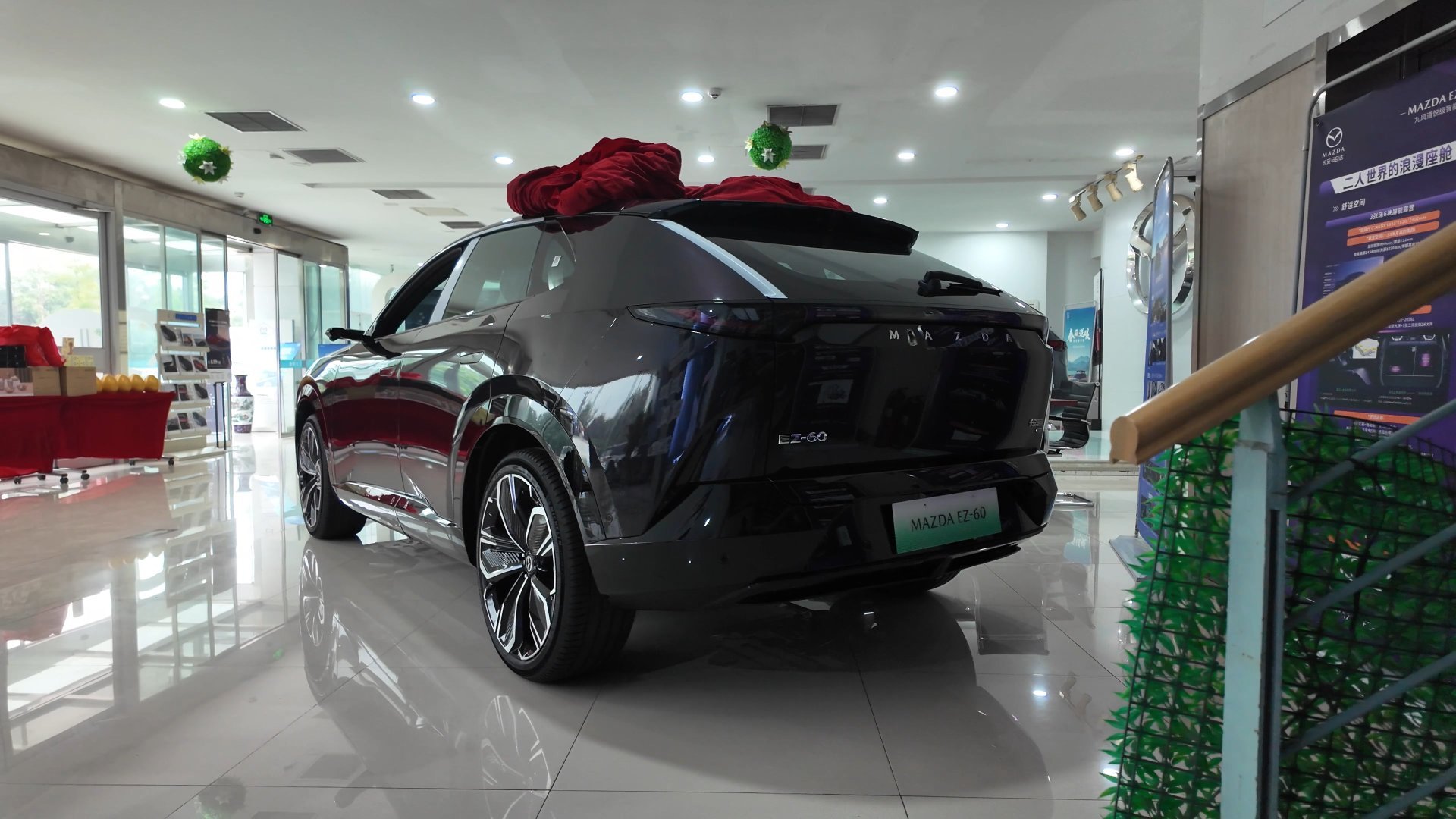
The rear is full and rounded, with an obvious sporty visual effect. Add the long body and relatively low visual center of gravity, and calling it a large two-box sedan would also be fitting.
[Basic Information]
In terms of vehicle pricing, the Mazda EZ-60 is clearly very down-to-earth. Two power forms, extended-range and pure electric, meet different consumer needs, and the target customer base has expanded again.
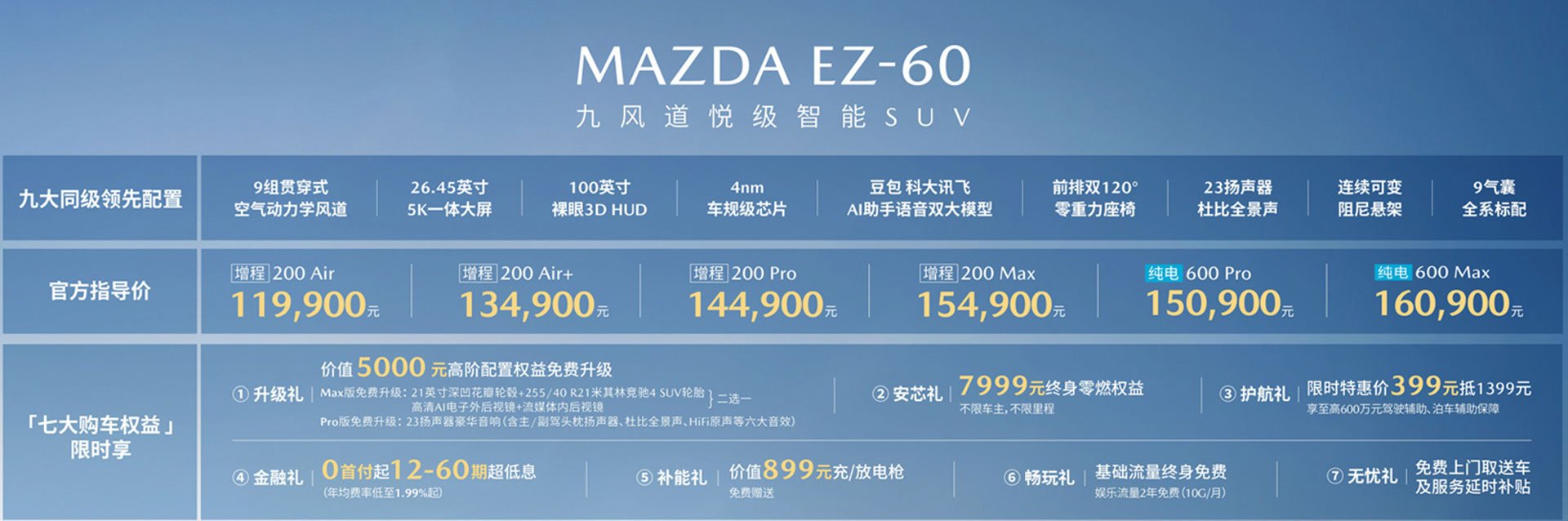
The 4 extended-range versions with 200 km of pure electric range are priced from 119,900 to 154,900 yuan, while the 2 600 km pure electric versions are priced at 150,900 yuan for the 600 Pro and 160,900 yuan for the 600 Max. This pricing completely follows that of domestic new energy vehicles. For many joint venture brands, taking the mass line first when building new energy vehicles is not wrong. Whether it is Mazda's EZ-6, GAC Toyota's bZ3X, or Nissan's N7, all joint venture new energy vehicles with good sales are like this.
Also worth mentioning is the "Peace of Mind Gift," namely a lifetime zero-combustion benefit valued at 7,999 yuan, and it is not limited by owner or mileage, which comprehensively eliminates consumers' concerns about choosing new energy vehicles.
There are also financial policies such as 0 down payment and ultra-low interest over 12-60 installments, further reducing the cost of purchasing a car. And if you can get the national subsidy for scrapping and replacing or the national subsidy for trade-in in your locality, that would be even better.
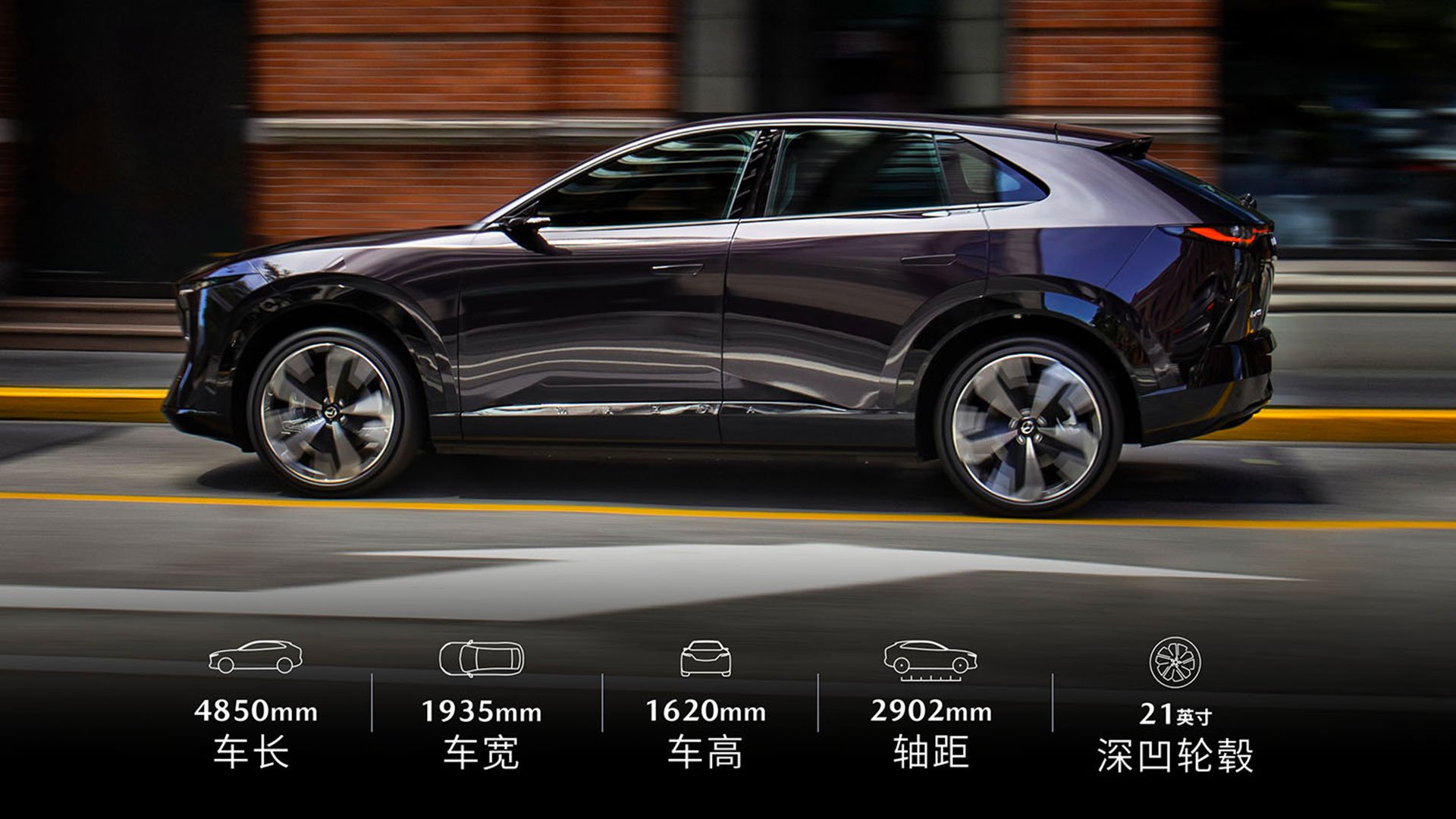
The image above shows the dimensional data of the Mazda EZ-60. The Model Y has a length of 4,797 mm, width of 1,920 mm, height of 1,624 mm, and wheelbase of 2,890 mm. Comparing these two cars, would you say the Mazda EZ-60's pricing is already quite people-friendly?
[Three-Electric System]
Let us take the Mazda EZ-60 Pure Electric 600 Max priced at 160,900 yuan and the Model Y Rear-Wheel Drive priced at 263,500 yuan as examples to see whether the differences between them in the three-electric system are as large as the 102,600 yuan price gap.
The Model Y Rear-Wheel Drive has a CLTC range of 593 km, while the Mazda EZ-60 600 Max has a CLTC range of 600 km.
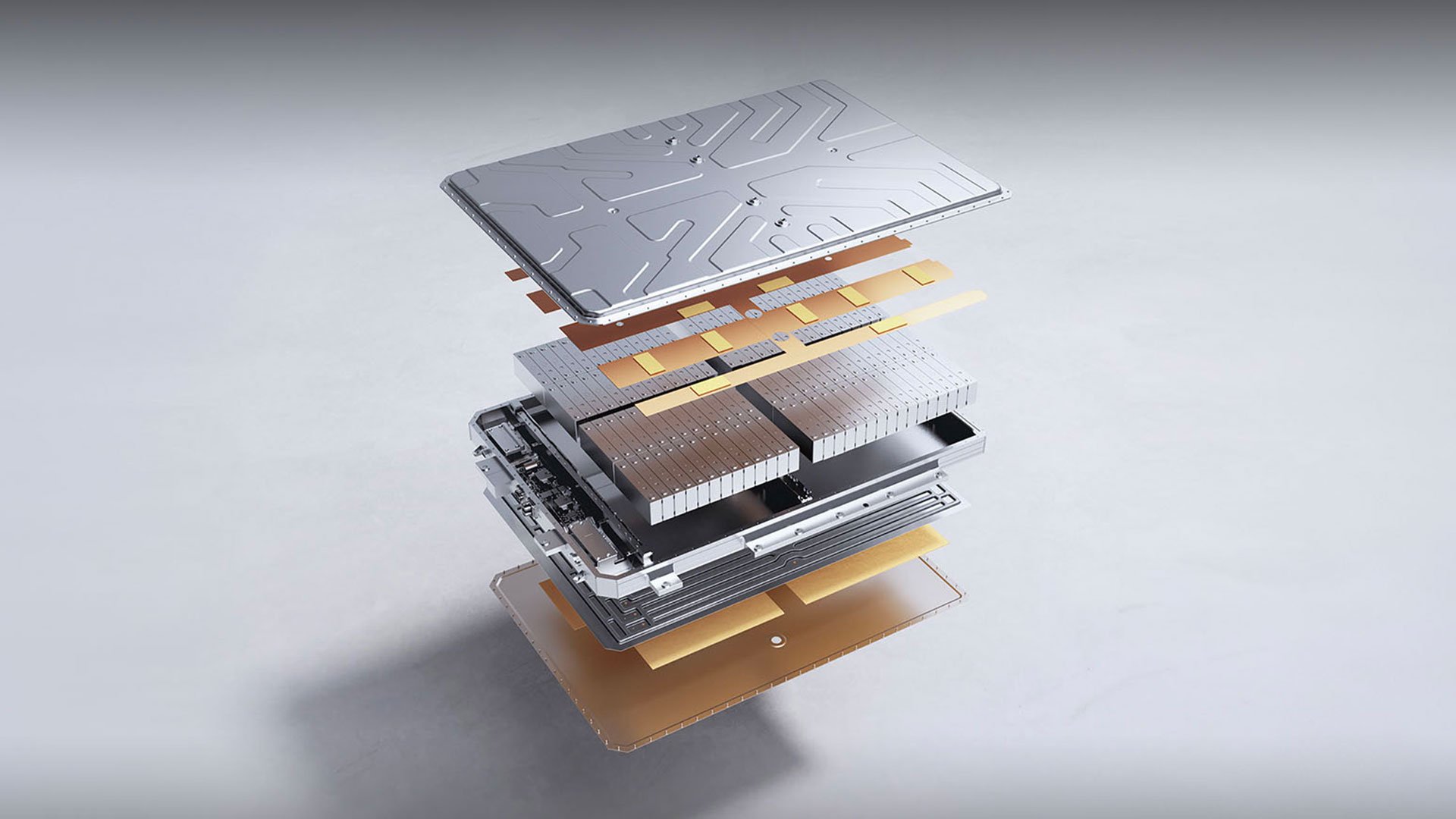
The Model Y Rear-Wheel Drive is equipped with a lithium iron phosphate battery with a capacity of 62.5 kWh. Charging from 20% to 80%, the high-efficiency charging interval, takes 1 hour. Range added per hour of charging = 593 km × (80% - 20%) = 355.8 km.
The Mazda EZ-60 600 Max is equipped with a lithium iron phosphate battery with a capacity of 77.94 kWh. Charging from 30% to 80%, the high-efficiency charging interval, takes 0.25 hours. Range added per hour of charging = 600 km × (80% - 30%) = 300 km ÷ 0.25 = 1,200 km.
So in terms of charging efficiency, is the Mazda EZ-60 far superior to the Model Y?
The Model Y Rear-Wheel Drive's drive motor has a maximum power of 220 kW, maximum torque of 410 N·m, and 0-100 km/h acceleration in 5.9 seconds.
The drive motor installed in the Mazda EZ-60 600 Max has a maximum power of 190 kW and maximum torque of 290 N·m.
In terms of power output, the Model Y still has a clear advantage, but on the one hand there is a price difference of more than 100,000 yuan, and on the other hand, for consumers with average driving skill levels, driving the Mazda EZ-60 may be relatively safer. Not every driver is capable of controlling powerful output, right?
So in terms of the three-electric system, the Mazda EZ-60 600 Max holds two advantages: larger power battery capacity and faster charging speed, while the Model Y Rear-Wheel Drive has stronger power output.
[Chassis and Suspension]
The Model Y's driving performance is very stable, but Mazda models' driving performance also has a well-established reputation. Let us first look at the hardware differences in the chassis and suspension of the two.
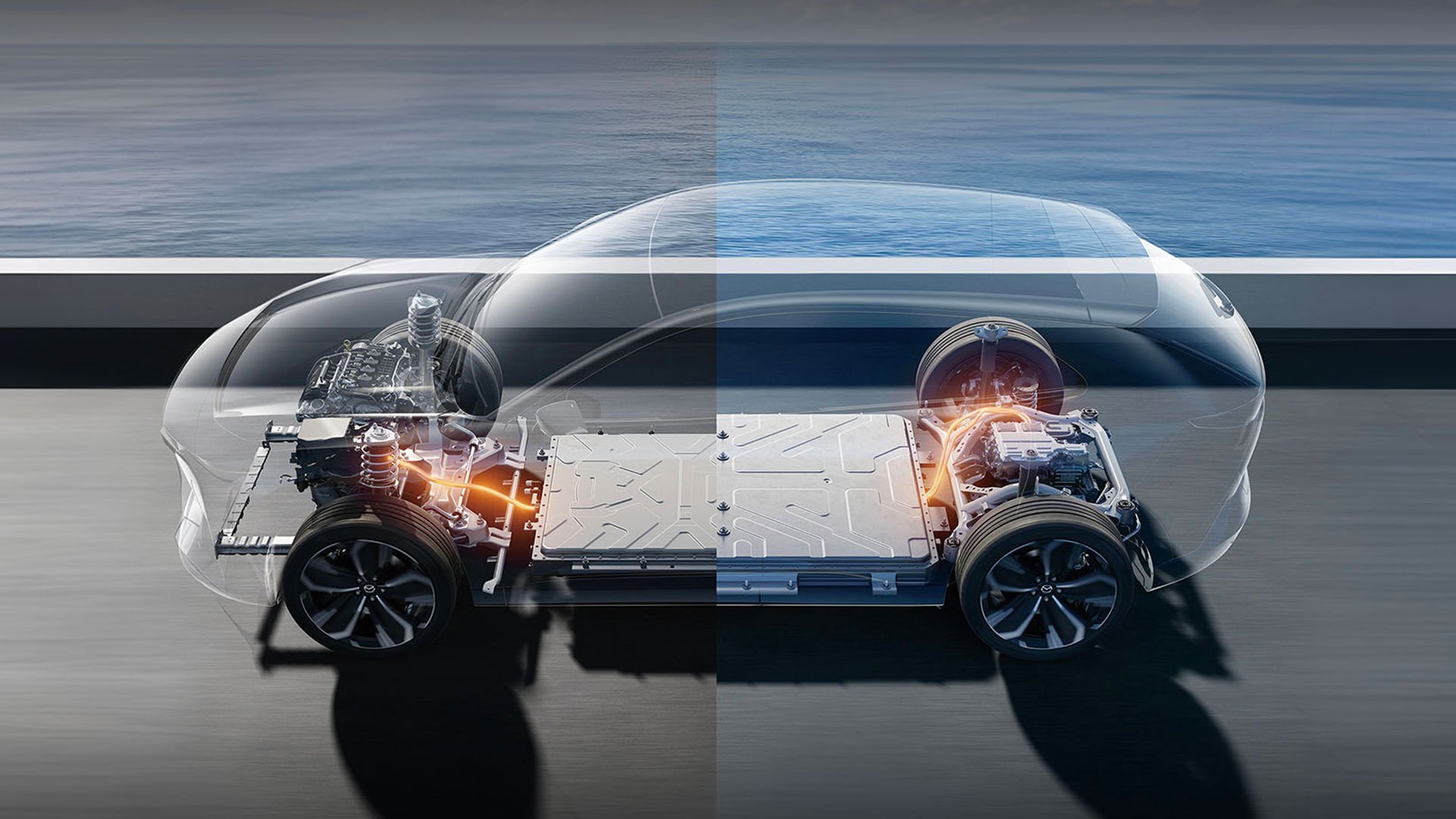
Both models are rear-mounted rear-wheel drive. The Model Y Rear-Wheel Drive adopts a double-wishbone independent front suspension + multi-link independent rear suspension setup, with tire specifications of 255/45 R19.
The Mazda EZ-60 600 Max adopts a MacPherson independent front suspension + multi-link independent rear suspension setup, with tire specifications of 235/55 R19.
Both suspension forms and tire specifications differ. From public habit, most people favor the double-wishbone + multi-link four-wheel independent suspension setup, but from the perspective of the target customer group, the Mazda EZ-60 600 Max's MacPherson independent front suspension has a simple structure, low maintenance cost, and can also easily be tuned for good comfort. Including the narrower tires, future replacement costs are also relatively low.
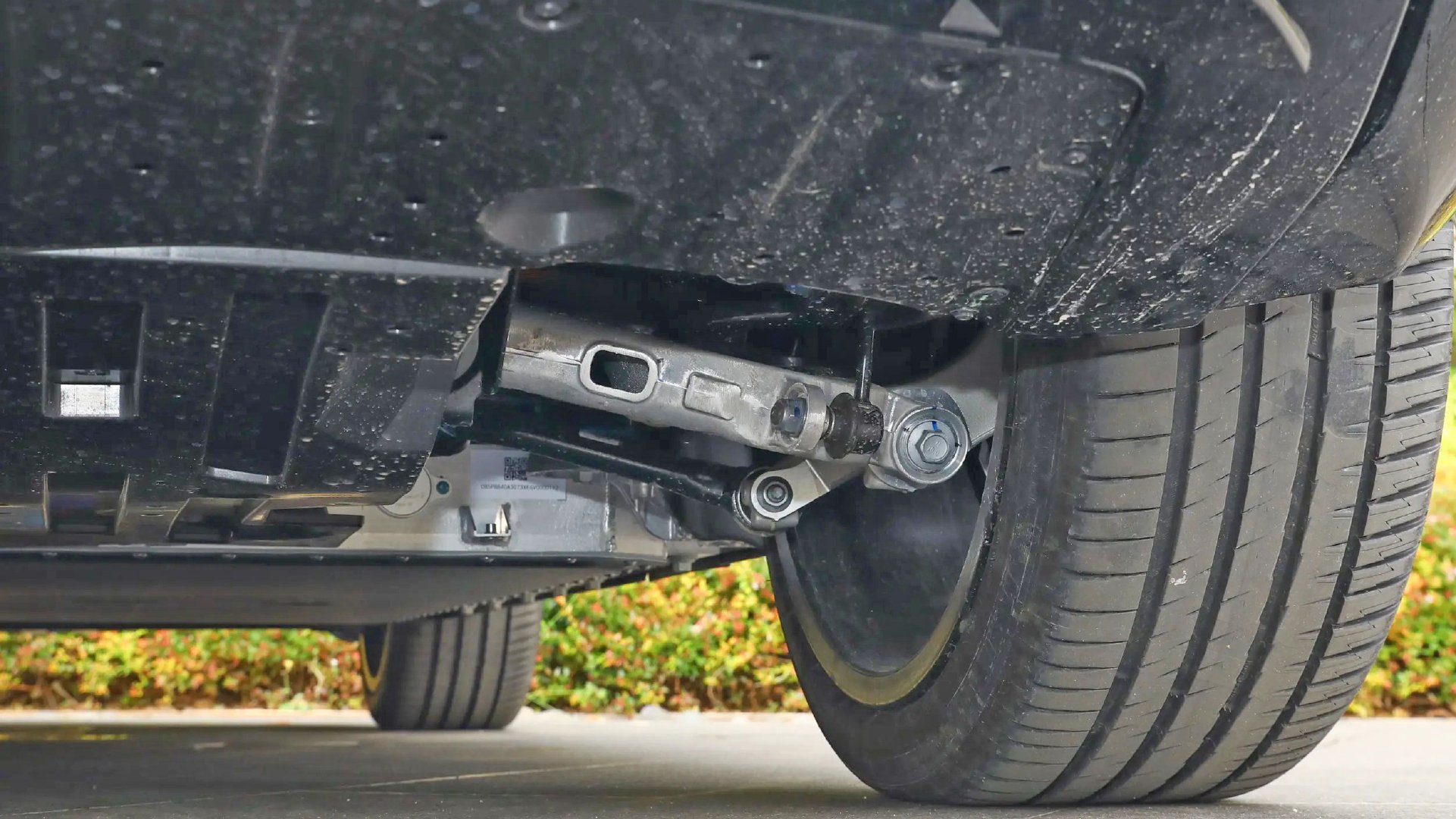
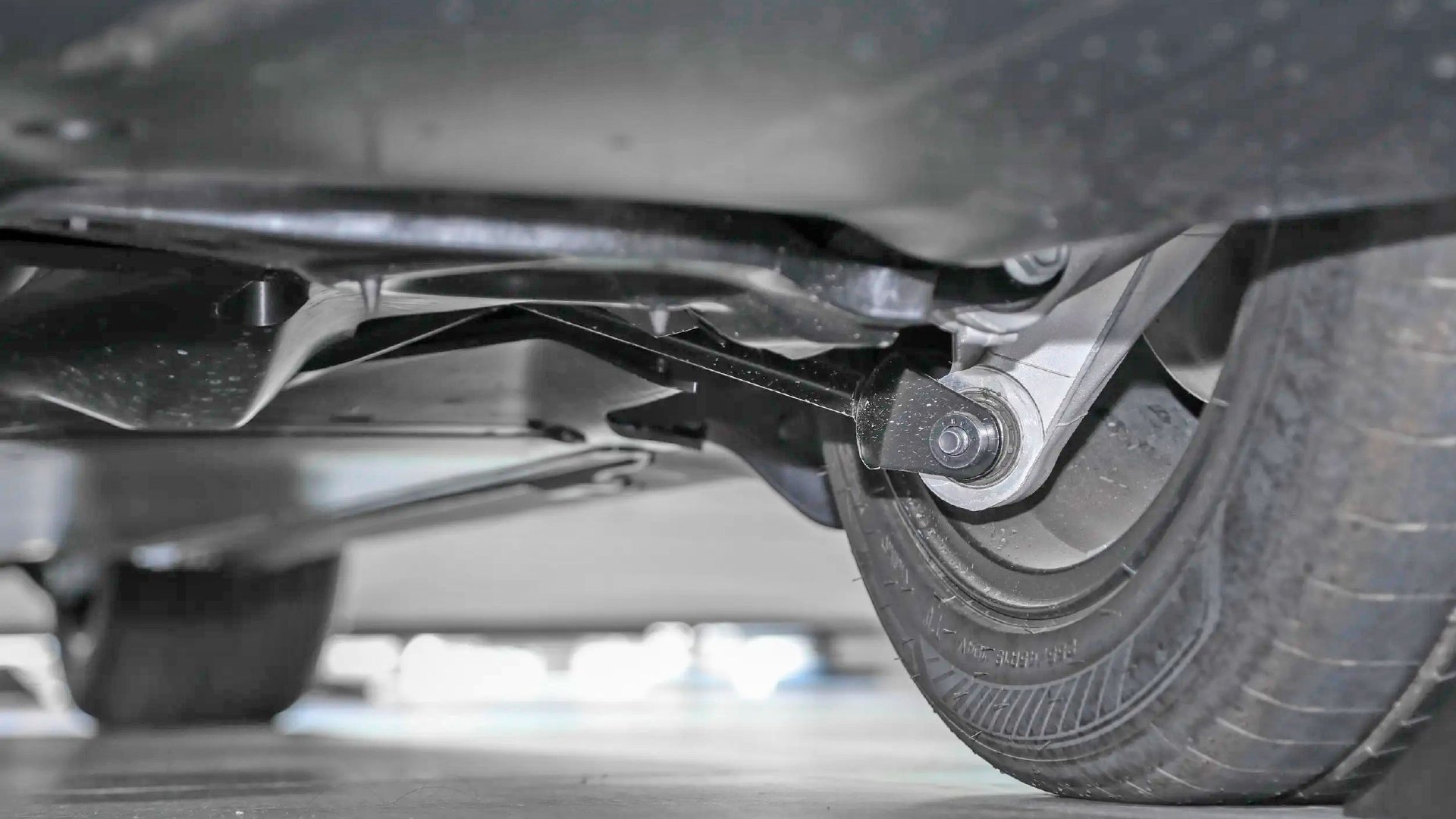
In addition, we should also look at the materials used in the suspension components. The double-wishbone independent front suspension used by the Model Y Rear-Wheel Drive uses more lightweight materials, while the H-arm multi-link rear suspension used by the Mazda EZ-60 600 Max uses more lightweight materials. As shown in the image above, can you guess which image is the EZ-60's rear suspension?
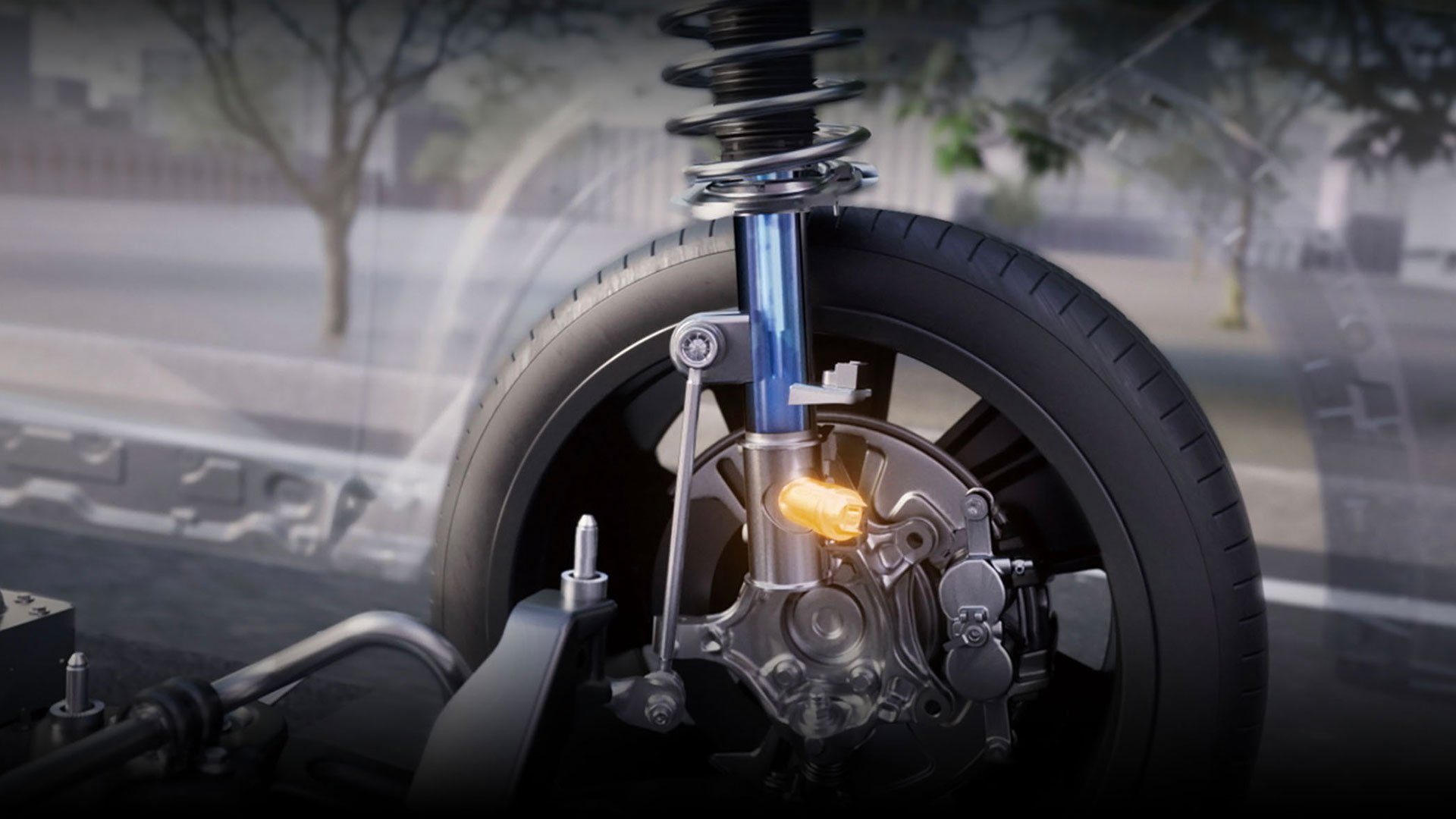
Regarding the vehicle's dynamic performance, the Mazda EZ-60's dynamic tuning was jointly carried out by R&D centers in China, Japan, and Europe, and a continuously variable damping suspension was developed. Using a certain automotive vertical website's comparison tool to compare the functional configurations of the Model Y Rear-Wheel Drive and the Mazda EZ-60 600 Max, we found that the Mazda EZ-60 600 Max does support adjustable shock absorber firmness, while that option is blank for the Model Y Rear-Wheel Drive.
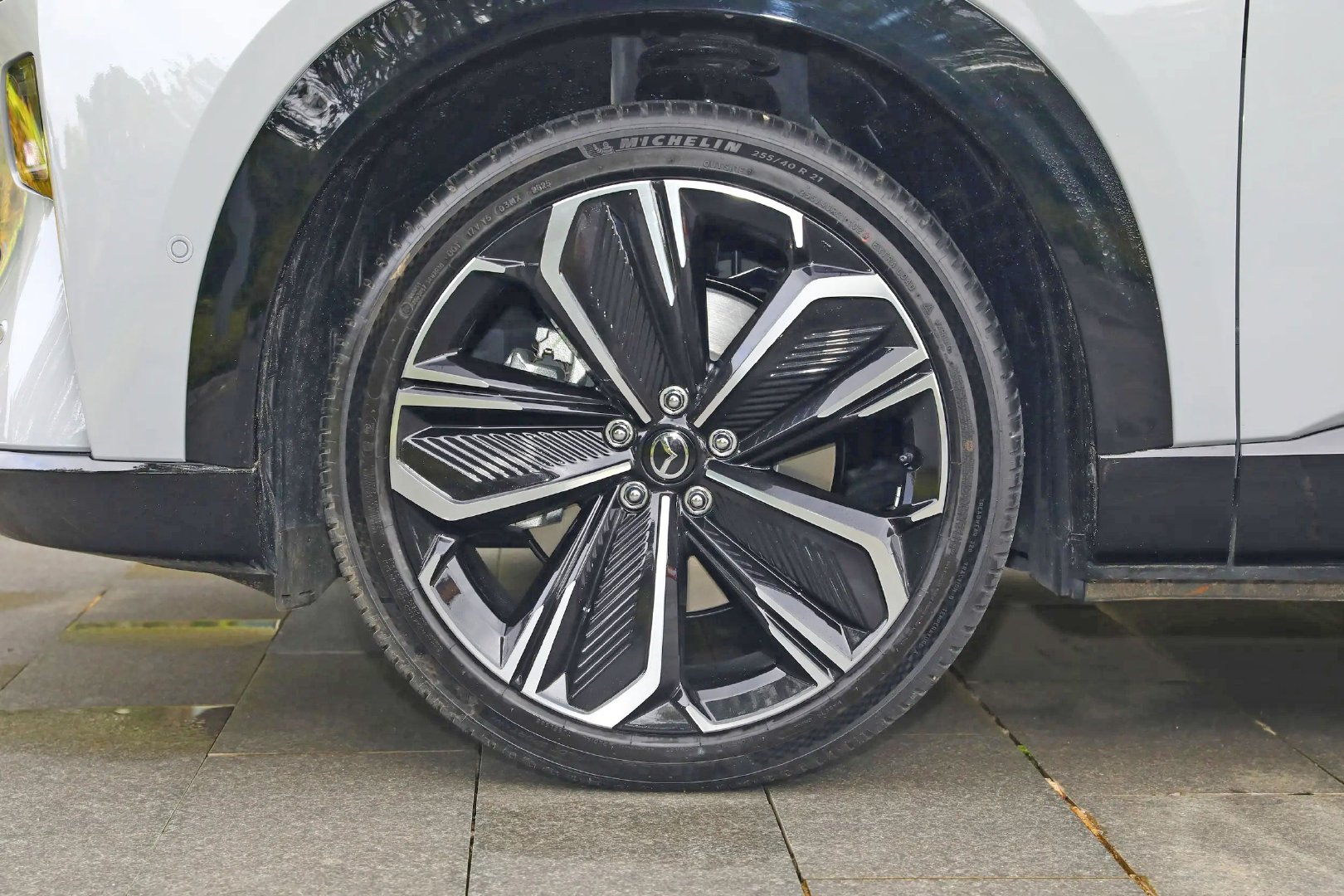
Also, from some real-life photos, we can see that the Mazda EZ-60 600 Max supports optional 255/40 R21 tires. Wide tires + continuously variable damping suspension + Mazda tuning, I believe every experienced driver, after comparing and test-driving these two cars, should not be able to say the Model Y is absolutely better than the Mazda EZ-60. "The two have their own characteristics in driving and ride performance" should be a relatively fair evaluation.
Of course, a car's dynamic performance is a subjective personal experience. If you are interested in this two-car comparison, or hold objections, you might as well take the time to verify it through your own comparative test drive.
[Safety Protection Performance]
Actually, Mazda models have always had fairly good safety protection performance. For example, in my impression, when C-IASI first began crash testing, every brand was caught off guard, but the Axela seemed to pass the offset crash test smoothly. Interested car enthusiasts may want to look it up to confirm.
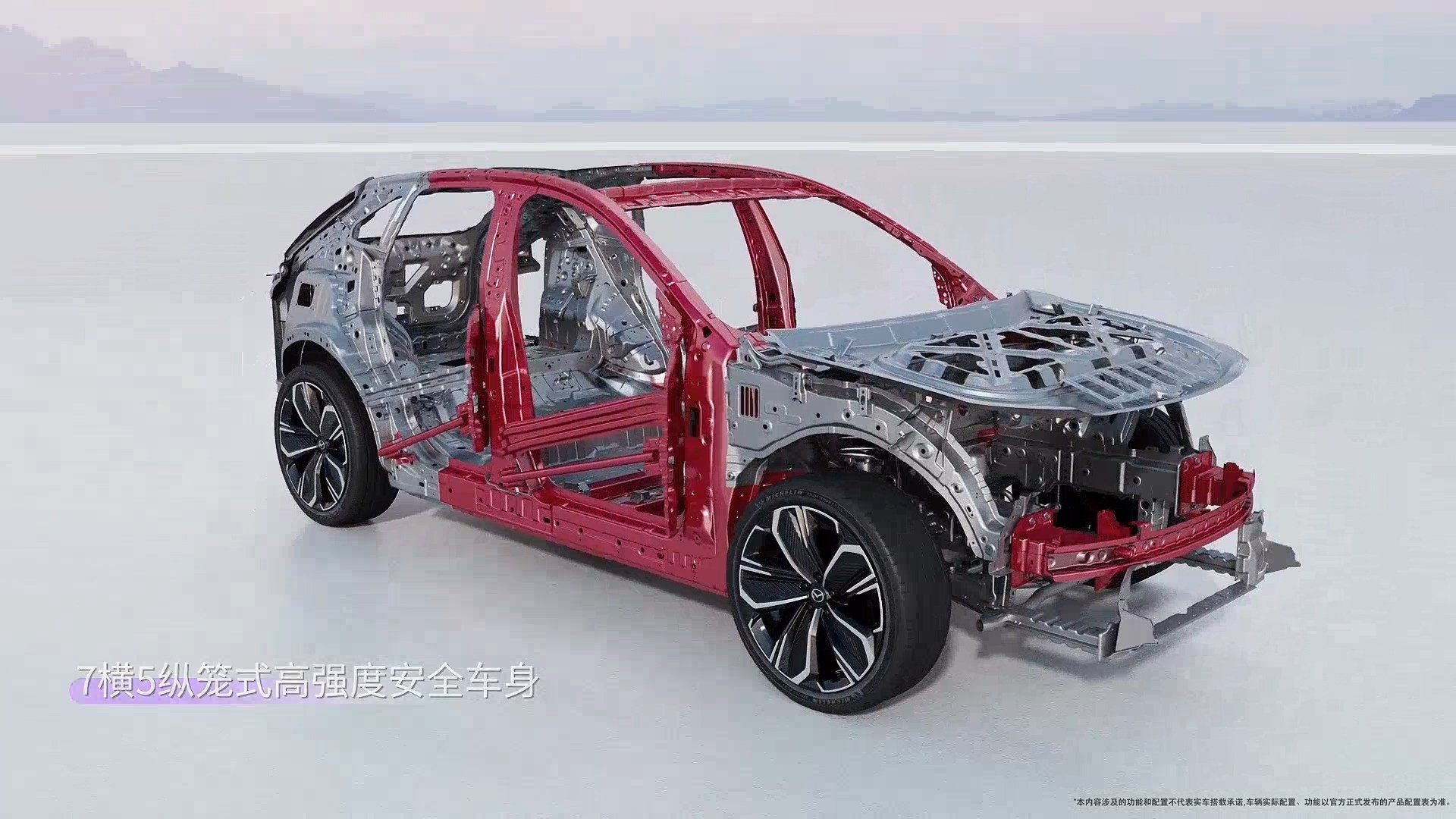
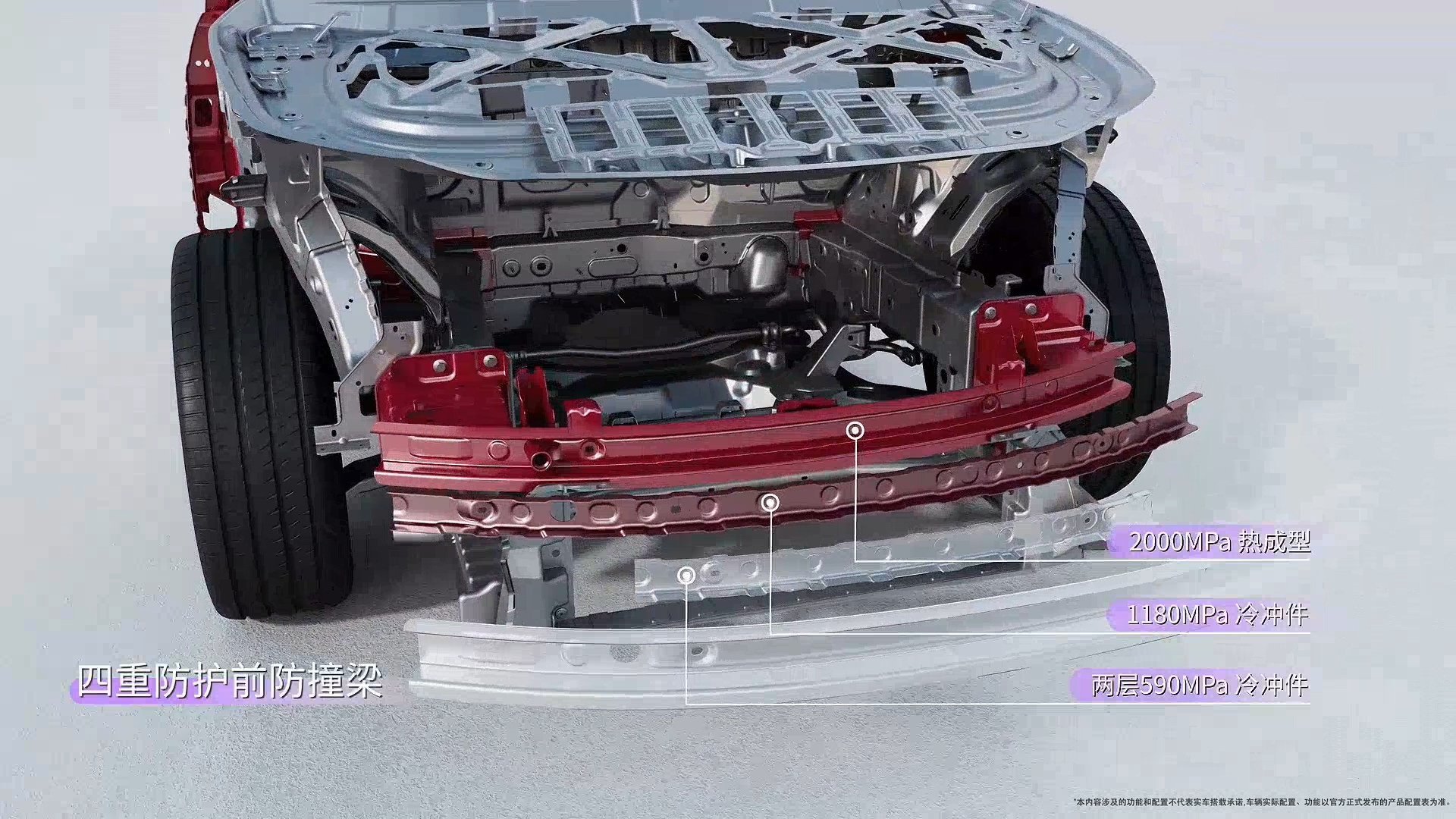
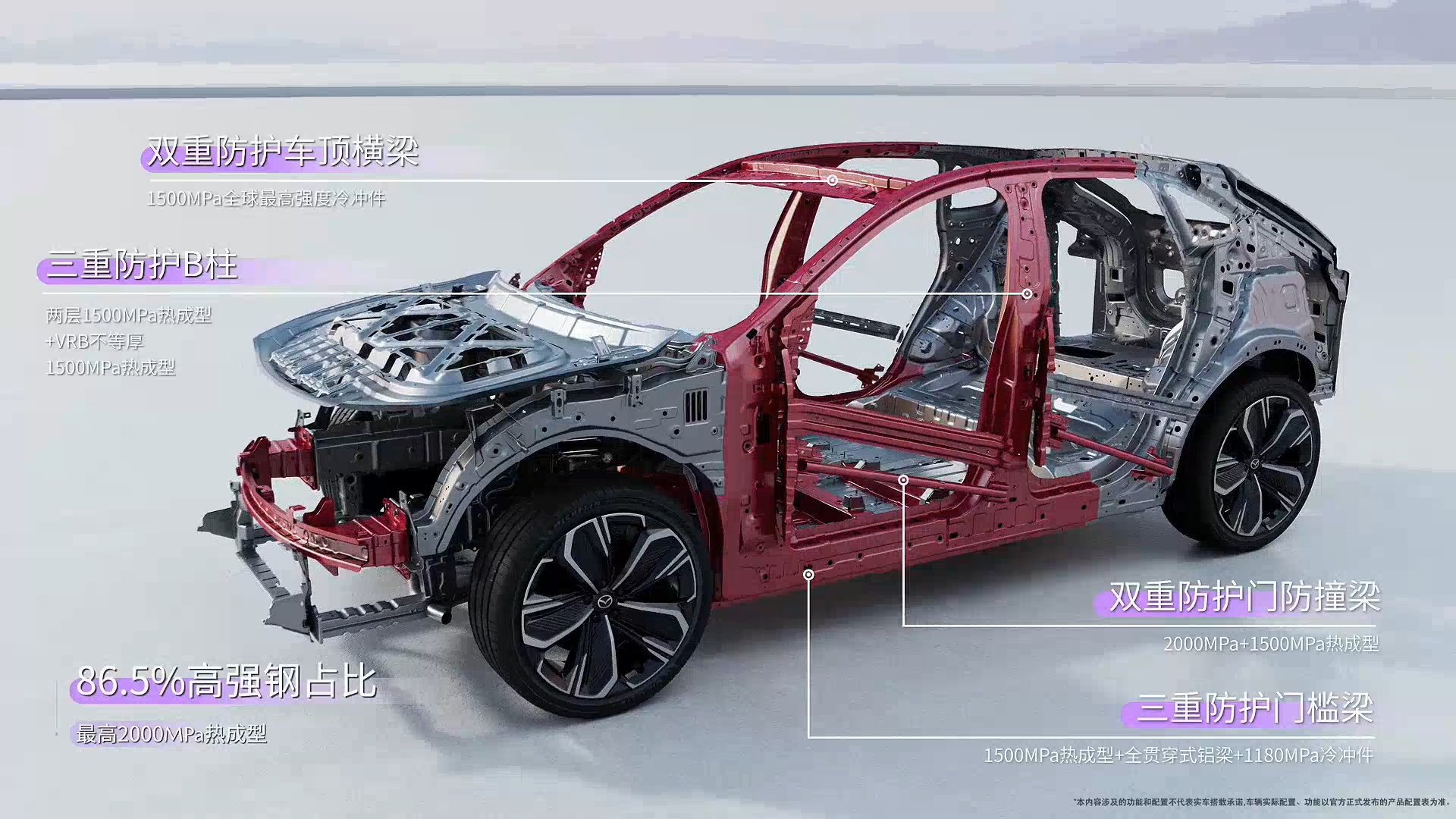
Mazda EZ-60's official promotional video mentioned several key points of the safety body. From the body structure to the front anti-collision beam, and then to the A-pillar, B-pillar, and rocker beam, the protective architecture design and component layout are quite good.
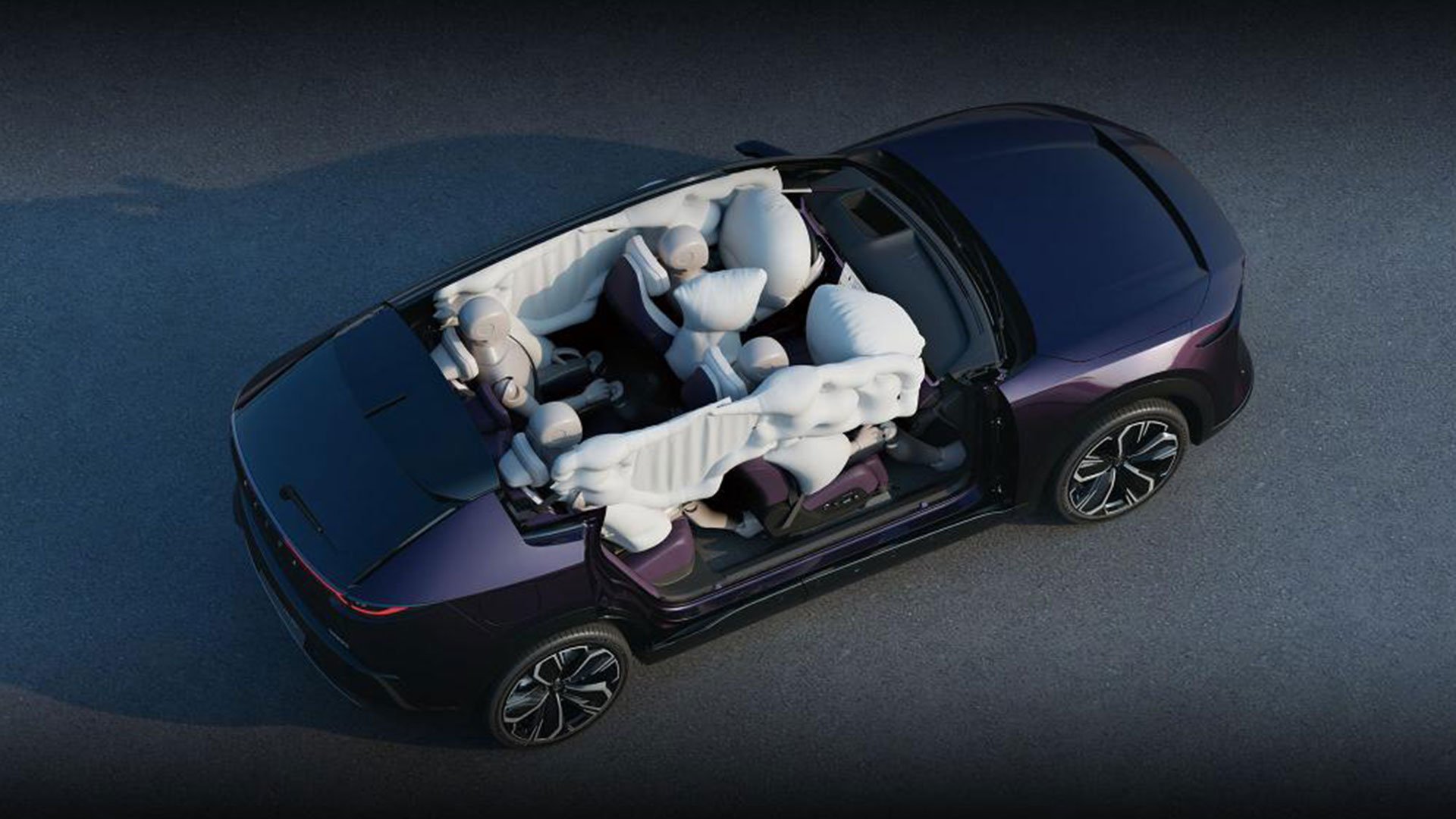
The Mazda EZ-60 claims to have 9 airbags as standard across the entire lineup. The author used a certain automotive vertical website's comparison tool to compare the Mazda EZ-60 600 Max and the Model Y Rear-Wheel Drive. Both cars are equipped with front airbags, front side airbags, side curtains, and central safety airbags. The Mazda EZ-60 600 Max also adds rear side airbags. Therefore, in terms of passive safety protection equipment, the Mazda EZ-60's performance can also be considered quite comprehensive.
[Assisted Driving]
The Mazda EZ-60 600 Max has more features than the Model Y Rear-Wheel Drive, including front and rear corner parking radars, 360° panoramic view, automatic parking, reverse tracking, automatic lane-change assist, highway NCA, and hill descent control. However, regarding assisted driving, the author still recommends test-driving yourself to experience how easy the function is to use.
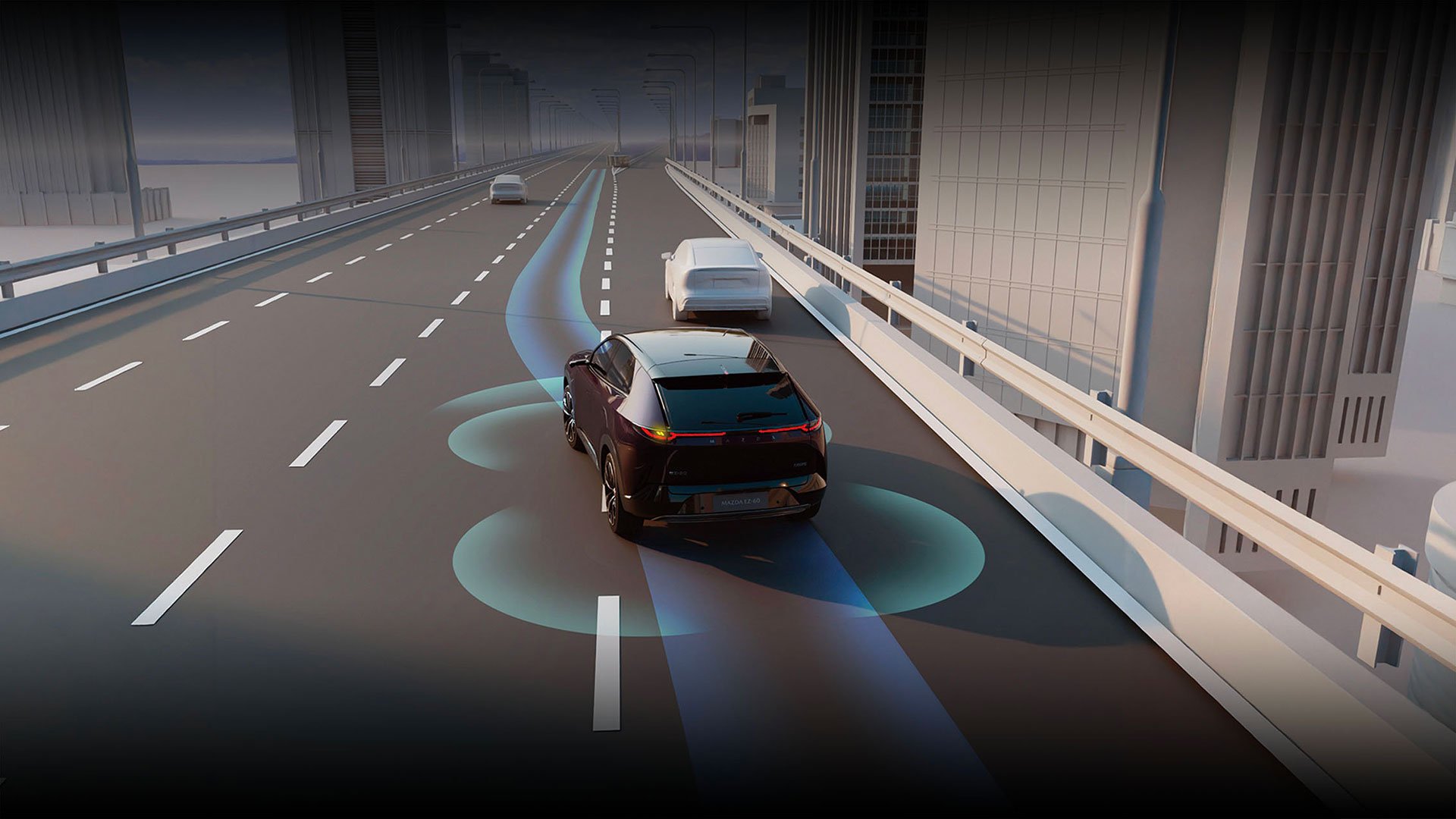
The Mazda EZ-60 600 Max is equipped with 5 exterior cameras, 2 interior cameras, 12 ultrasonic radars, and 5 millimeter-wave radars. This is enough to handle following traffic and reduce driving fatigue in most daily road conditions. Assisted driving is useful, can be used frequently, and can be used well, but it must not be relied on or abused!
[Comfort and Convenience Configuration]
At the Renzheng Licheng Mazda store visit, the display car's driver and front passenger seats were both equipped with zero-gravity seats. The author checked the configuration table and found that both the Extended-Range 200 Max and the Pure Electric 600 Max are equipped with zero-gravity seats for the driver and front passenger, which can be seen from the leg rests.
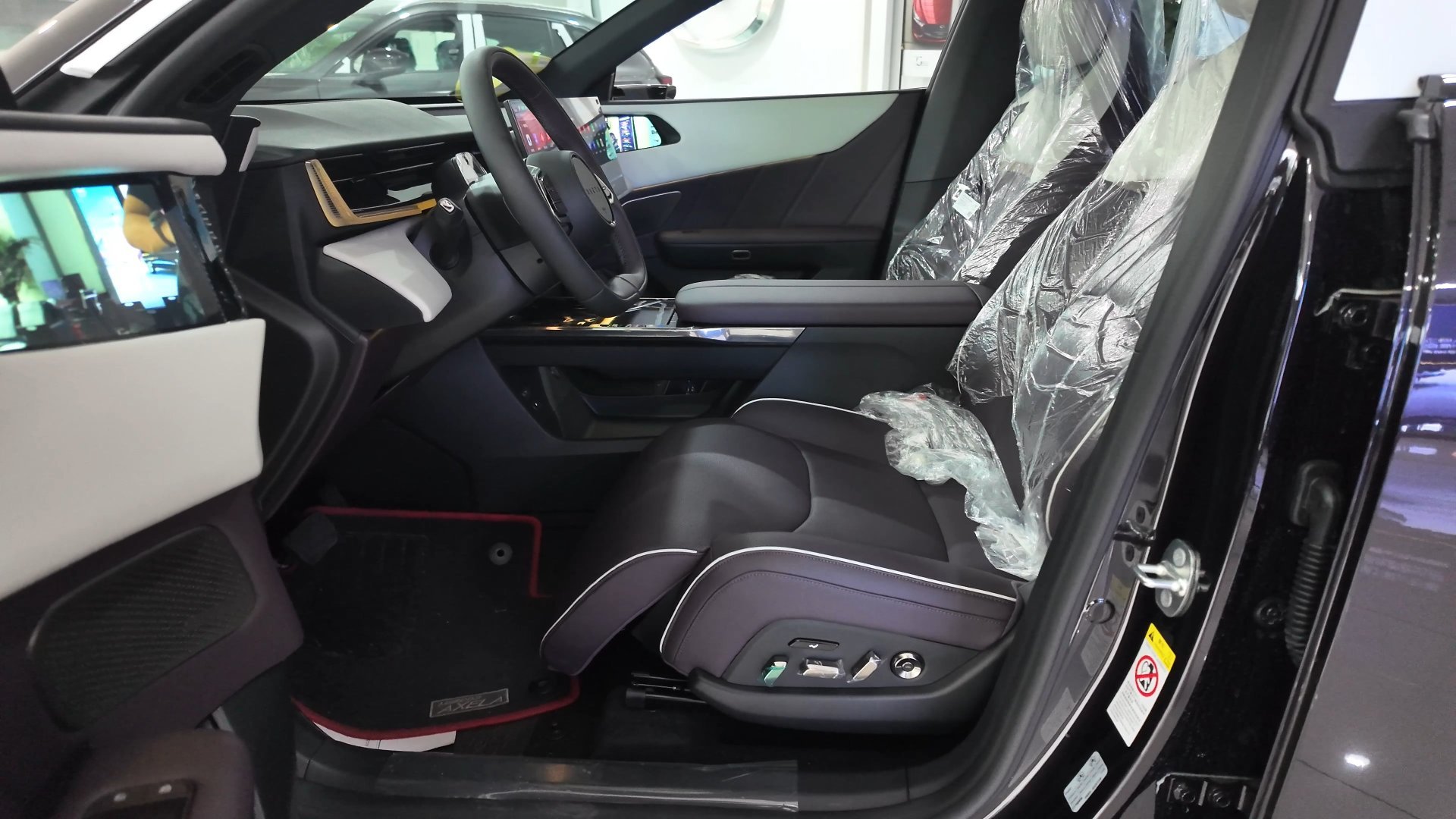
Except for the two lower-trim extended-range versions, the other higher trims of the Mazda EZ-60 all come standard with front seat ventilation and heating, and driver's seat memory. The two Max versions also have massage functions for the front seats. However, since the Mazda EZ-60's pricing adopts the domestic-car playbook, its functional configuration should also be aligned with domestic new energy vehicles in the same price range.
Also, for example, the panoramic sunroof sunshade is standard across the entire Mazda EZ-60 lineup, which is a necessary configuration in regions often exposed to scorching sun in summer.
Both the extended-range and pure electric Max versions come standard with a 23-speaker Dolby Atmos 7.1.4 in-car audio system. The current new-car launch benefit "Upgrade Gift" shows that the Pro version can be upgraded for free to the 23-speaker audio system, and the Max version can choose a free upgrade to 255/40 R21 tires, or a high-definition AI electronic exterior rearview mirror + streaming media interior rearview mirror, choosing one of the two. The author suggests upgrading to wide tires is more suitable. The left-side electronic exterior rearview mirror's viewing angle is actually not as good as an ordinary glass exterior rearview mirror, and the car already has so much assistance equipment that ordinary exterior rearview mirrors are enough to handle most dim scenarios.
Summary:
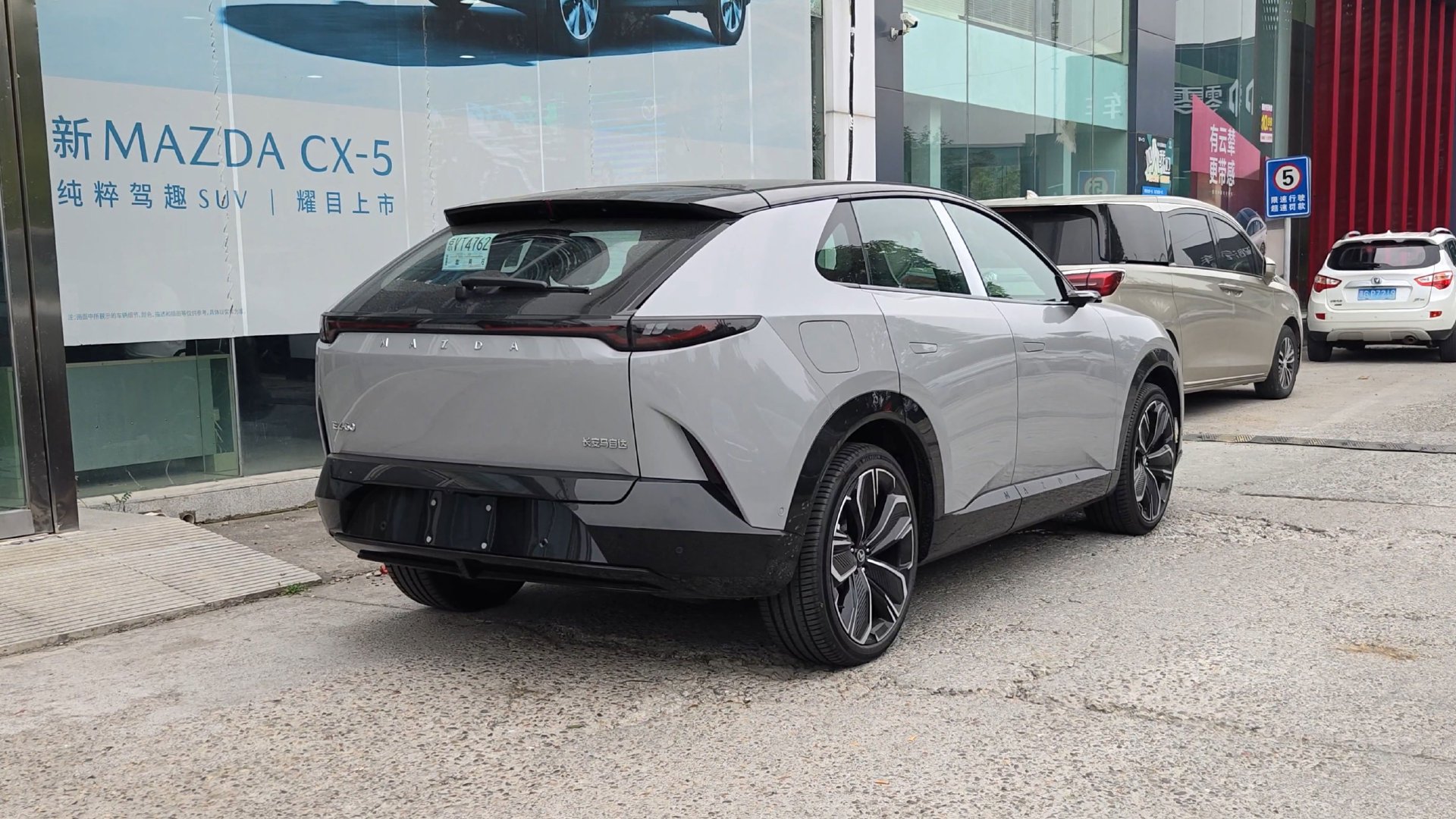
In August, the Mazda EZ-6 sold 2,741 units. Given Mazda's current scale, being able to sell this many new energy vehicles is already quite good. The Mazda EZ-60 also takes the route of high looks and high cost-effectiveness. If viewed from the perspective of "transportation tool attributes," the Mazda EZ-60's product strength is actually comparable to the Model Y Rear-Wheel Drive, and it also has the advantage of a price more than 100,000 yuan cheaper. For consumers who want a rear-wheel-drive new energy SUV, they might as well take the time to try the new energy SUV tuned by Mazda, with the hardware boost of free upgrade to wide tires + continuously variable damping suspension, and see whether it is more suitable than the Model Y Rear-Wheel Drive!
By the way, when leaving the store after the visit, Renzheng Licheng's test-drive car was already in place. It is currently in the temporary license plate stage. The test-drive route is said to be a run to the Airport Second Expressway and then a U-turn back from Jinzhan. This test-drive route is fairly smooth and exciting. When choosing a new energy vehicle, you must test-drive more; shopping around never hurts!
Note: Some of the images in the article come from the internet and will be deleted if infringing! Written impromptu without review; please forgive any errors or omissions!


