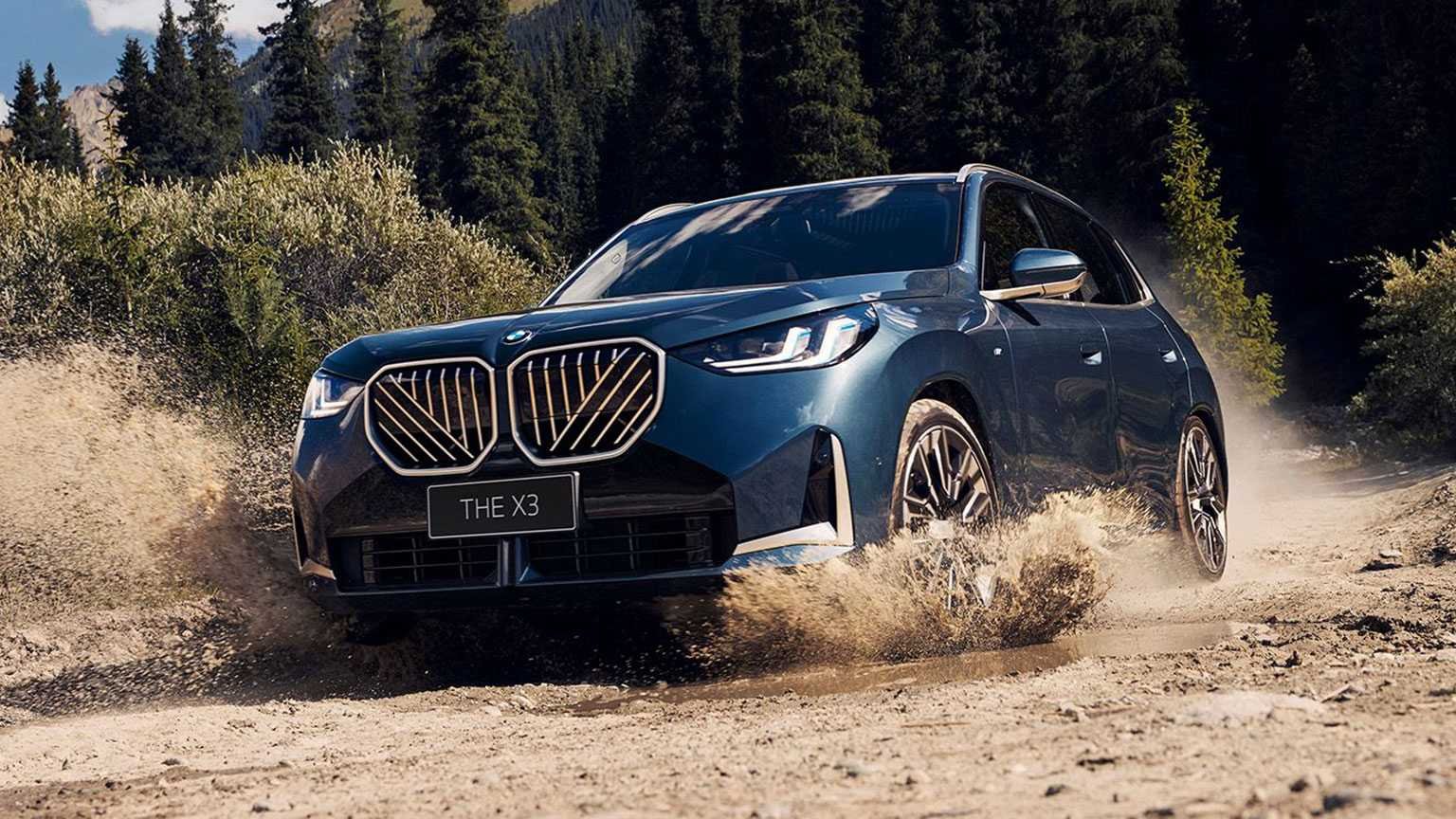
These past two days, the new BMW X3 has been a hot topic of discussion. It just so happened that I recently had the opportunity to get in touch with both the new and old generations of the BMW X3, and I took both the new and old BMW X3 for a short nighttime test drive over a short distance around the Rengang Road area. The one-sentence verdict I would give is: it has lost the traditional BMW joy of driving pleasure!
Of course, in order to adapt to and satisfy the "newly wealthy class's" needs for a luxury midsize SUV, and to win their favor and choice, there is nothing wrong with the vehicle's driving and handling feel leaning toward relaxed comfort. But if the goal is simply to pursue relaxed handling and comfortable ride, at the 400,000 price point there are plenty of new-force vehicles with more technological charm and luxury质感. Even for the "newly wealthy class," is it still necessary for them to choose a BMW X3?
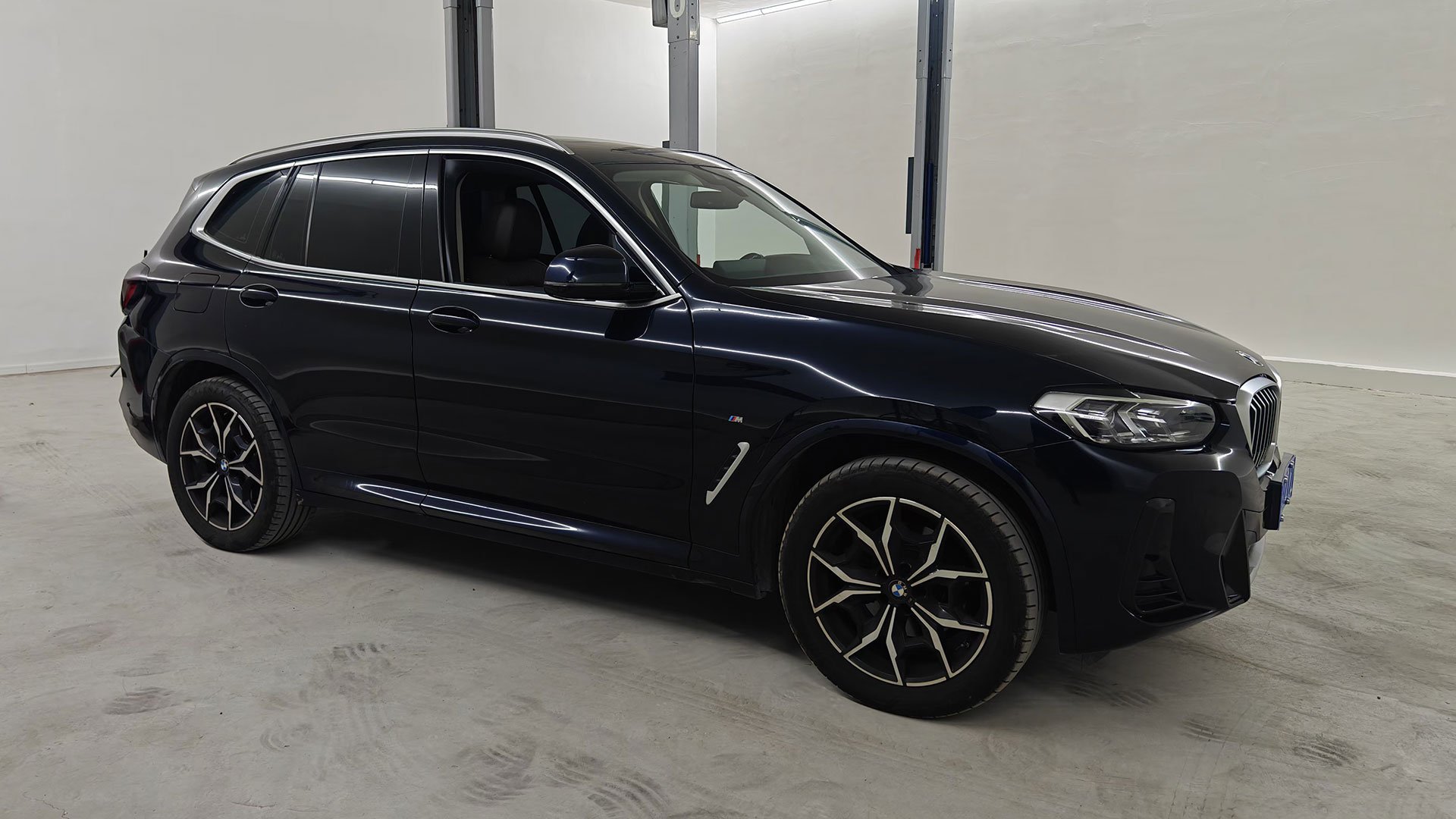
The picture above is the old BMW X3 I test drove. For various reasons, I only took this one picture. In addition, a friend provided four photos of the new model's tire specifications. These are only to corroborate that this brief intimate contact really happened, and that this is not casual cloud reviewing. Just so you know!
During the brainstorming stage when planning this episode, a friend mentioned that the front-wheel caster angle of the new BMW X3 has been increased by 19%. My first reaction was that "the steering may become more darty." In my impression, when I studied Automobile Construction more than 20 years ago, the benefit of "caster" among the front wheel alignment parameters was that when the steering returns to center after a turn, it uses the vehicle's own weight to increase downward pressure, thereby strengthening the steering's automatic return to center. You can simply understand this as one kind of "steering assist." Of course, because it has been so many years and the books I studied back then have long been forgotten, if I remember it wrong, I ask industry experts to criticize and correct me.
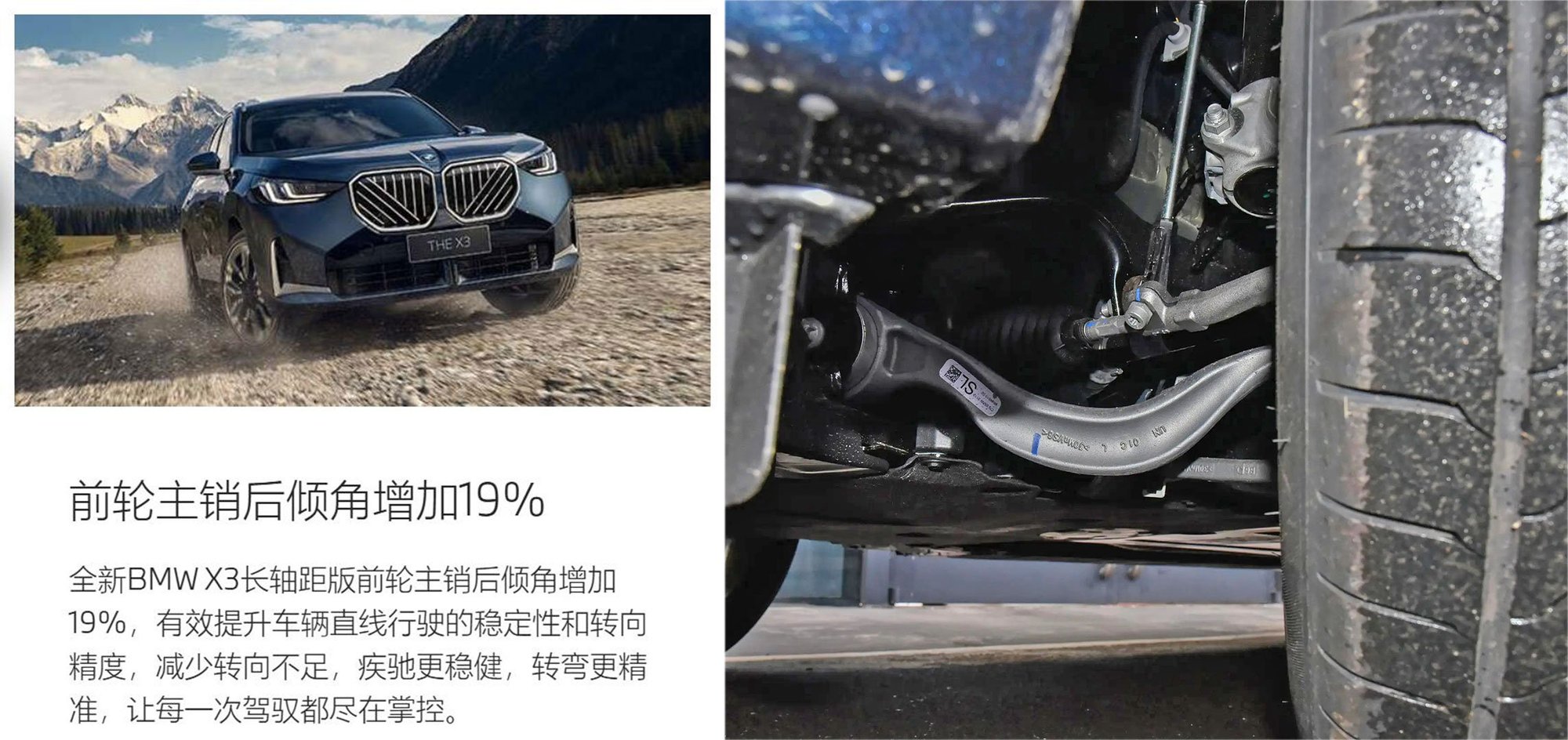
On site, I checked BMW's official website and found that the new BMW X3 indeed states "front-wheel caster angle increased by 19%." The steering feel during the test drive was consistent with my first reaction upon hearing this information: it was indeed very relaxed and at ease. If judged by the driving and handling feel of "traditional BMW joy," that old BMW X3 felt more like a BMW!
On site, I also confirmed the tire specifications of the new and old models. The front tire specification of the new BMW X3 is 255/40R21 102Y, and the front tire specification of the old BMW X3 is 245/50R19 105W. But at the time I did not further check the rear tire specifications of the new and old models.
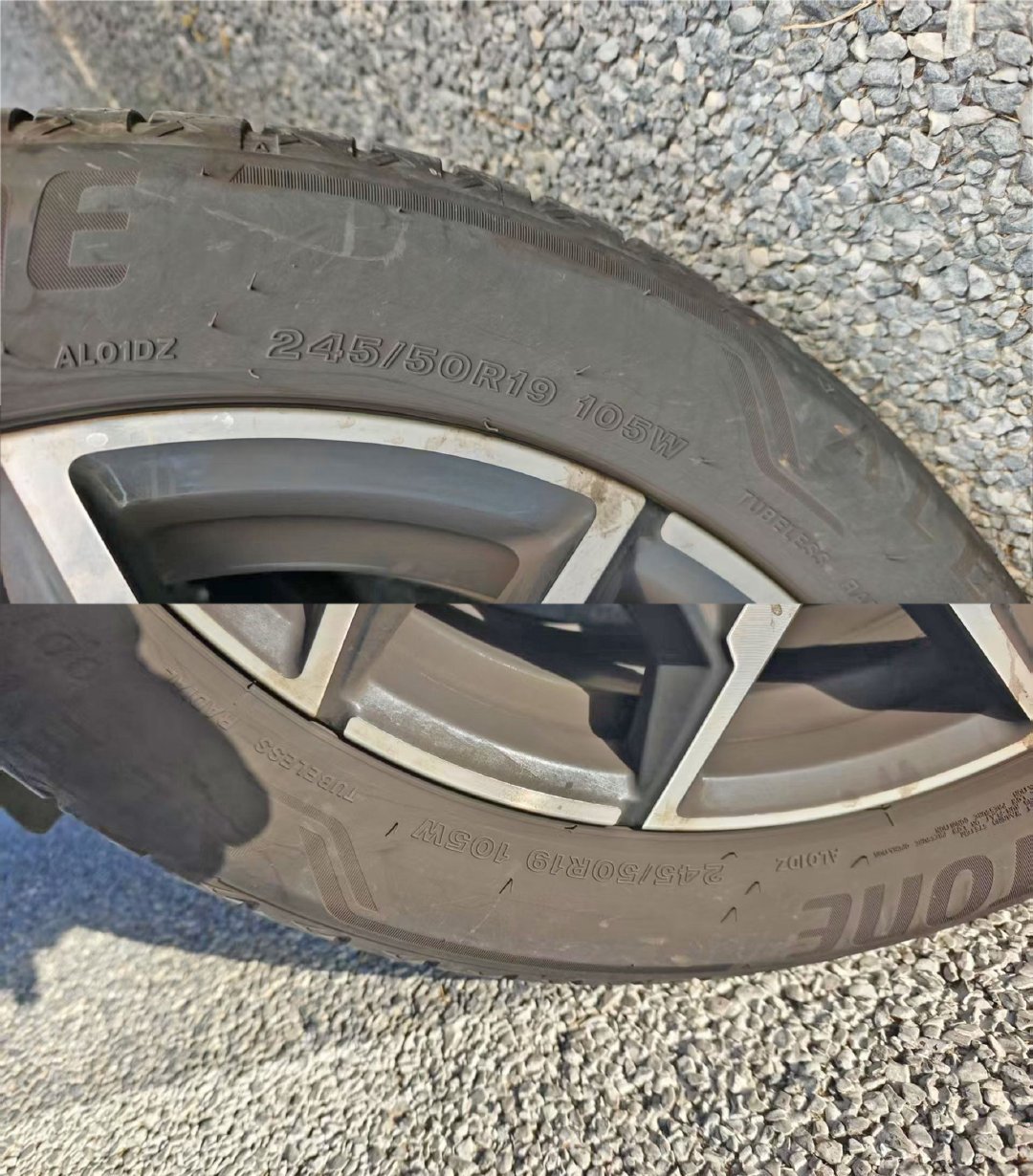
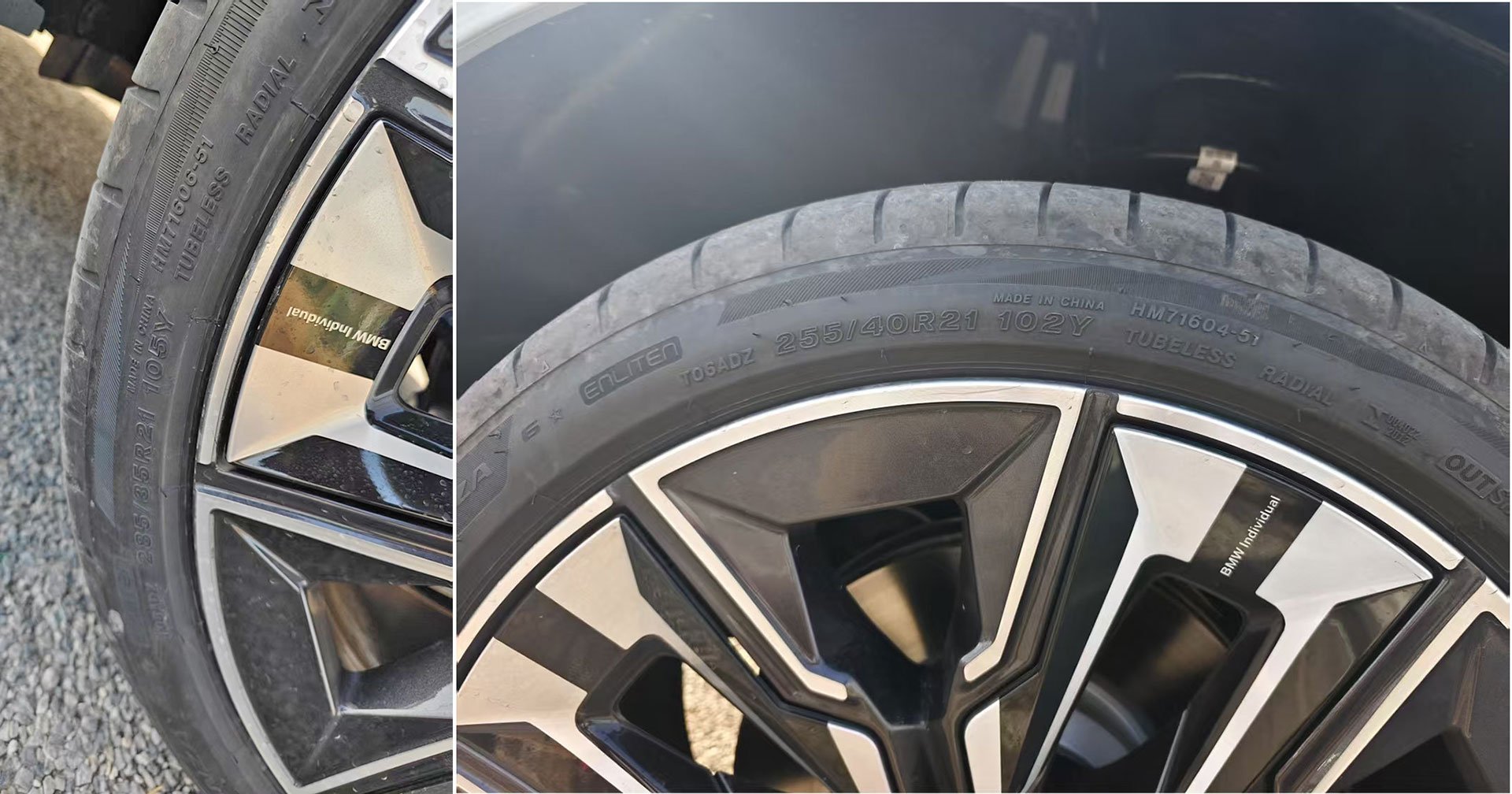
The next day, while shooting dynamic footage in the daytime, a friend provided photos of the four-wheel tire specifications of both the new and old models. After comparing the relevant data of the 2022 BMW X3 xDrive25i and the 2025 30L xDrive BMW X3 on a certain automotive vertical website, it was confirmed that the old model has the same front and rear tire specifications, while the new BMW X3's front wheels are optionally fitted with larger wheels and lower-profile tires. The front tire specification is 255/40R21 102Y, and the rear tire specification is 285/35R21 105Y. BMW's official website promotional material also mentions the phrase "faster steering return to center after turning," which also confirms that my first reaction should be at least somewhat on the mark.
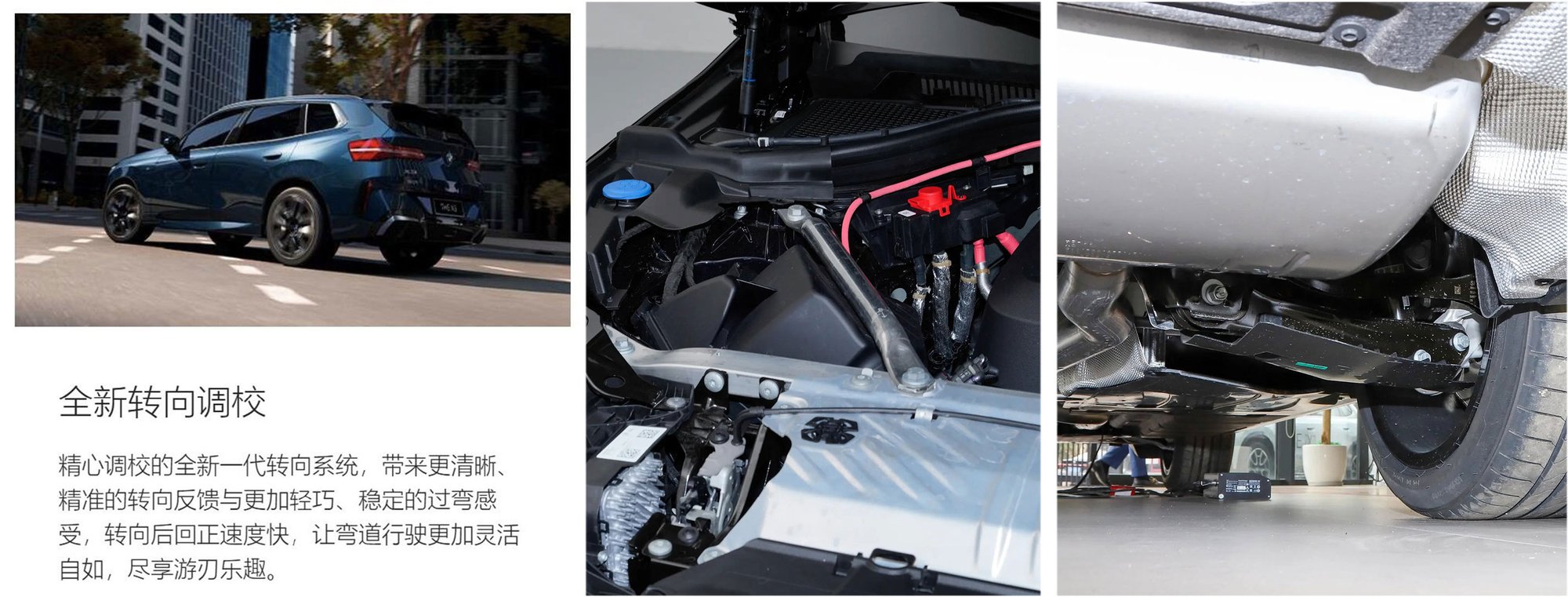
Actually, that same night I already mentioned that if, under the premise of a huge difference in tire specifications, the new model's relaxed driving and handling performance still surpasses the old model after being fitted with more exaggerated large wheels and low-profile tires, then that shows the new model has already departed from the definition of "traditional BMW joy." It may be intended to cater to the majority of users who like the BMW brand, rather than to cater to the user group that likes "traditional BMW joy." If viewed from the height of the BMW brand, I believe the product evolution of the new BMW X3 at least cannot be defined as an "upgrade." A more appropriate definition would be "a generation of product that compromises to cater to user demands."
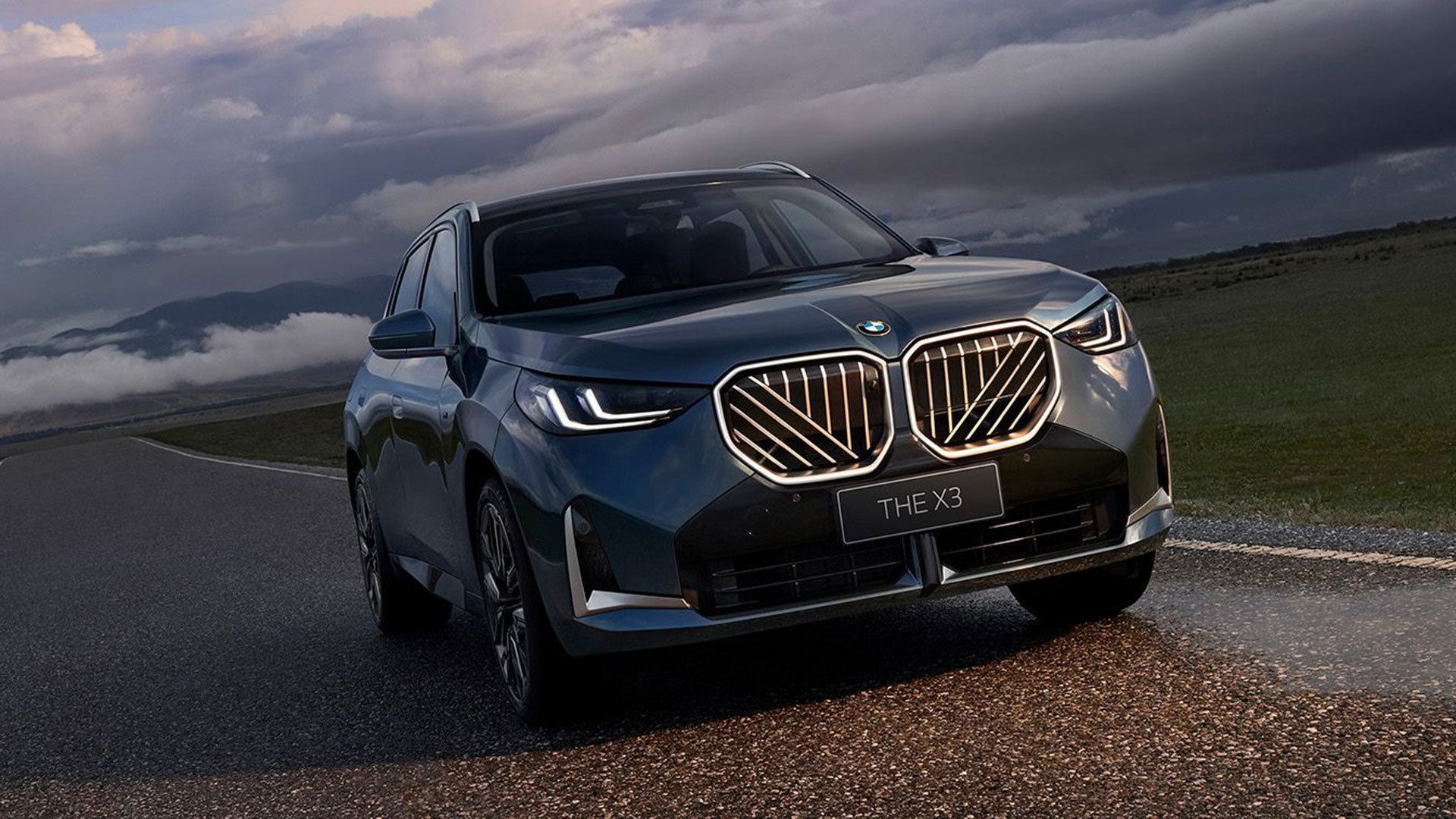
During the test drive, I also tested slalom handling. The new model's overall body-roll cohesion is better than the old model's, while the old model rolls a bit more. Before the test drive I had not checked the difference in tire specifications. After checking the difference in tire specifications, I believe this should be caused by the higher aspect ratio. It is common knowledge that large wheels with low-profile tires are more stable, and it is also common sense that tires with a higher aspect ratio deform more during slalom handling, causing relatively larger sway amplitude.
On the way back, I passed a not-very-deep pothole with a vertical cut face. At the moment the new model went over the pothole, I could feel through my seat the vibration of the tire dropping into the pothole, while the old model's experience over this pothole was relatively much better, with basically no physical sensation. This also benefits from the tire with a higher aspect ratio, whose relatively greater deformation absorbs the vibration of the tire falling into the pothole.
If you choose large wheels with low-profile tires, and your daily driving conditions often include bumpy roads, the probability of tire and wheel rim damage may be much greater than with tires like the "dog riding a rabbit" type with a high aspect ratio. This is also the main reason why many hardcore off-road vehicles use tires with relatively higher aspect ratios: they rely on the greater deformation of higher-aspect-ratio tires when encountering poor road conditions to absorb and buffer collision energy and reduce the risk of rim deformation or cracking.
After I confirmed the difference in tire specifications between the new and old models, an idea occurred to me: if the new model's tires were swapped onto the old model, and the old model's tires were swapped onto the new model for another test drive, then the new model's driving and handling feel might move even further away from "traditional BMW joy," while the old model's driving and handling feel might become even more stable.
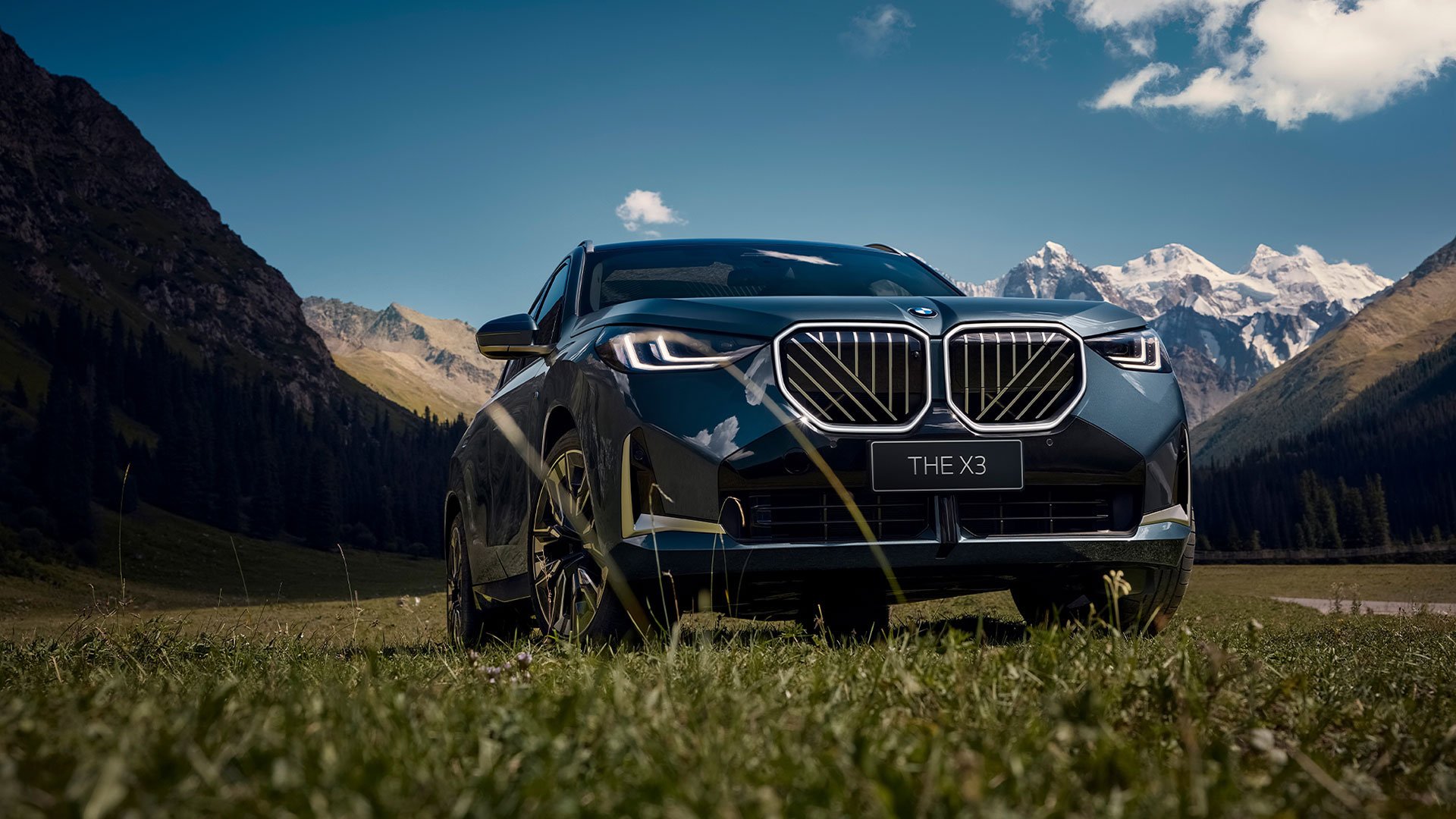
In addition, after the short nighttime test drive, I believe the new model's NVH performance is not as good as the old model's. More obvious vibration and noise can be felt inside the cabin. Of course, because the tire specifications of the two models differ, large wheels with low-profile tires indeed tend to produce more noise and vibration.
During the test drive, I felt the acceleration sound was not quite right. A friend mentioned "simulated engine sound" and turned off that function. After that, the feel during extreme acceleration was right. I believe the tuning level of the new model's "simulated engine sound" still has room for improvement. If defined using terms commonly used by Hi-Fi enthusiasts, the sound performance of the "simulated engine sound" has a bit too much digital flavor.
Also, when moving the car at idle over a short distance inside the workshop, the clattering noise of the engine at idle was very unrefined. This has always been a weak point of BMW. There are also quite a few old BMW X1s and old BMW X3s in our community, and their owners like to warm up the car in place. The clattering idle noise lets you know from far away that it is a BMW. But to be fair, when blipping the throttle and standing outside the car listening to the real exhaust note, the performance of most BMW models can be defined as "a powerful, vigorous sense of refinement."
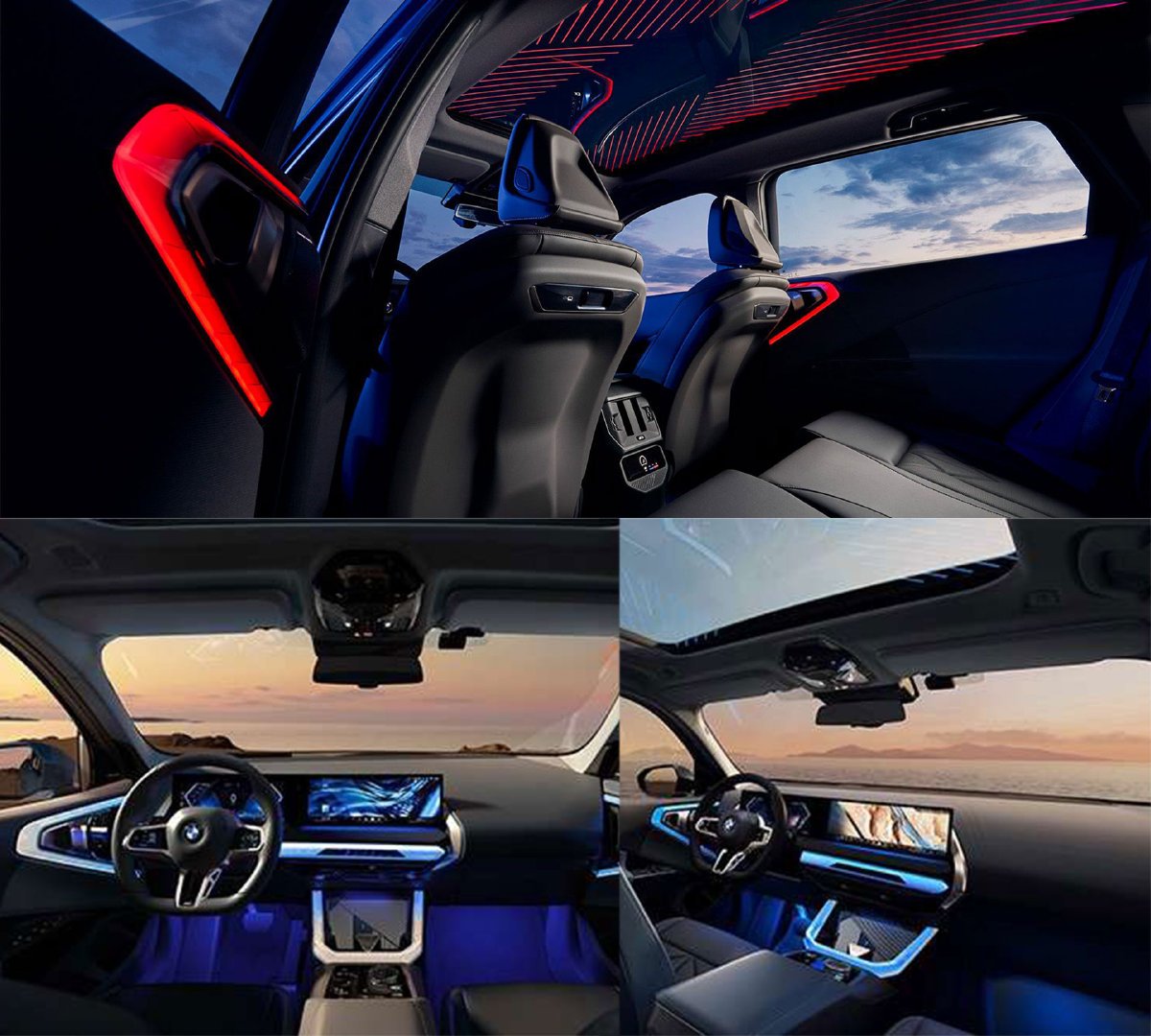
Another thing I need to complain about is the interior ambient lighting. During the test drive on Rengang Road, although there were streetlights along the road, large trees on both sides blocked them. After the interior ambient lighting was turned on, its colorful display more or less affected driving visibility. We tried to find the control switch and turned it off, and at the time it felt much better. If driving at night on a road without streetlights, the new model's nightclub-style interior ambient lighting may have an even greater impact on driving visibility.
We also discussed this issue. A friend said the new BMW X3 has a "off" option, which is not a problem. But from the perspective of driving safety and catering to the aesthetics and preferences of the "newly wealthy class," I believe the ambient lighting should default to "off," and if users have a need they can "turn it on." That way it would appear that traditional automakers care more about driving safety, and it would also count as taking user needs into account.
If it defaults to on, and users have to choose "off" for the sake of better driving safety, then for a century-old automaker, that should not be the case. What do you think?
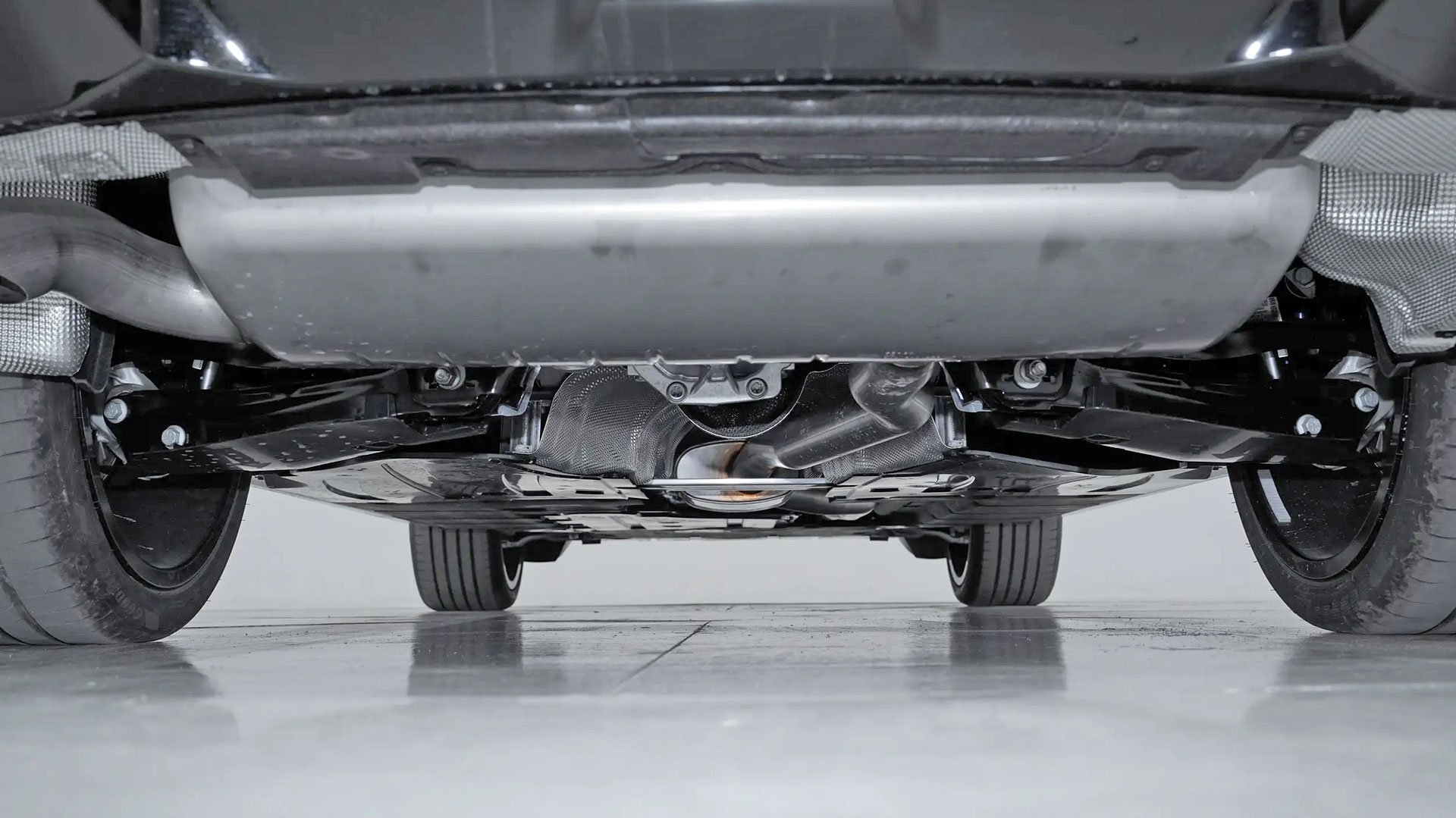
I inspected the chassis and protection performance of the new and old generations of the BMW X3, and there is basically no difference. Something like the caster angle increasing by 19% cannot be confirmed by visual inspection.
The old model is a 25i, and the new model is a 30L, so there is a size difference in the front brake master cylinder. This can still be regarded as a "configuration difference." Likewise, because the two models have different powertrains, we cannot compare the power output differences between the two models in this way.
The new BMW X3's powertrain tuning still maintains a fairly high standard. Under normal acceleration, upshift shock is basically imperceptible. After turning off the simulated engine sound, the change in engine speed during upshifts can be perceived. Experienced drivers should all be able to feel it.
When entering a side road from the main road through a 90-degree turn, while lightly braking to slow down, I felt "downshift shock." On the remaining test drive route I also tested deceleration downshifts, and the shock sensation was more obvious than on upshifts, and there really was a physical sensation of "shock."
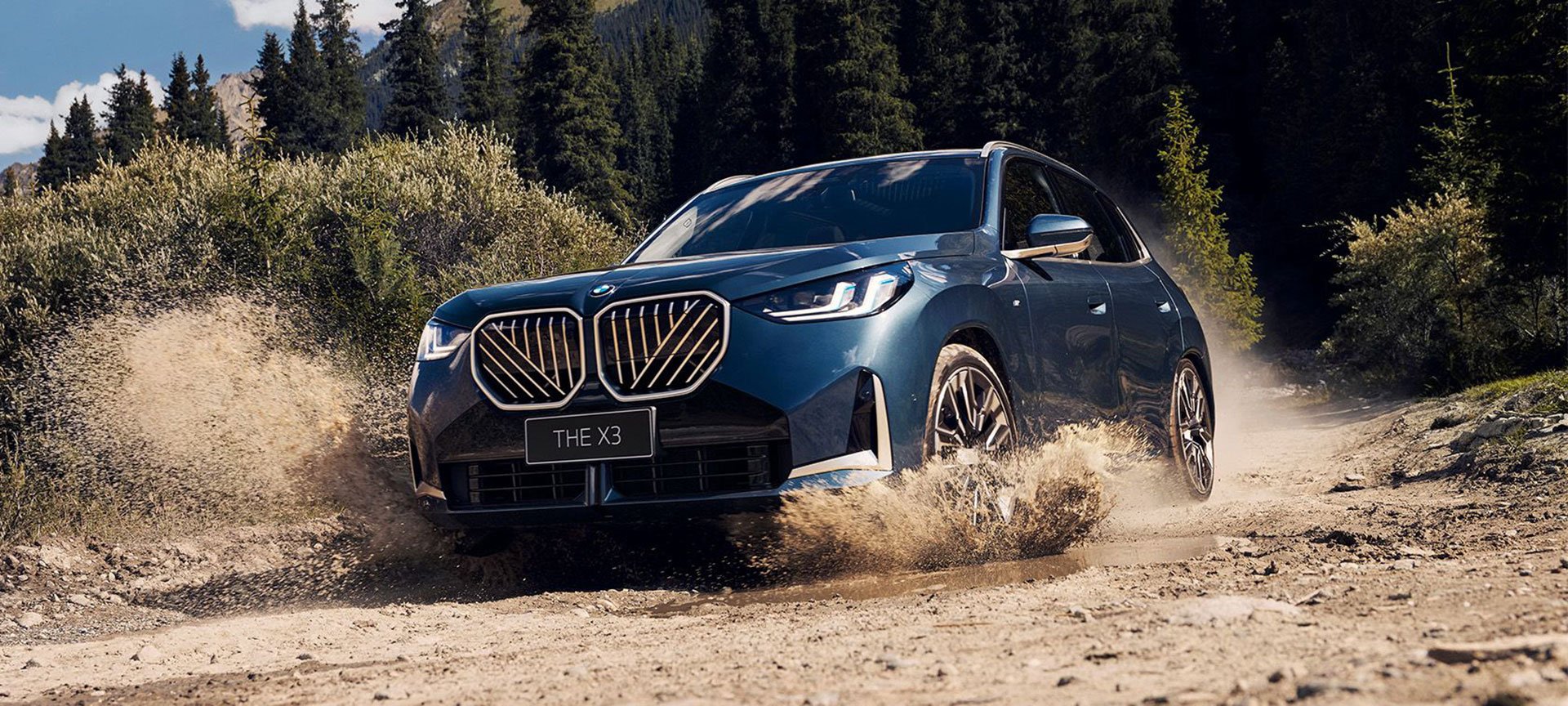
From this brief intimate contact with the new and old generations of the BMW X3, I felt the bewilderment of traditional automakers after being impacted by new-force models. Sales volume being the only truth has affected the confidence of the brand and its employees. But for product upgrading and iteration and the long-term development of the brand, "leveraging strengths and avoiding weaknesses" is the real kingly way!
Originally, their own technology foundations, which they were proud of, gave them an obvious advantage over new-force automakers, and this was also the main reason they could continue to win the favor and choice of loyal fans. But if they compromise with the trends led by new-force automakers, can traditional automakers' development philosophy and iteration speed catch up with new-force automakers? This was originally also a shortcoming of traditional automakers. Therefore, traditional automakers still need a bit more confidence when creating products.
For example, take the currently popular intelligent driving. In cases where traffic accidents caused by using intelligent driving have sparked controversy, it is quite obvious that new-force models are more numerous. In the future, many users will surely understand why, when using intelligent driving in the same way, traditional automakers' automotive products have relatively fewer similar cases when used by customers. This is not only a difference in consumer groups' attitudes toward vehicle use, but also a difference in automakers' understanding of "driving safety." Therefore, the information and philosophy conveyed to the target customer group are also different, and as a result, the driving safety of this consumer group is relatively better guaranteed.
Take the case from a few years ago on the Shenhai Expressway involving a rear-end collision with a construction vehicle. If the driver involved, who was also an investor, had chosen a BMW X3, the outcome of car destruction and death might have been avoided.
Finally, I once again advocate that intelligent driving is useful but should be used properly. Automaker executives should not surreptitiously mention "0 takeovers" and thereby lead some consumers with insufficient willpower and safety awareness to try "hands-off intelligent driving," ultimately reducing their own driving skill improvement because of reliance on intelligent driving, reducing their own awareness of safe driving, and reducing their own risk awareness while driving. This will plant many hidden dangers in our traffic environment. Cherish life, use intelligent driving cautiously, and do not rely too much on intelligent driving while driving!
At the same time, I also hope traditional automakers will take up the banner of promoting "a higher concept of driving safety," actively improve the intelligent driving experience, actively improve the overall product experience, and continue to carry forward their own signature strengths, so that our traffic environment can become more civilized, more harmonious, and safer!
Note: Some of the images in this article come from the internet and will be deleted if infringing! This was written impromptu and has not been proofread. Please forgive any errors or omissions!


