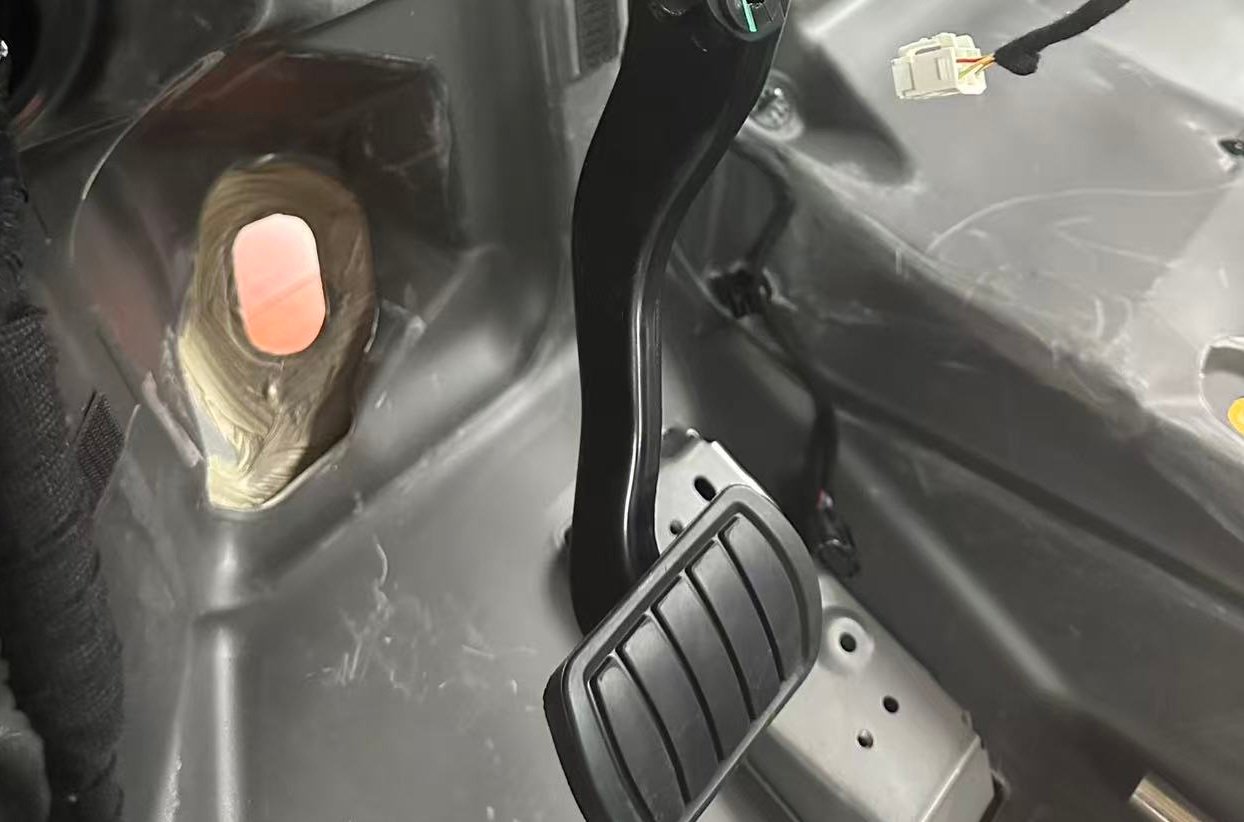
When buying a car, people look at features, looks, and intelligence, but what truly determines your confidence on the road is always the underlying mechanical safety you cannot see. In the vehicle safety system, the brake pedal bracket and pedal arm are the highest safety-grade core load-bearing structures on the brake force transmission path. All braking commands, all the life-saving force of emergency evasion, are all received, transmitted, and borne by these two components.
With the current wave of lightweighting sweeping the automotive industry, many automakers, in order to balance cost and energy consumption, commonly adopt PP+GF40 glass fiber-reinforced engineering plastic solutions for core components such as brake pedal brackets. This material has a density only one-sixth that of steel, good formability, dimensional stability, and low cost. It is a mature choice for lightweighting and commercialization, suitable for secondary body structures under conventional room-temperature and medium-load conditions.
But the industry consensus is equally clear: lightweighting is suitable for non-core load-bearing structures, and life-saving safety components cannot be judged solely by lightweighting. Engineering plastics inherently suffer from insufficient rigidity, poor heat resistance, and weak fatigue resistance. Under long-term repeated pedaling, bumpy vibrations, and high-temperature conditions, they are highly prone to hidden dangers such as deformation and loosening, vague pedal feel, and hidden cracks. Especially in scenarios involving brake thermal fade on long downhill descents, high-temperature exposure in the engine bay in summer, and extreme emergency hard braking, plastic brackets carry the fatal risk of instantaneous brittle fracture and brake failure, which is also the core root of recent safety controversies over pedal breakage in multiple vehicle models.
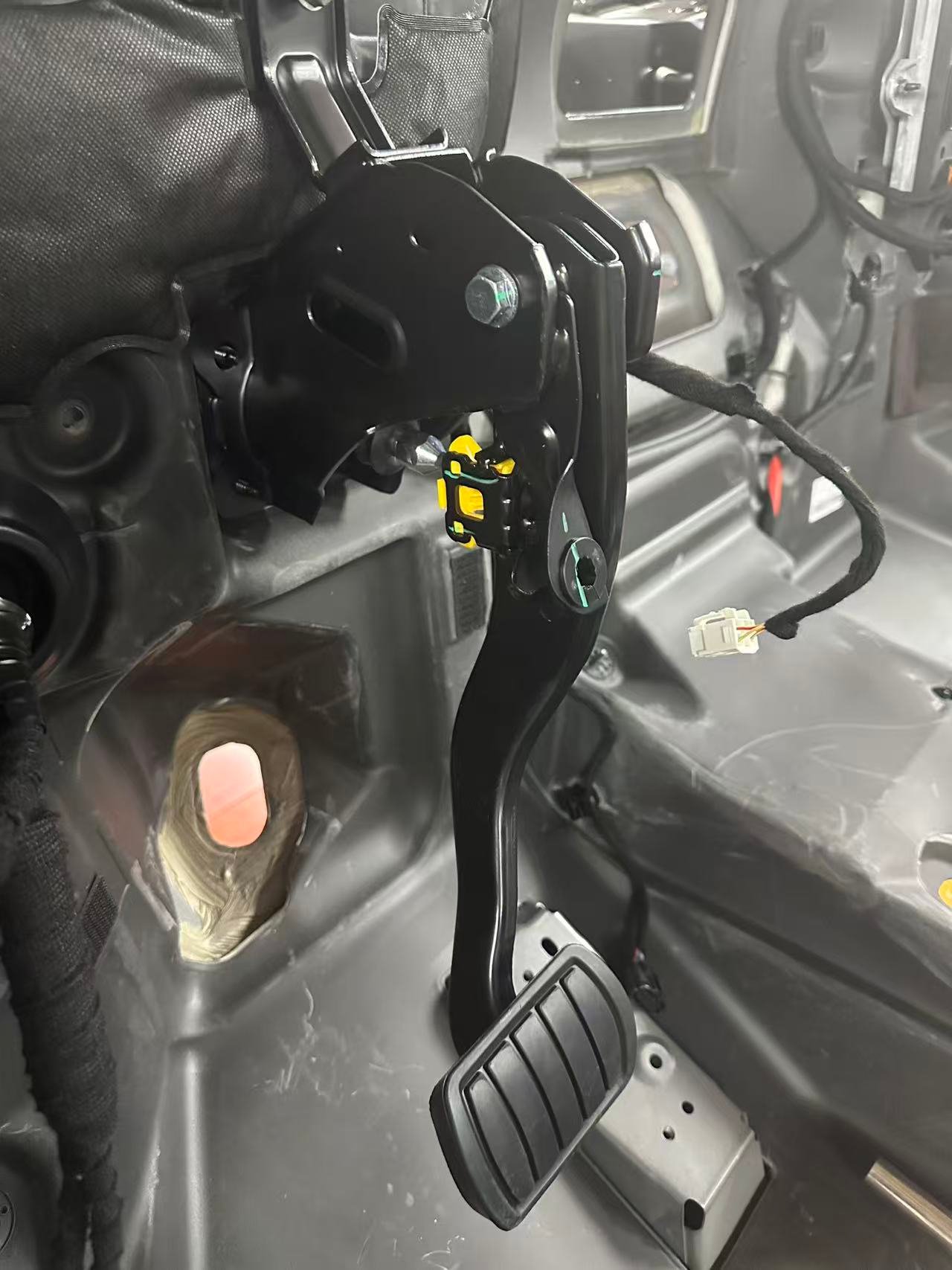
Yijing, deeply understanding the essence of safety, refuses to compromise on core safety components. Yijing X9 completely abandons the plastic material path, and the entire vehicle's brake pedal system adopts a high-strength steel architecture in all dimensions, using hardware standards far exceeding the industry to maximize driving safety redundancy and firmly support every braking action.
Dual steel reinforcement, building a safety barrier from the structural foundation
For the two core components of the brake pedal, Yijing X9 adopts grade-specific high-strength steel custom design, providing dual protection and dual reliability.
Brake pedal arm: DL590 dual-layer high-strength steel construction
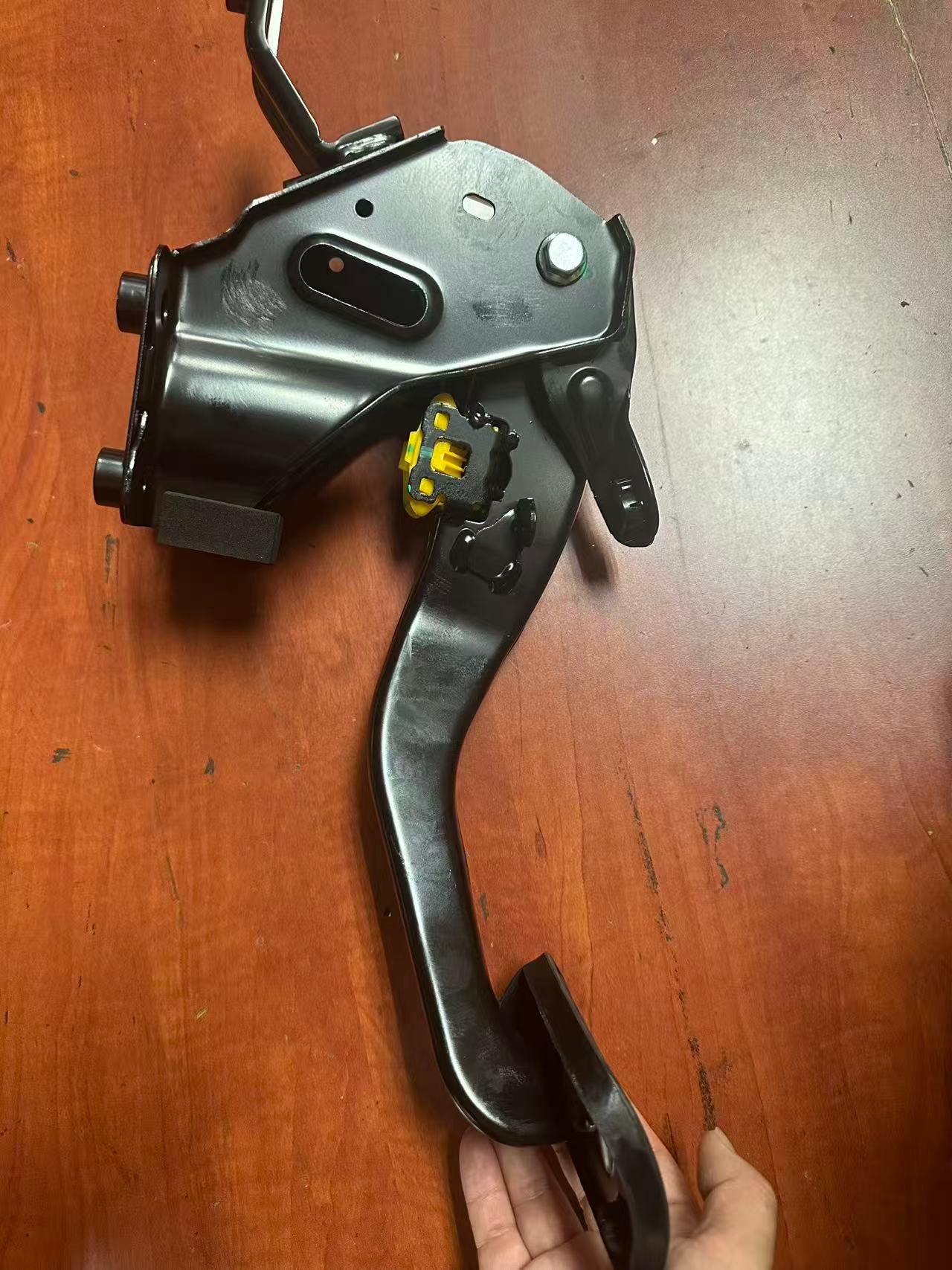
Unlike ordinary single-layer sheet material and plastic structures, the Yijing X9 pedal arm adopts DL590 high-strength steel dual-layer plate integrated forming. The dual-layer steel stacked structure greatly improves bending resistance, fatigue resistance, and impact resistance. It is unafraid of daily high-frequency pedaling, hard braking during aggressive driving, and ten years of long-term bumpy wear. It will not develop the aging deformation and stress cracking problems of plastic parts. The pedal feel remains firm and precise for life, with no dead travel and no looseness.
Brake pedal bracket: DL510 ultra-high-strength steel core load-bearing
As the core fulcrum of brake force transmission, the Yijing X9 bracket uses a DL510 high-strength steel single-layer solid plate, with core parameters comprehensively outperforming industry plastic materials:
1. Maximum rigidity, controllable deformation: elastic modulus as high as 190-210 GPa, more than 20 times that of ordinary glass fiber plastics. Ultra-high rigidity eliminates deformation and displacement after long-term use, thoroughly solving the common problems of plastic pedals becoming looser with use, vague brake feel, and delayed braking response, keeping control always precise and responsive;
2. Doubled strength, unafraid of limits: tensile strength can reach 510-700 MPa, with load-bearing capacity 4-7 times that of conventional plastic brackets, and safety performance improved by 5 times compared with mainstream models of the same class. High-strength steel has unique plastic deformation characteristics. Under extreme overload, it will only slowly deform as a warning, with no risk of instantaneous brittle fracture, thoroughly avoiding the fatal hidden dangers of high-speed brake pedal fracture and brake failure;
3. High-temperature resistance and aging resistance, stable in all scenarios: steel has a melting point as high as 1500°C, with heat resistance 15 times that of plastic. In the face of sustained high temperatures in the engine bay in summer, continuous heat accumulation from long downhill braking, and high-intensity braking on complex road conditions, the steel bracket will not soften, age, deform, or fail, maintaining stable performance as new in all seasons and all operating conditions.
Exceeding-standard verification, defining safety redundancy with rigorous standards
National standards are the minimum bottom line for driving safety, but the safety design of Yijing X9 never stops at compliance.
The current national standard GB 21670-2025 and general industry verification standards set the brake pedal load threshold at only 1500-2000 N, meeting daily conventional operating conditions to pass. But Yijing knows well that real road conditions are full of uncertainty. Full-force pedaling during emergency evasion and extreme loads under sudden conditions far exceed conventional standards.
To this end, Yijing proactively raises its internal safety threshold, increasing the design standard for static load of the brake bracket to 3000 N, 1.5 times higher than the general industry standard, directly aligning with the top safety redundancy level of global luxury brands. Moreover, it has been verified through a full set of professional bench extreme tests: under sustained action of 3000 N above-standard static load, the Yijing X9 high-strength steel bracket shows no cracks, no deformation, no fracture, and no performance degradation, with structural stability and load-bearing safety far exceeding national standard requirements.
Wise trade-offs: lightweighting can be compromised, safety cannot
Automotive lightweighting is a long-term industry trend and an important technical path for reducing energy consumption and improving range. In this regard, Yijing has a clear logic of technical trade-offs: lightweighting is left to body panels and non-load-bearing auxiliary structures, while core safety structures resolutely prioritize strength.
We always believe: a car can pursue lightness and energy efficiency, but the bottom line that protects life cannot be light; features can be iteratively upgraded, but mechanical safety cannot be fixed later through OTA. The lightweighting and low cost of plastic materials come at the price of long-term uncontrollable safety hazards, while the high-strength steel solution upheld by Yijing X9 sacrifices some lightweighting data and manufacturing cost in exchange for absolute peace of mind for vehicle users over ten years of travel.
From the dual-layer DL590 steel pedal arm to the DL510 high-strength steel bracket, from load redundancy 1.5 times above the national standard to the all-condition stability of steel characteristics, Yijing X9 redefines the benchmark for household travel braking safety with solid hardcore materials, rigorous design standards, and an uncompromising safety attitude.
True luxury is never about piling up features, but about going all out in the invisible core details to safeguard every journey.


